
Key Takeaways
- Mats are a low-cost, high-engagement entry point to a corporate wellness program — no big equipment footprint.
- Wellness programs deliver real returns: nearly two-thirds of HR leaders measuring ROI report at least $2 back for every $1 spent.
- Scroll the space first — a break room, meeting room or quiet corner can become a usable practice area with a plan.
- Choose thick, comfortable mats that make floor work inviting rather than off-putting.
- Visible and repeated habits drive participation — schedule it, rotate champions, and keep the area welcoming.
Why a Mat Program Fits the Modern Office
Corporate wellness does not have to mean a full gym. Many offices lack both the budget and the floor space for cardio machines and squat racks. A mat program is the opposite: small, cheap, and immediately usable.
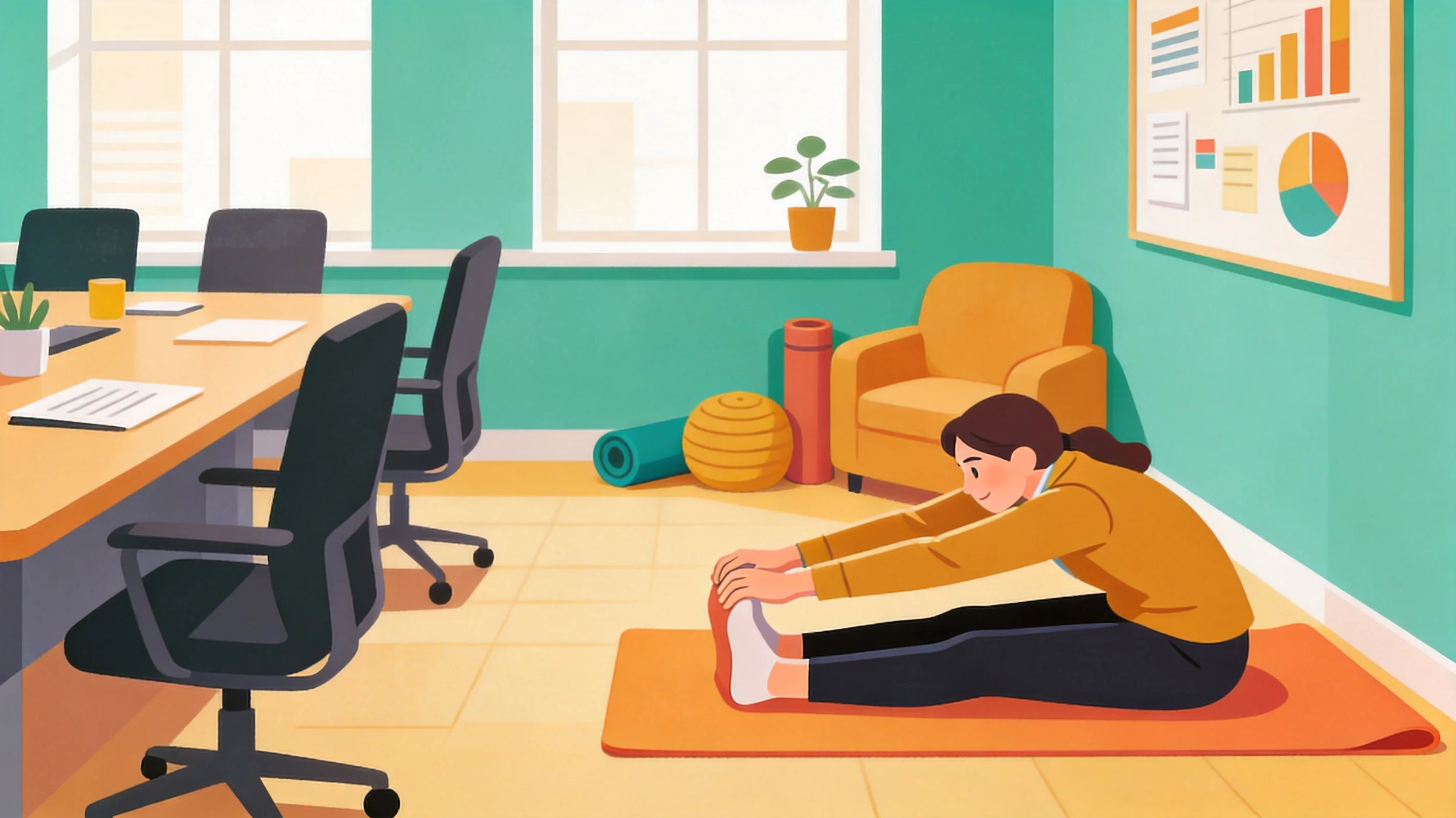
A stack of high-quality mats allows employees to do mobility work, stretching, short guided flows, or a five-minute reset without leaving the building. It meets people where their day actually is — between meetings, at lunch, or at the end of a long sitting block.
And the business case holds up. Nearly two-thirds of HR leaders who measure it report at least $2 in return for every $1 spent on wellness. Healthy, active employees take fewer sick days, focus better, and tend to stay longer. A mat program is one of the most affordable ways to start capturing that.
Scoping the Space: Zones and Coverage
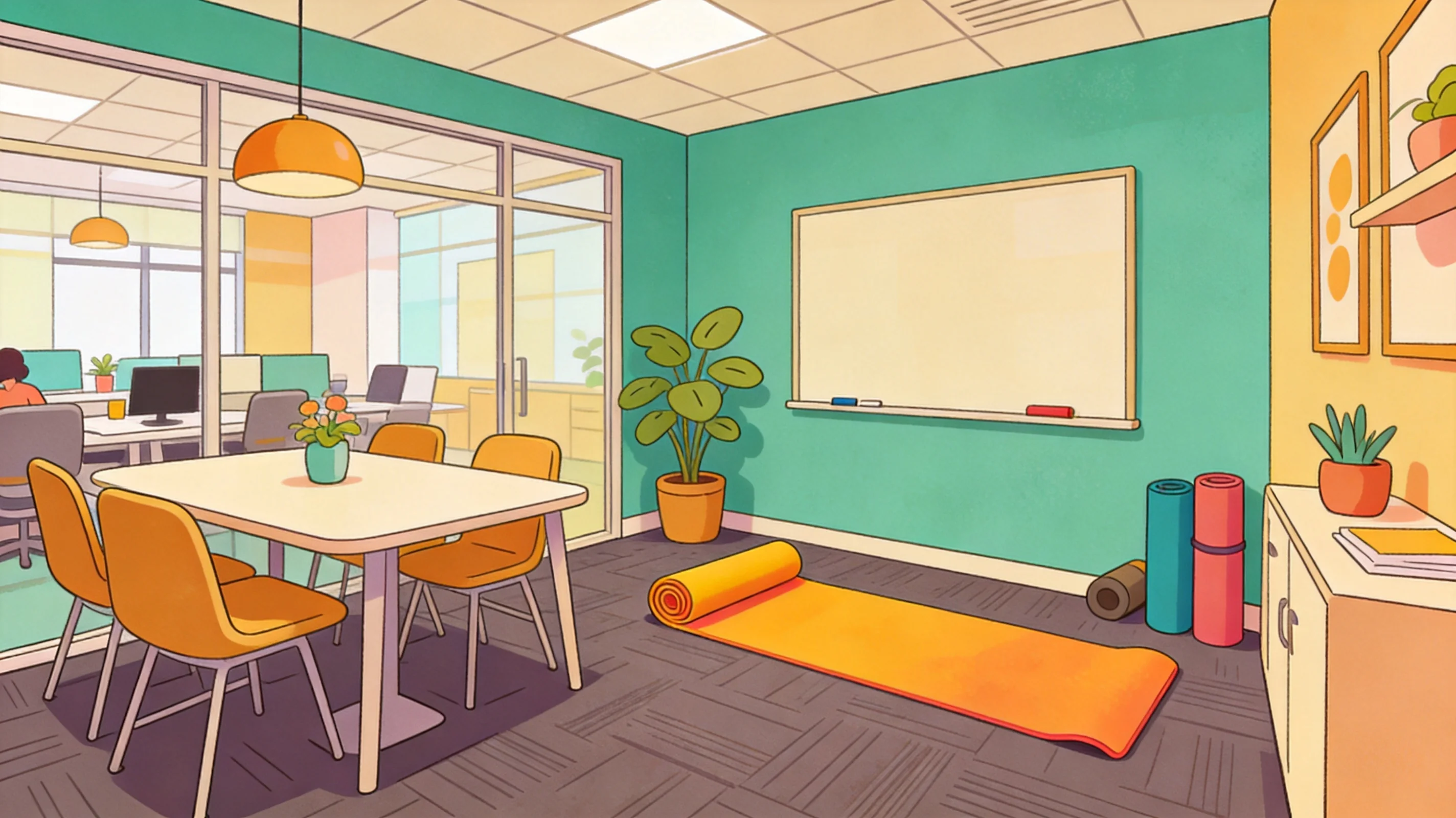
Before you buy a single mat, decide where the program will live. Good candidates are break rooms, unused meeting rooms, a quiet corner of the open plan, or a flexible community space.
Then measure. A small practice zone only needs a few mats. A 6x4 foot mat covers 24 square feet and comfortably fits one person doing floor work; larger 6x6 or 6x10 formats suit two-person or group stretches. Plan about 21 to 25 square feet per person so the space feels open, not crowded.
Sketch it like a mini floor plan: how many people do you want to fit at once, and what will they do? A daily midday stretch for three people is a very different footprint from a weekly group flow for twelve.
Choosing the Right Mats for the Office
Office mats face lighter use than studio mats, but comfort is the priority. If the mat feels like a chore, nobody will use it.
- Thickness: go for a cushioned 8-10mm range so knees, elbows and backs are comfortable on a hard floor
- Material: a dense, non-toxic, odor-free surface that cleans easily keeps an office area pleasant
- Surface grip: nonslip top means employees stay put during sweaty moves and transitions
- Size: mix formats — a few 6x4 mats for individuals and larger 6x6 or 6x10 for group work
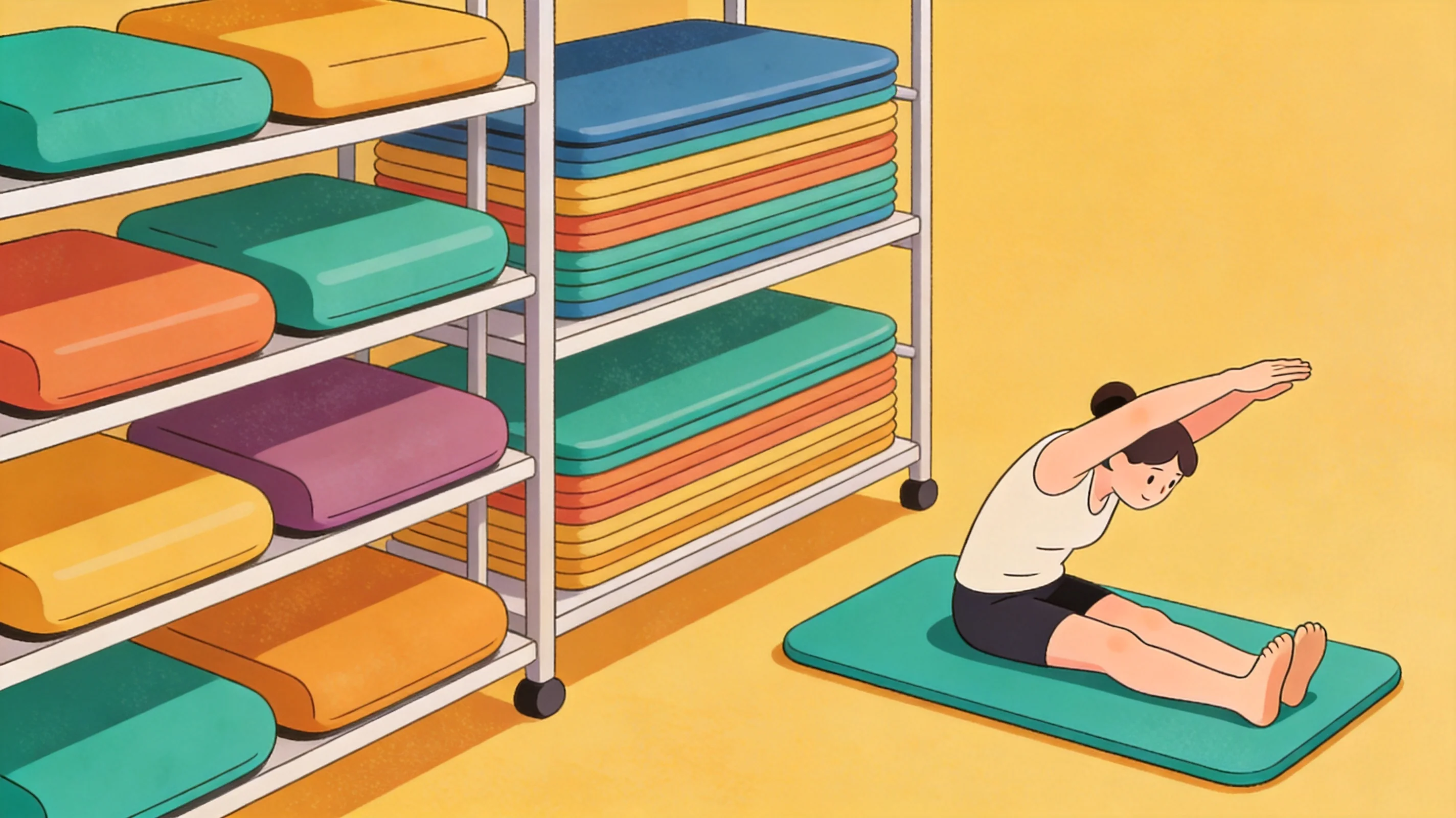
- Storage: choose mats that roll or store neatly so the area can become a regular meeting room again
Buying a set as part of a bundle usually gets better value per mat and supplies the program in one order.
Launching and Driving Participation
A mat program succeeds on consistency, not novelty. Here is how to make it stick:
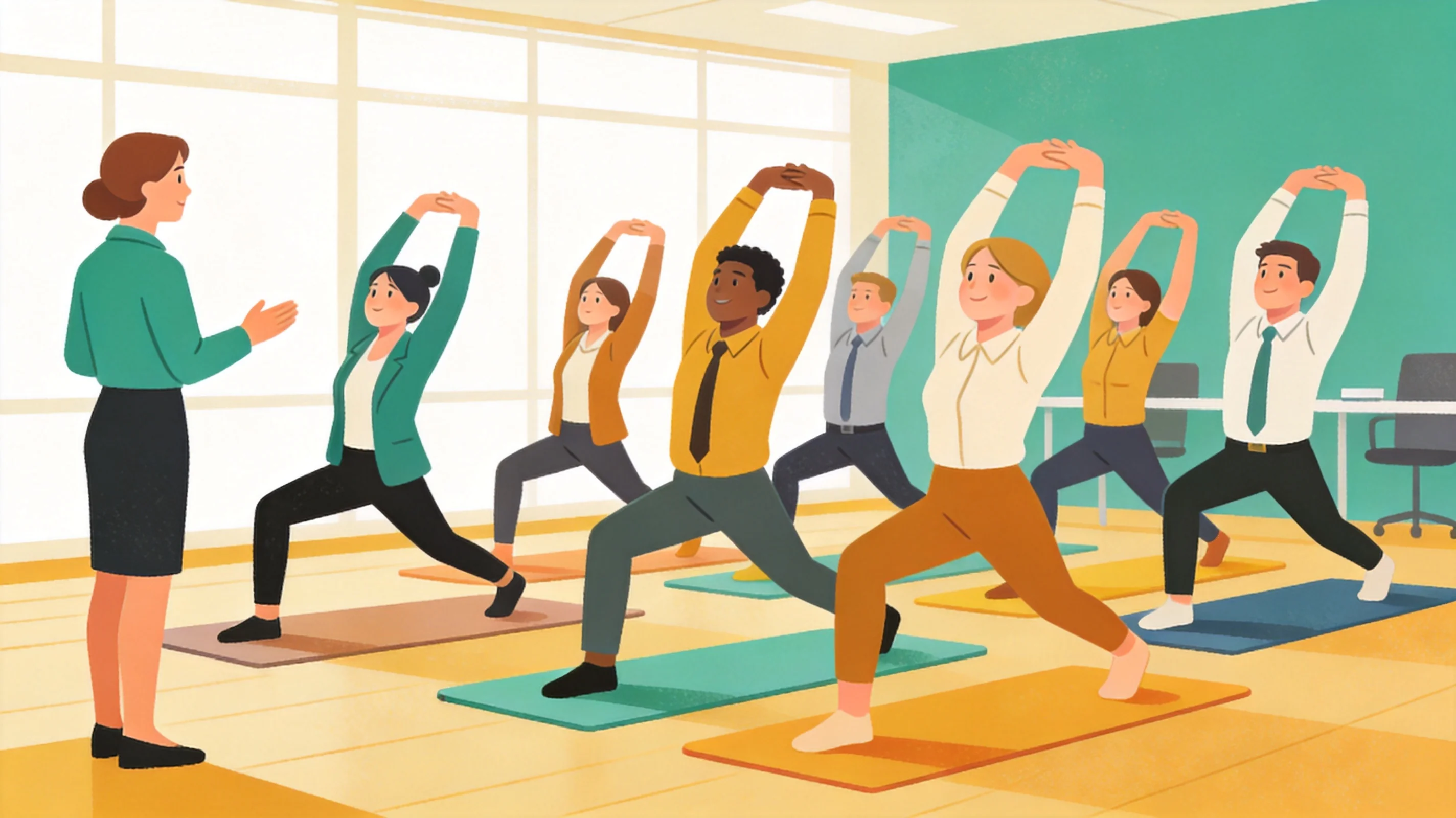
- Schedule it. Put a 15-minute midday stretch on the calendar so it becomes a habit, not a one-off
- Rotate champions. A different employee leads a session each week, which builds ownership and variety
- Make it visible. Keep the mats out, clean and welcoming, and let leadership participate visibly
- Lower the barrier. No gear or attire required beyond a mat — employees just drop in
- Gather feedback. Ask what times and formats work, then adjust so the program serves real needs
Personalization is the difference between a wellness box-tick and a program people actually join. When employees feel the program fits their day, participation — and the retention payoff — climbs.
Bottom line
A corporate mat program is small, inexpensive, and easy to launch — and it is a credible first step toward the retention and productivity gains that wellness delivers. Scope the space, pick comfortable mats, schedule it, and lead by example.
Once the office standardizes on a mat spec it likes, scaling a fully branded wellness mat for every break room and in employee welcome kits becomes an easy next phase.