
Key Takeaways
- Gym floors die from routine abuse, not one dramatic drop. Gravel, scuffs, and vibration slowly wear a subfloor if nothing is underneath.
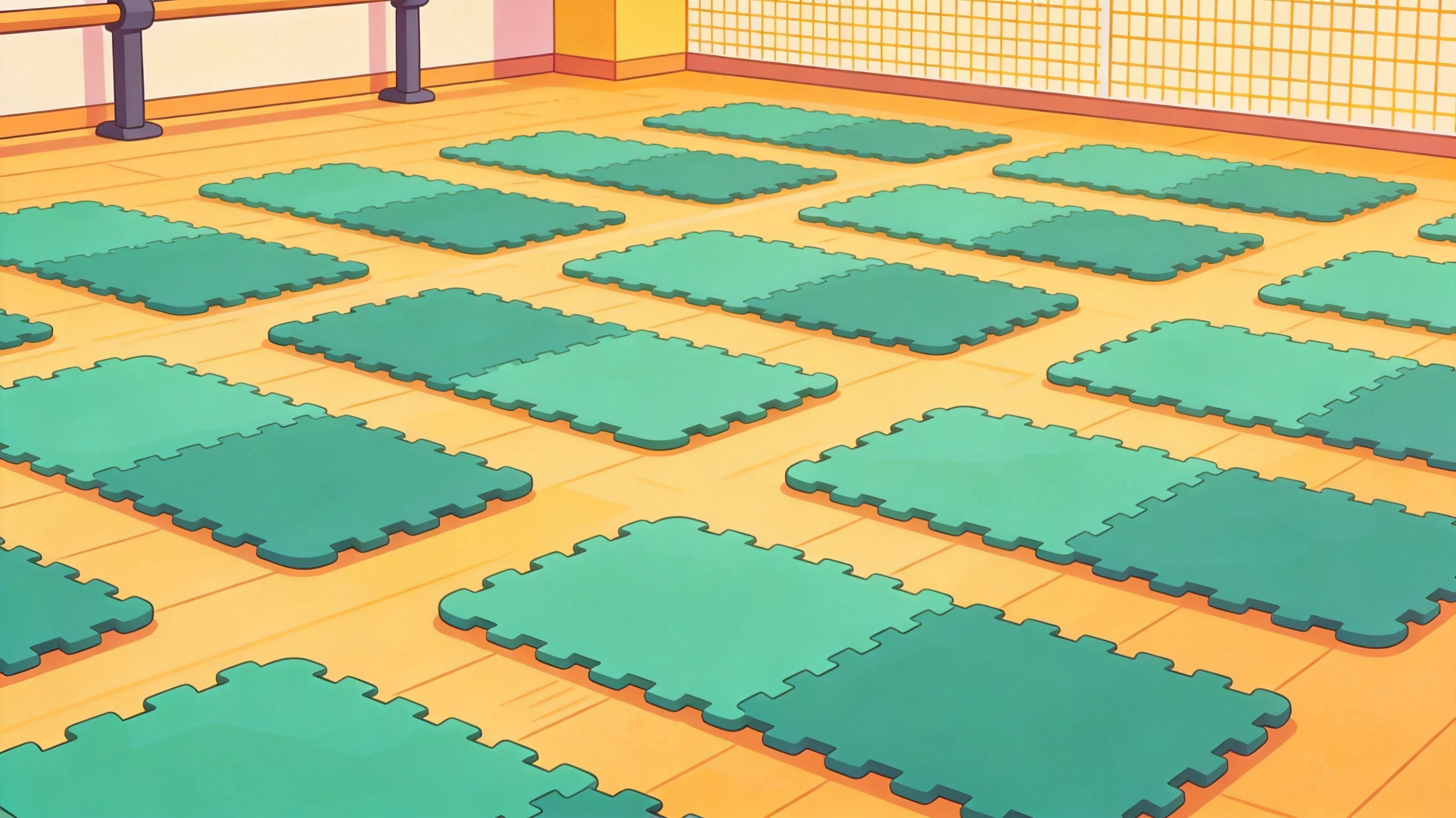
- Protection is zone-based. A yoga and stretching area needs far less cushion than a free-weight zone.
- 8mm to 3/8 inch suits most commercial areas; heavy lifting needs 1/2 inch or thicker.
- Daily care is mostly dry work — dust mopping and tacking remove the grit that scratches finishes.
- Replace damaged sections, not whole floors — interlocking mats and tiles make spot-fixes easy.
Why Floors Take Damage in a Busy Gym
A gym that is open daily puts its floor through more wear in a month than most homes see in years. The damage rarely comes from one dramatic incident. It comes from thousands of small ones: street shoes dragging silica and dirt across the surface, dumbbells rolled off racks, plate feet grinding in place, and the constant vibration of cardio machines transmitting straight into the slab.
If nothing sits between that abuse and your finish, the cost shows up later as scratches, dulled coating, cracks, or a subfloor that has to be patched and refinished. Protection is cheaper than the repair, and much simpler to plan.

Choosing a Protective Mat by Zone
Think of your floor as a set of zones, each with its own demand. Match the mat or floor thickness to what happens in that zone, and you will not over-buy in quiet areas or under-protect where feet and iron live.
- Yoga, Pilates and stretching: 1/4 to 5/16 inch is plenty — the work is low-impact and largely on the mat itself
- Mixed functional training and light weights: 8mm to 3/8 inch is the comfortable sweet spot most gyms choose
- Free weights and dumbbells: 3/8 inch protects against daily drops and scuffs on a rolling base
- Weightlifting, CrossFit and Olympic lifts: 1/2 inch or thicker, where dropped barbells and plates are expected
For most commercial spaces, 8mm to 3/8 inch covers the floor, with thicker material reserved for the zones that actually need it. That targeted approach keeps budget where it matters.

Daily Surface Care for High-Traffic Gyms
The best mat in the world will not matter if the floor under it is grinding with grit. Your daily routine does more for the finish than any single purchase.
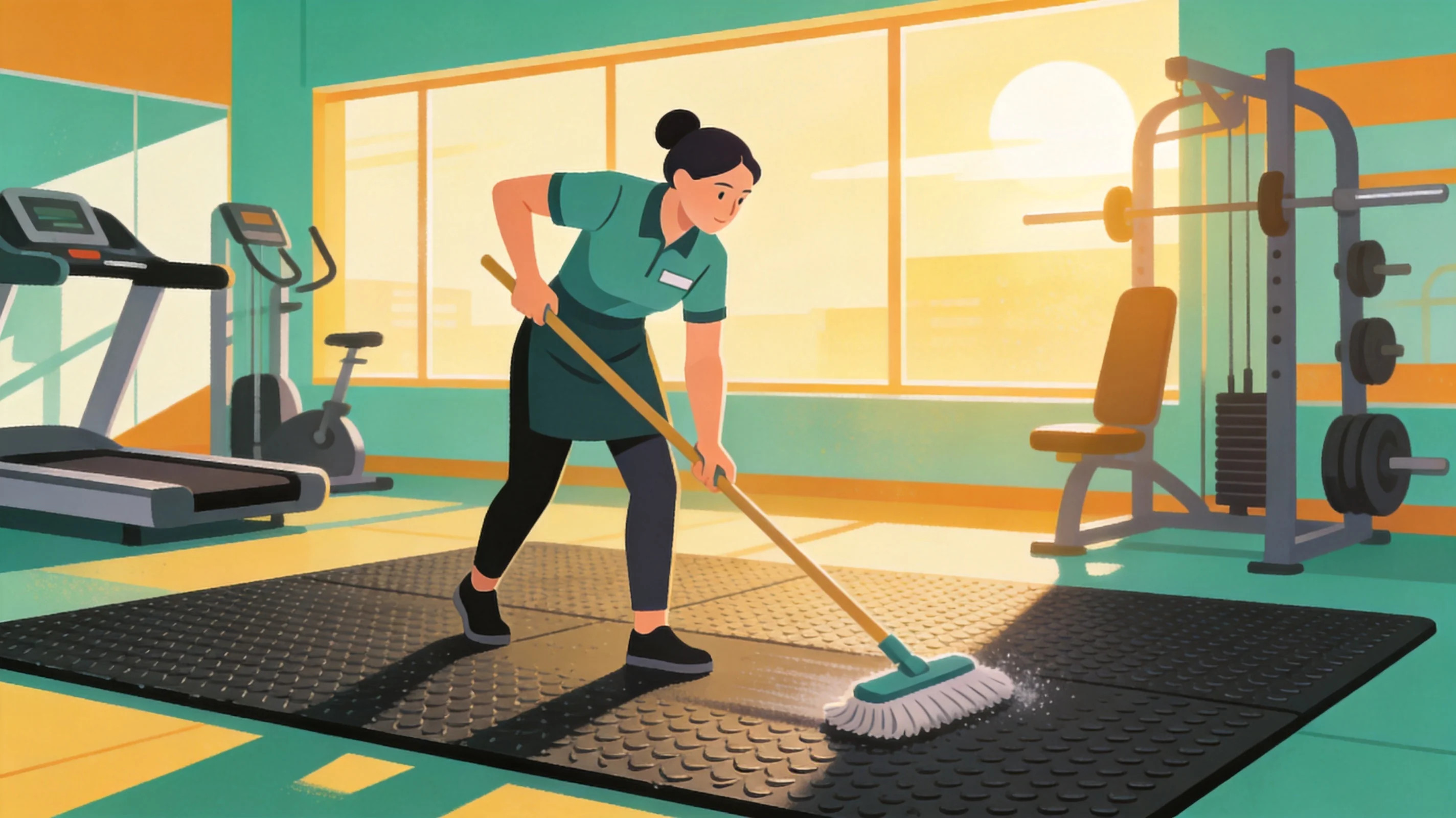
- Start with a dry care pass — dust mop or tack the floor daily to lift sand, silt and clay before they abrade the surface
- Keep street shoes off the mat area as much as possible; particle soil is the top enemy of a finish
- Spot-clean damp mat zones after sweaty or wet classes so moisture and odor do not settle
- Give mats a weekly thorough wipe — a neutral cleaner keeps both grip and appearance
- Inspect high-traffic mats monthly for frayed edges, softened corners and thin spots before they spread
This routine is inexpensive and unglamorous, but it is exactly what separates floors that last a decade from floors that need recoating every couple of years.
Repair and Replacement Reality Check
However good your protection plan, a mat or tile will eventually take a hit that does not bounce back. The good news: interlocking mats and tiles are designed for spot replacement. You lift one damaged section and drop in a fresh one without redoing the whole floor.
That is why choosing a format you can service matters as much as choosing the right thickness. Before you buy, confirm the supplier stocks the same product for reorders, and buy a couple of spares up front so a damaged corner never becomes a hole in your teaching area.
Replacing one tile now beats replacing the subfloor in five years — and the difference in both cost and downtime is dramatic.
Bottom line
Protecting a daily-open gym floor comes down to three habits: matching mat thickness to each zone, keeping the surface clean with a dry daily routine, and choosing mats you can spot-replace. Do those three things and your subfloor stays intact, your equipment stays stable, and your repair budget stays quiet.
Many owners also discover that consistent, well-maintained mats make a better base for custom-branded production runs down the line — when the time comes to standardize quality across a fleet of studios, a single durable spec is far easier to scale.