
Key Takeaways
- Count square footage first, mats second — the floor decides the order, not the reverse.
- A standard 6x4 mat covers 24 sq ft; a 6x10 covers 60; a 6x6 covers 36.
- Lock in realistic spacing — about 21.5 to 25 sq ft per person for a practice area, so people are not shoulder-to-shoulder.
- Add a 5 to 10 percent buffer for replacements and future patches.
- Interlocking tiles convert extra simply — divide the space by the coverage of each individual tile.
Start With Floor Square Footage
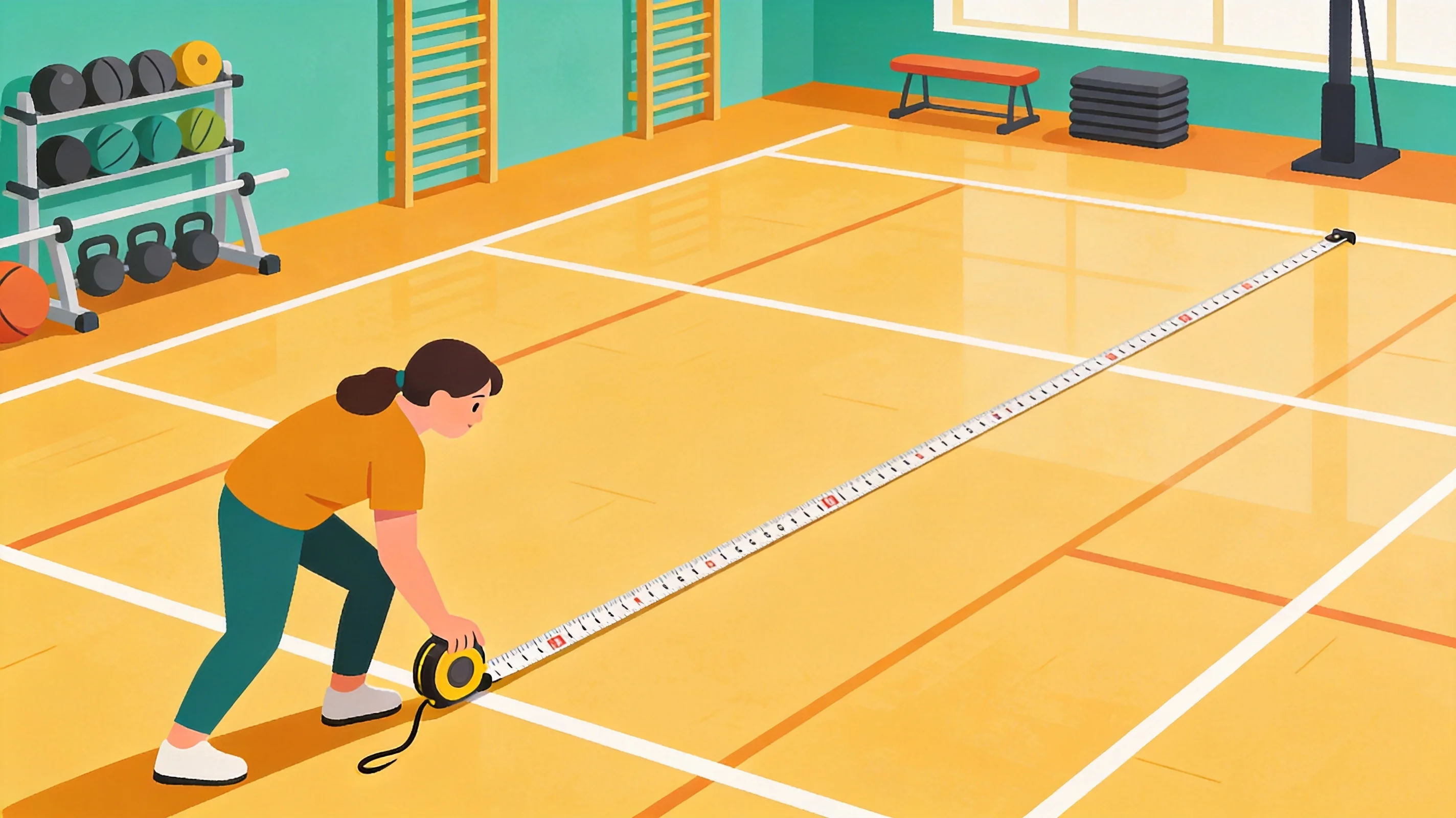
Every mat order starts the same way: with the floor. Measure the length and width of the training area and multiply them together. A room that is 30 feet long and 20 feet wide is 600 square feet.
Whether you are placing that number in square feet is what every subsequent calculation needs. Do not round to a tidy guess — measure the actual usable space, and subtract any columns, pillars or permanent fixtures that break up the floor.
That honest number is the base for every mat count from here on.
Convert Square Feet to Mats
Once you know the square footage, the conversion is a clean division. Pick the mat format, divide the floor area by the coverage of one mat, and round up.
The numbers you will use most:
- Standard 6x4 mat: 24 sq ft each
- 6x6 mat: 36 sq ft each
- 6x8 mat: 48 sq ft each
- Extra-large 6x10 mat: 60 sq ft each
A 2,400 sq ft training floor works out to 100 standard 6x4 mats. The same area needs only 40 of the larger 6x10 mats. Notice how the format changes the count — and the seams, and the money.
For continuous coverage rather than individual mats, interlocking tiles use the same logic. A 37x37 inch tile delivers roughly 9.5 sq ft, and formats in the 2 to 2.5 sq ft range are common for smaller tiles. Divide your space by the per-tile coverage and round up to the nearest case.
Size Templates and Zone Math
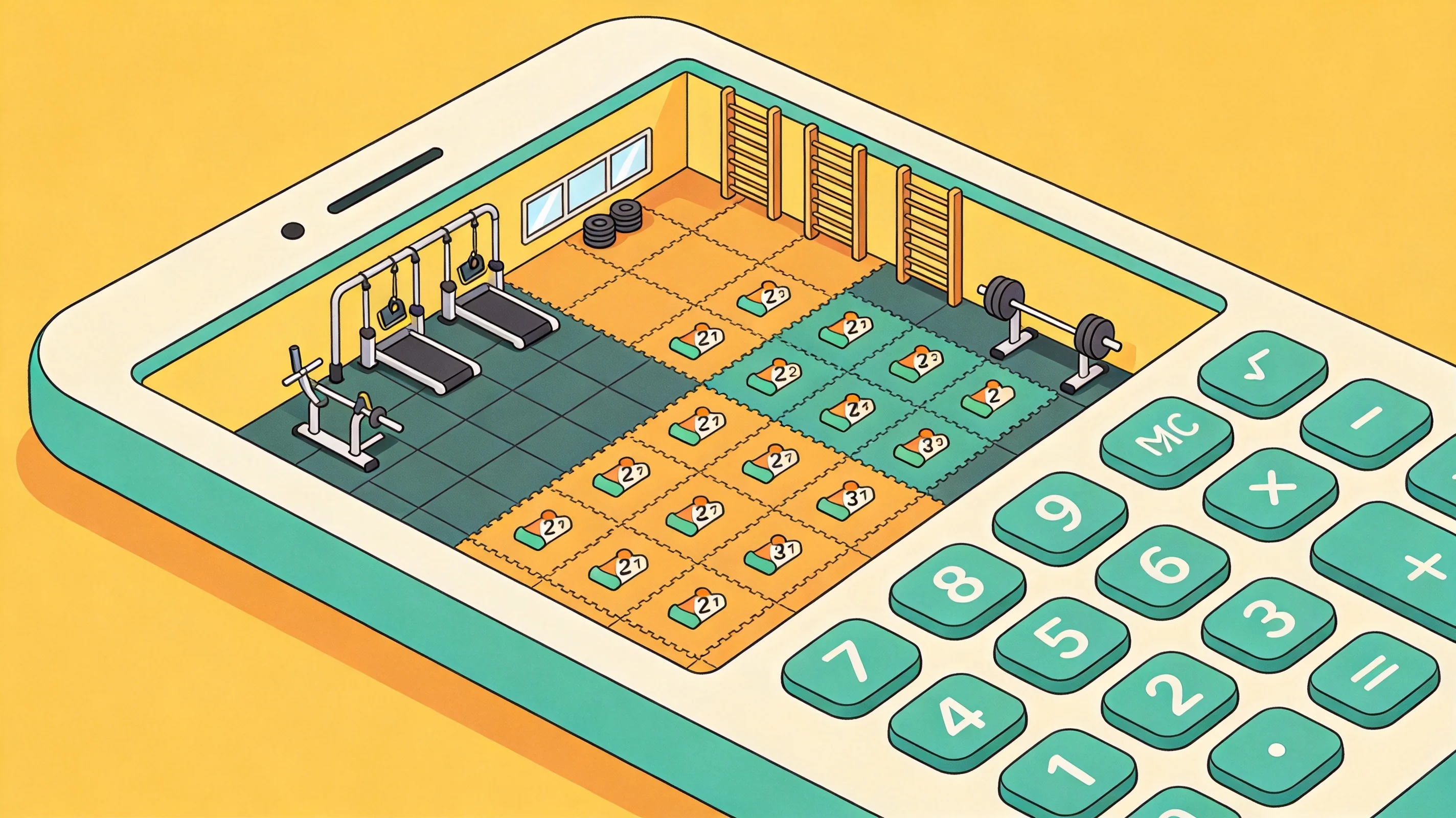
Few gyms are one flat surface. Map your floor into zones and size each one separately, then combine the totals:
- Practice and class zone: about 21.5 to 25 sq ft per person once you add arm-swing and movement buffer
- Strength area: a larger continuous mat under racks and dumbbells, sized to the equipment footprint
- Equipment pads: individual mats sized to the machine's base
- Mobility and stretching strip: lighter mats where impact is low
A practice zone for 20 people at 24 sq ft per person needs roughly 480 sq ft of matted surface. Layer in the strength and equipment zones and you have a full floor plan, not just a guess.
The tidy part of this approach: each zone converts with the same division, so you can build the whole order slide by slide on a clear spreadsheet.
Add the Practical Buffer
Every gym eventually needs a replacement. A mat gets split by a dropped weight, a tile corner chips, or a busy zone wears through faster than the rest. If you are ordering once, order a little extra.
A 5 to 10 percent buffer on top of your calculated total covers replacements and lets you patch a damaged section without waiting weeks for a restock. For a 100-mat floor, that is 5 to 10 spare mats — cheap insurance compared with the downtime of a gap in your teaching area.
Bottom line
You do not need to be a math person to order the right number of mats. Measure the floor, apply the per-format coverage, split the space into zones, add a buffer and round up. That five-minute calculation turns a nervous estimate into a confident, exact order.
And once you settle on a consistent spec that works across your floor, custom mat production becomes a practical option — the same count converts directly into a repeatable manufacturing run.