
Key Takeaways
- High-density foam (TPE/EVA) tends to be lighter, eco-friendlier and sweat-resistant; PVC is cheaper and very durable.
- PVC mats are slick and durable but heavier, and they're made with plasticizers you may want to avoid.
- TPE foam keeps its non-slip grip even when wet and is recyclable in many regions.
- For sweaty, hot or eco-conscious practice, TPE high-density foam wins; for budget and durability, PVC holds its own.
- Consider texture, weight and recycling alongside the bare specs.
What we're comparing
These are the two materials you'll see most often underfoot. PVC (polyvinyl chloride) is the classic budget mat. High-density foam here means TPE (thermoplastic elastomer) or EVA — modern foams that blend the bounce of rubber with the lightness of plastic.
Let's see how they line up.
Performance: comfort and grip
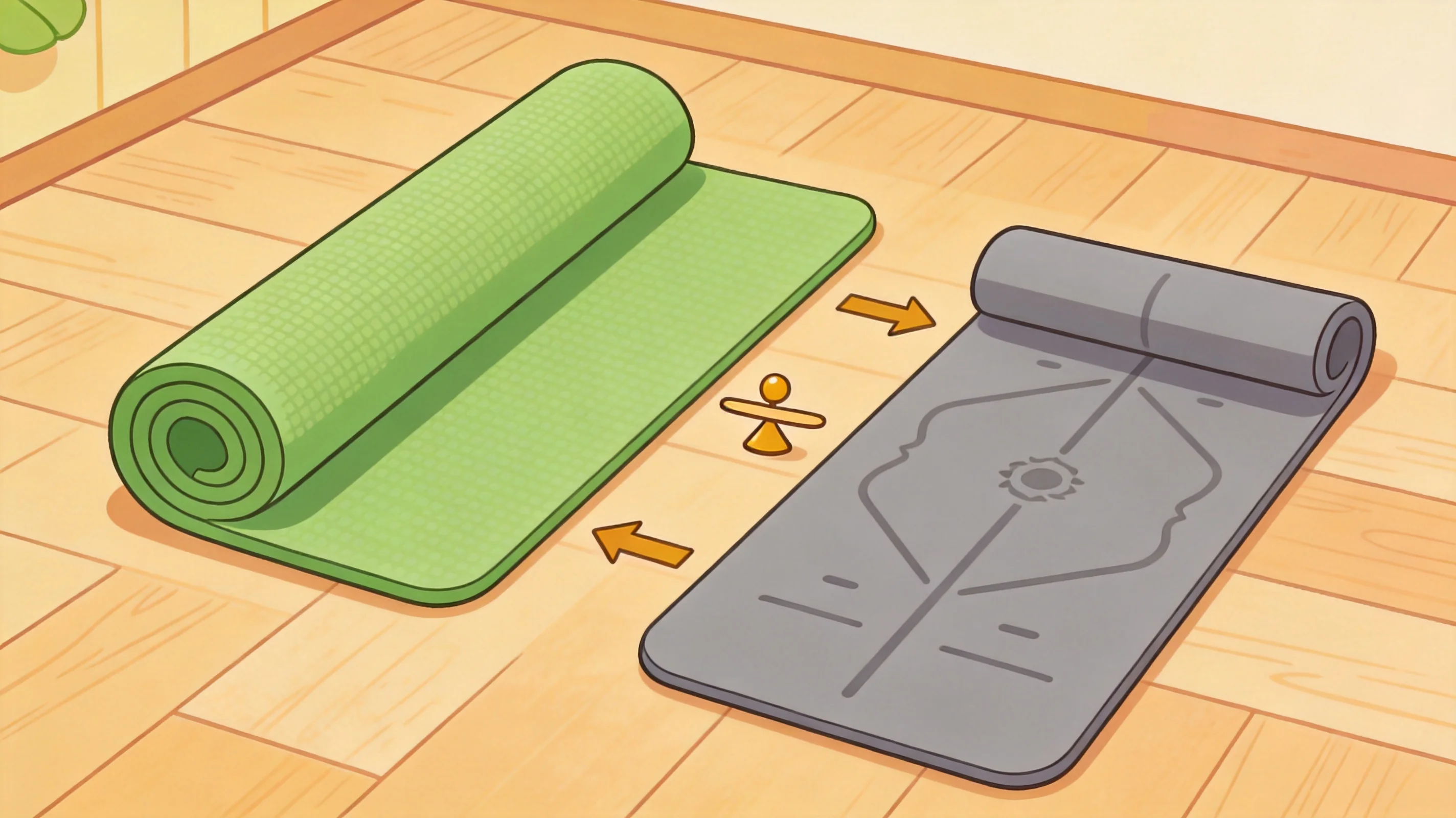
High-density foam (TPE): The elastomeric structure gives great shock absorption while staying stable — a real cushion-firmness balance. Crucially, TPE keeps its non-slip grip even when sweaty, which matters in hot and dynamic practice.
PVC: Durable and sticky when dry, but it can turn slippery with sweat. It's inexpensive and easy to wipe clean, though some PVC mats are very soft and compress a lot.
If you sweat, TPE foam is the grip winner.
Durability and weight
PVC is tough and can take years of heavy use without wearing out. It's also dense, so PVC mats are usually the heavier ones to carry.
High-density foam (TPE/EVA) is noticeably lighter and easier to roll and travel with. TPE is durable but generally not quite as bulletproof as PVC over a very long lifespan — though high-density foam still lasts well with normal care.
Environmental impact
This is where the gap gets wide.
- PVC is made with plasticizers (including phthalates in many products), is difficult to recycle, and some materials release concerns over time. If you care about non-toxic materials, PVC is the weak point.
- High-density foam (TPE/EVA) is typically free of PVC, heavy metals and phthalates, and often recyclable where facilities exist. Many TPE mats are marketed as eco-friendlier and non-toxic.
For an eco-conscious choice, high-density foam is clearly ahead.
Which should you choose?
Match the material to your priorities:
- Sweaty or hot practice → high-density foam (TPE) for wet grip.
- Eco-friendly and non-toxic → TPE or EVA foam.
- Budget mat for beginners → PVC is affordable and durable.
- Travel → lightweight TPE foam rolls small and carries easy.
- Long, heavy home use → PVC's toughness can pay off.
Bottom line
High-density foam and PVC both make perfectly usable mats, but they suit different people. If you want a lighter, sweat-proof, eco-friendlier mat, high-density foam (TPE) is the better material. If budget, price and raw durability are your priorities and you don't mind a heavier roll, PVC still does the job.
Either way, choose a mat that fits how you actually practice.
The best material isn't the one true winner — it's the one that matches your practice, your budget and your values.