
Key Takeaways
- Decide your activities first — bodyweight, yoga and heavy lifting need very different flooring.
- A large roll-out mat is the simplest option and works for bodyweight, yoga and light equipment.
- Interlocking tiles are better when you need to permanently cover an odd-shaped or larger room.
- Thickness follows the weight you lift: light workouts need less, heavy drops need much more.
- High-density foam suits comfort and bodyweight; rubber suits heavy iron.
Start with your workouts
Before you pick any flooring, ask what you'll actually do on it. A mat you'll stretch on, a spot you'll drop weights on, and a corner for yoga all call for different setups. Match the floor to your training, and every later decision gets easier.
Option 1: A large mat as flooring
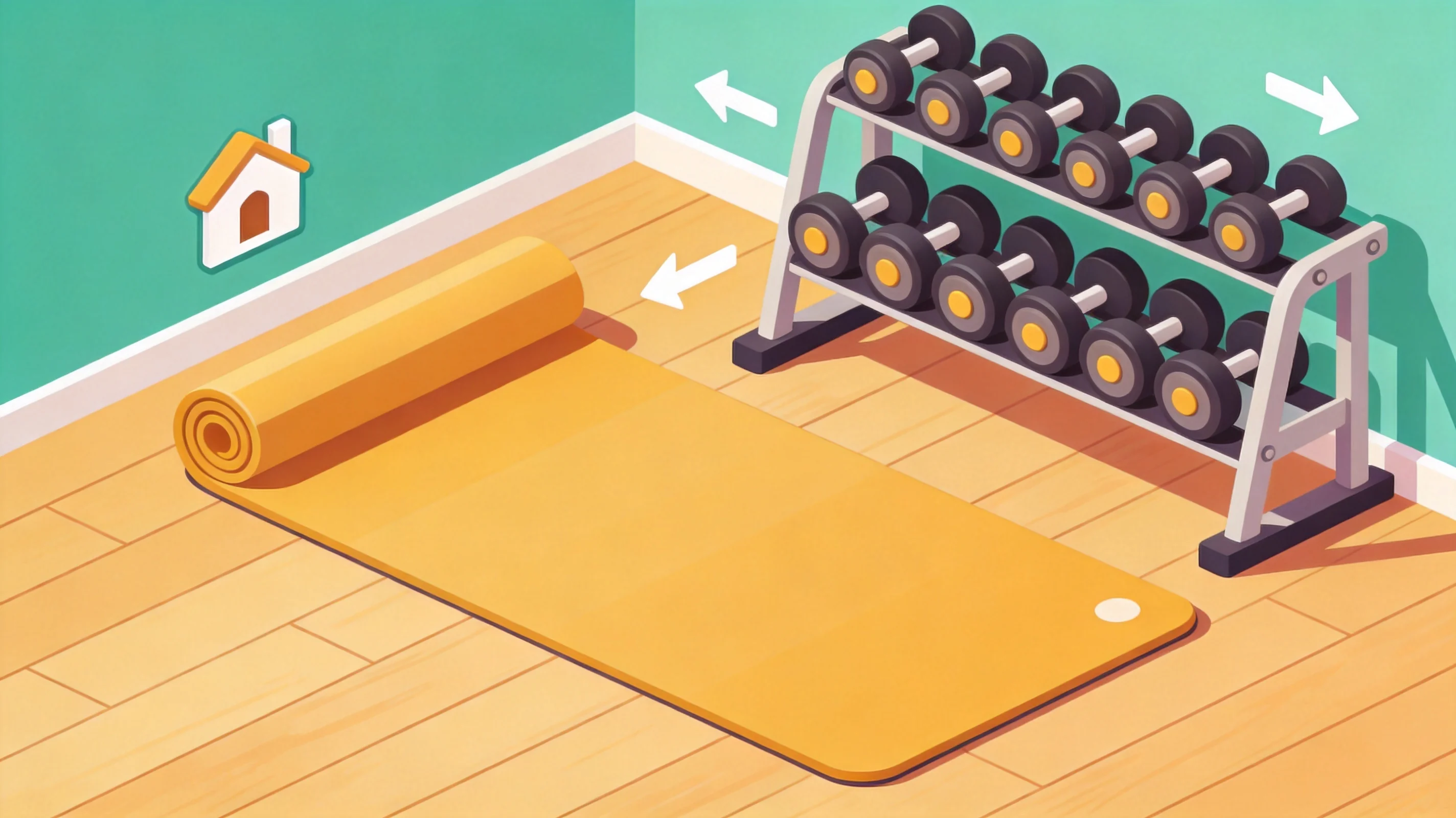
For most home workouts, a large, high-density mat is the simplest answer. Unroll it where you train, use it, roll it back up. It works for bodyweight, yoga, stretching and light equipment, and it protects the floor beneath.
Pros: Easy setup, portable, comfortable under joints.
Cons: Not ideal for very heavy dropped weights; doesn't give the solid, total-room coverage of tile.
If your workouts are mostly floor-based and joint-friendly, a big dense mat is usually plenty.
Option 2: Interlocking tiles
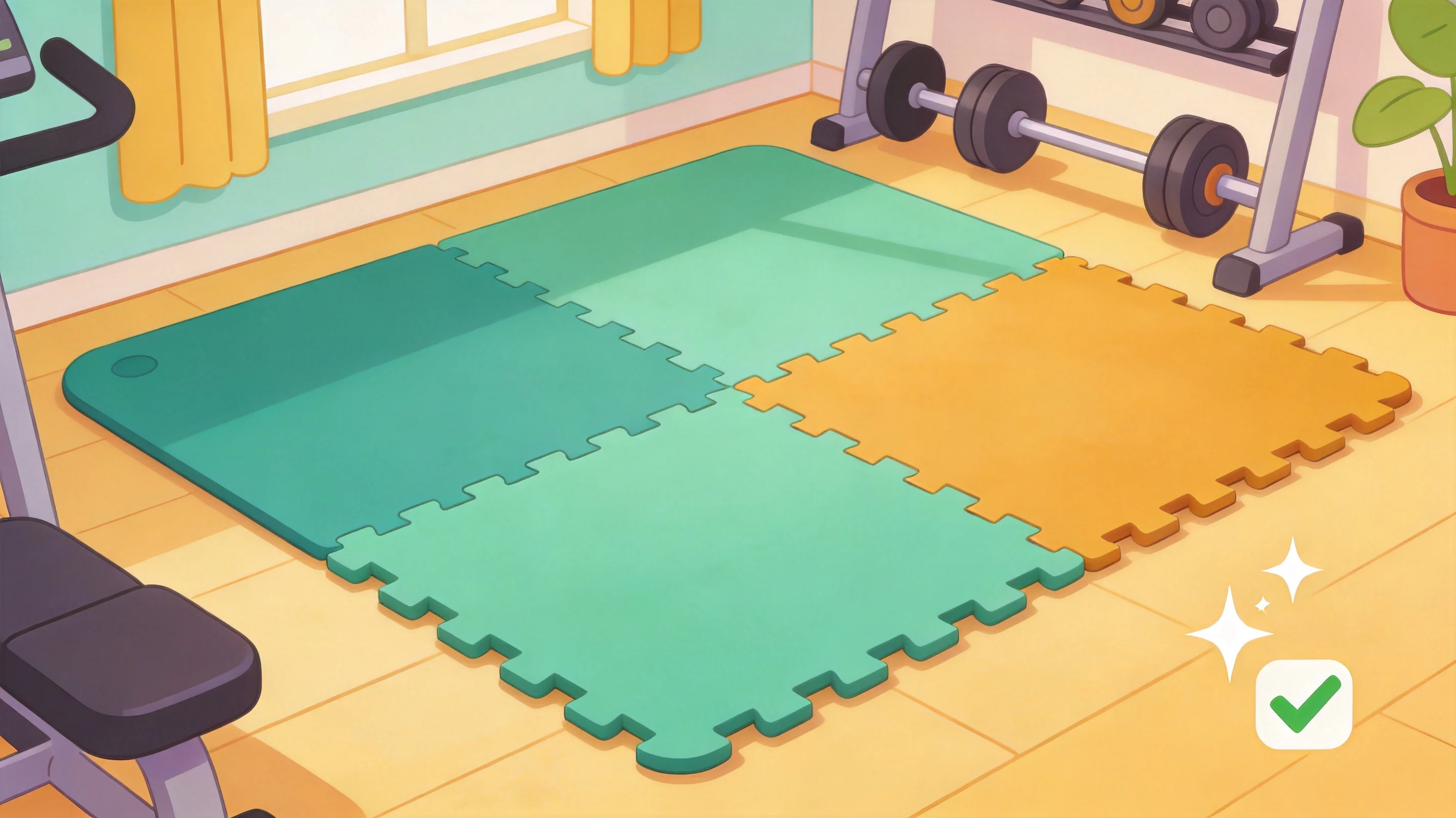
Interlocking tiles are the go-to for unshaped or larger rooms. They snap together without glue or tools, cover exactly the area you want, and can be configured around racks and equipment.
Pros: Great coverage, DIY install, flexible to room shape, easy to replace a single tile.
Cons: Seams to keep clean, can take more setup, smaller pieces for a big area.
For a dedicated home gym floor, tiles win on coverage and permanence.
Thickness by activity
Match thickness to what you do:
- Bodyweight, yoga, stretching: around 8-12mm of high-density foam is comfortable and joint-friendly.
- Light equipment (kettlebells, dumbbells, bikes): 1/4 to 3/8 inch rubber protects the floor from machinery.
- Dumbbells and moderate free weights: around 1/2 inch rubber gives solid protection.
- Olympic lifting and dropped weights: 3/4 inch or thicker is considered the safe minimum.
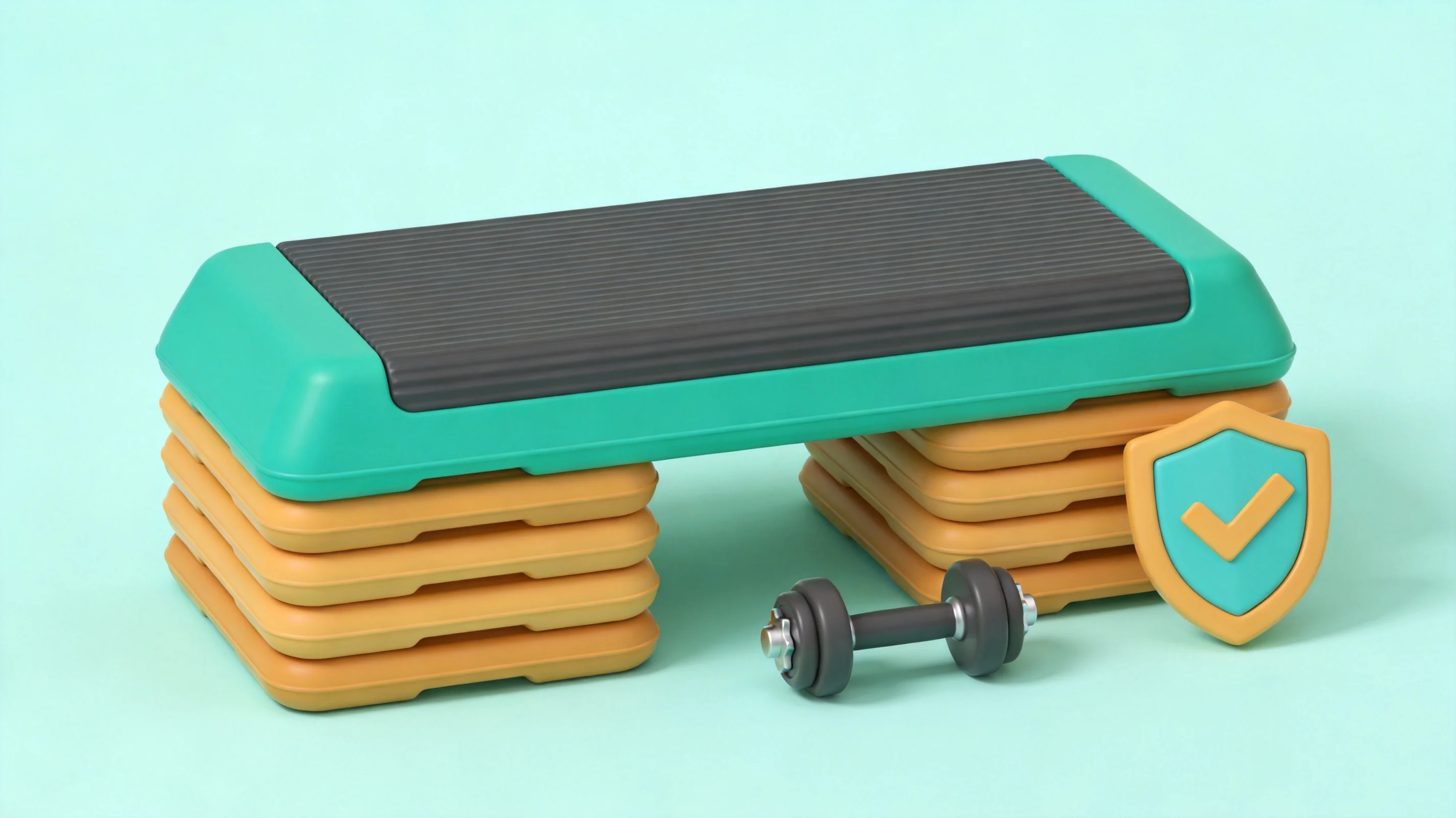
The general rule: the heavier the (potential) drop, the thicker the floor.
Material: foam vs rubber
- High-density foam feels softer under your body and quiets bodyweight movements — great for yoga, floor work and comfort.
- Rubber is unmatched for durability and shock absorption under heavy weights. It's denser and heavier, but it can also reduce vibration and noise from equipment.
Many home gyms use both — foam where your body works, rubber where your iron lands.
Common mistakes to avoid
- Not covering enough — leave a mat margin around your workout so straps and feet stay on the floor.
- Ignoring seams — keep tile seams clean and seated to avoid trip hazards and dust.
- Skipping under-equipment flooring — machines and racks can damage a subfloor without a mat underneath.
- Choosing the wrong thickness — too thin under heavy drops can still mark your floor.
Bottom line
Set up your home gym floor around your workouts first. Bodyweight and yoga are happy on a comfortable high-density mat; heavy lifting wants thicker rubber. For a room that doubles as a gym, interlocking tiles give clean, full coverage. Match the floor to your training, and you'll protect your floor, your joints and your hearing.
Start with your workouts, then pick the floor — everything else follows.