

Key Takeaways
- In hot yoga, wet grip is the number one buying criterion — everything else is secondary.
- Material decides grip when soaked: natural rubber and open-cell PU stay tacky as you sweat; smooth closed-cell PVC is the weakest performer.
- 6–8 mm of dense cushioning protects knees without destabilizing balance poses.
- For home practice, a larger mat gives you towel space and transition room that standard studio mats lack.
- Easy cleaning matters: hot-yoga mats need frequent washing, so pick a surface that handles it.
What hot yoga demands from a mat
Hot rooms change the physics of your practice. Studio temperatures run 95–105°F with humidity to match, and an average class produces enough sweat to pool on your mat's surface. A mat that grips perfectly in a dry living room can fail completely by minute twenty.
So a hot-yoga purchase comes down to four questions: does the surface grip when wet, is there enough cushioning for floor work, is the mat big enough for your practice style, and can you clean it easily between classes? Get those right and everything else is preference.
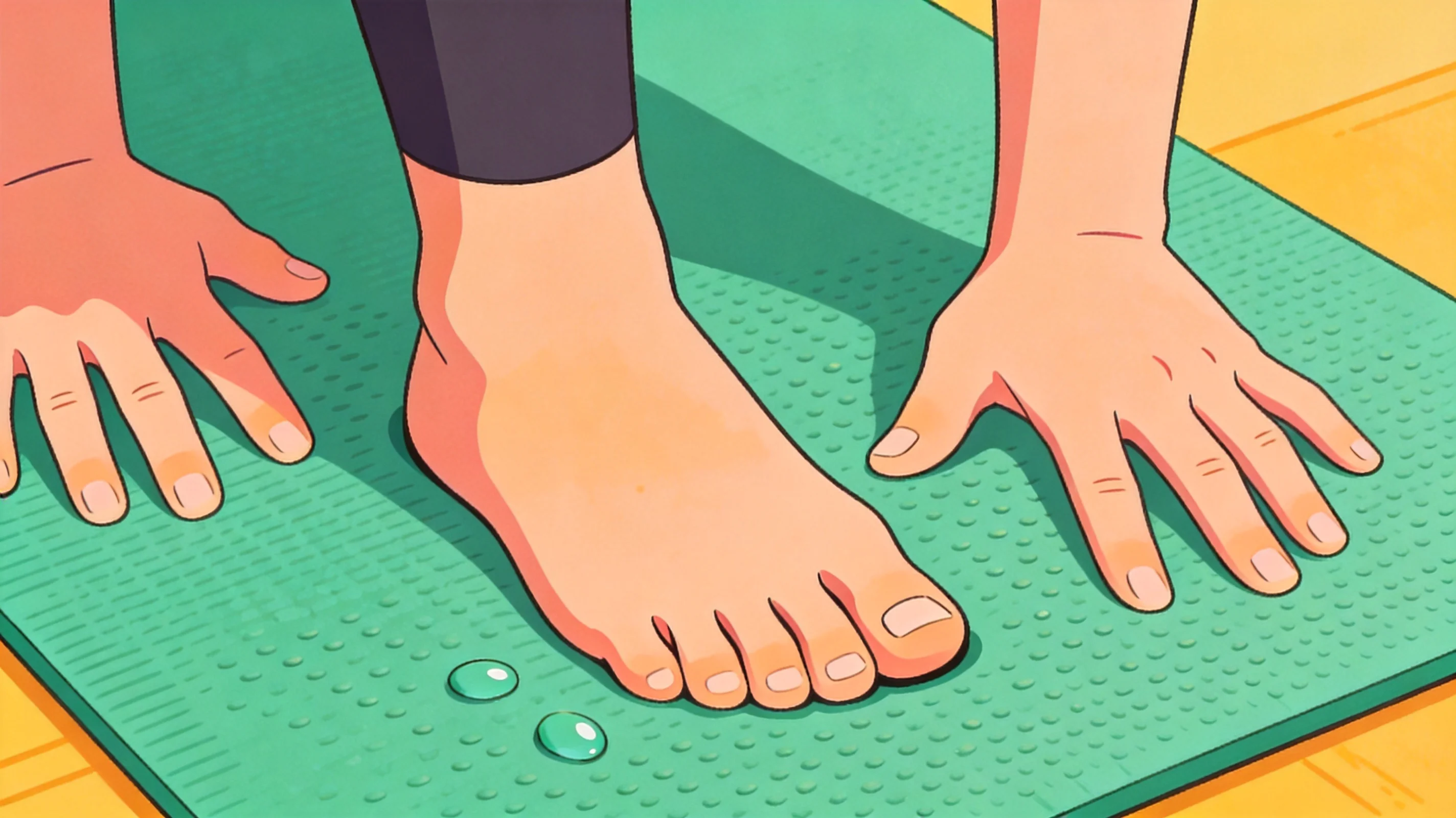
Material comparison: which surfaces grip when soaked
This is where most buying guides lose you in jargon, so here is the plain version:
| Surface | Wet grip | Feel | Care |
|---|---|---|---|
| Natural rubber | Excellent — gets tackier as you sweat | Firm, grounded | Needs drying |
| Open-cell PU top | Excellent — wicks sweat into the layer | Smooth, skin-like | Showers well |
| Cork | Very good — traction improves damp | Firm, slightly rigid | Low maintenance |
| Textured TPE | Good — pattern channels moisture | Soft, light | Quick rinse |
| Smooth PVC | Poor — slick film forms fast | Plush at first | Easy wipe |
Reviewers who test mats in real heated classrooms consistently land on the same conclusion: absorbent or moisture-activated surfaces beat sealed ones. OutdoorGearLab's testers dumped water on mats to simulate heavy sweating and found only the porous-top designs stayed secure. If your current mat is smooth PVC and you slide despite decent technique, the material is the problem — no amount of wrist effort fixes a surface with nothing to hold.
Thickness and comfort in a hot room
Heat makes bodies ambitious: deeper lunges, longer holds, more time on knees and forearms. But too much padding works against you in standing balance poses, because soft foam lets your edges sink and wobble.
The sweet spot for most hot practitioners is 6–8 mm of high-density foam. That is enough compression resistance to keep kneelers happy through floor sequences, while staying firm underfoot for single-leg work. Ultra-plush 12–15 mm mats feel luxurious in the store and then undermine every tree pose in the room.
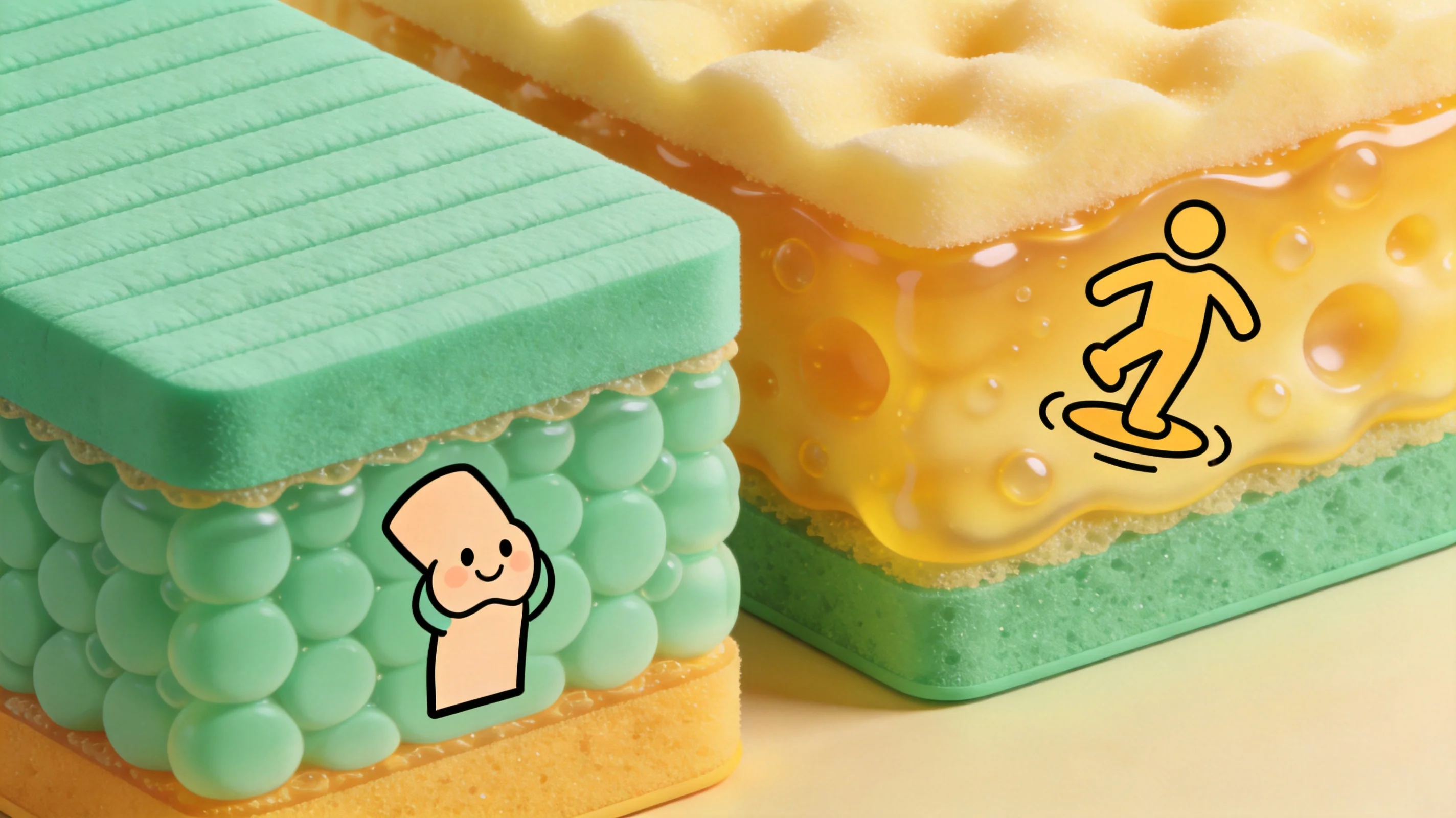
Size, cleaning and practicality checklist
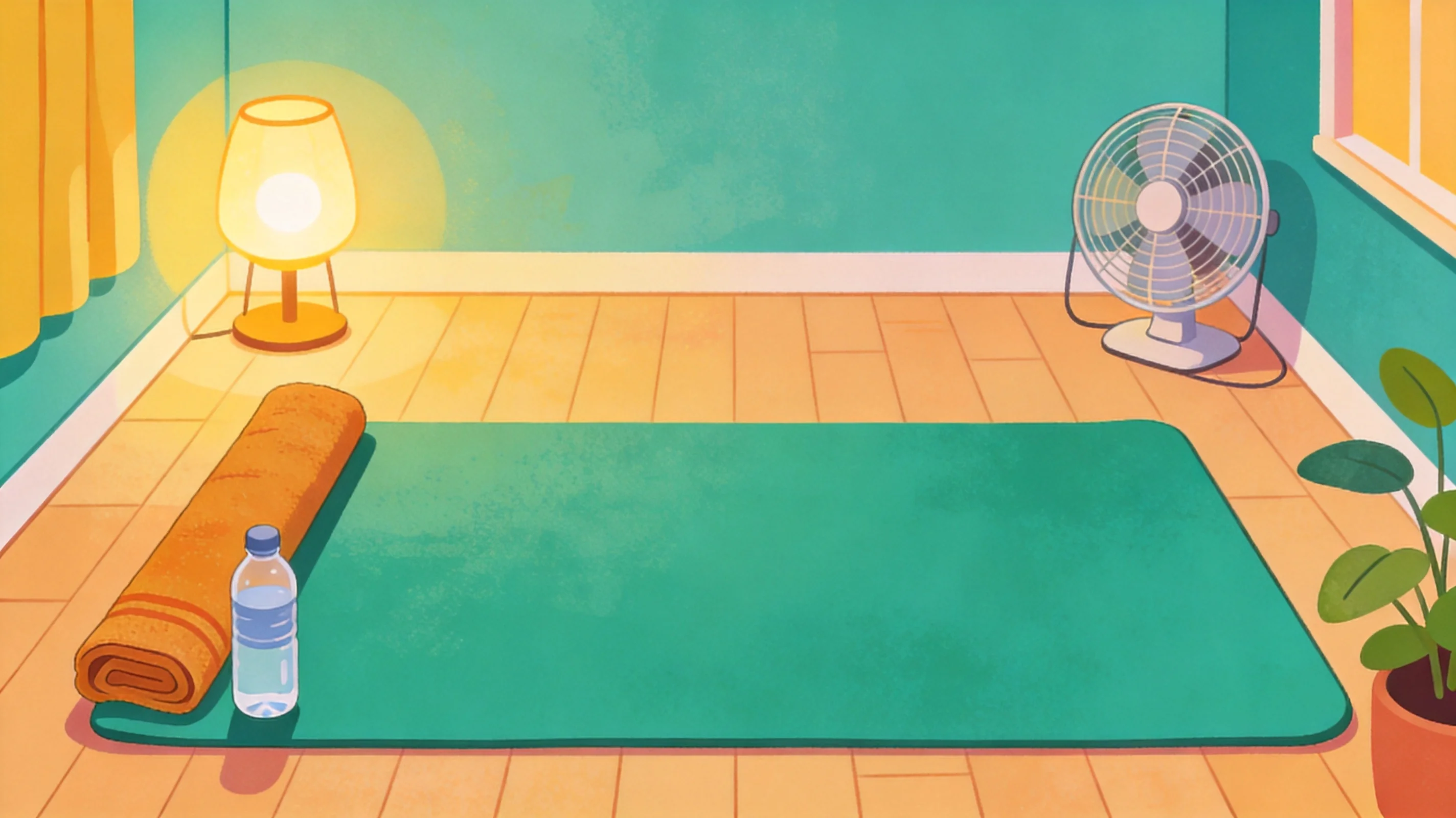
Studio mats are standardized around 24 x 68 inches because studios stack hundreds of them. At home, you set the rules. Practicing in a heated room means flowing wider, dropping a towel beside you, and moving through transitions without landing off the edge — all arguments for going bigger than a studio slab.
Before you buy, run this checklist:
- Wet-grip surface or a plan for one (towel layered on top).
- Dense, not squishy, cushioning in the 6–8 mm range.
- Extra length and width if you flow, stretch or use props.
- Closed-cell or easy-rinse surface you can actually sanitize after sweaty sessions.
- Non-slip underside — humid floors are slick floors.
Our picks for hot yoga
For home hot-yoga practice, we like oversized formats that give the sweat-management tactics room to work. The GXMMAT Large Yoga Mat 6'x6' turns a corner of any room into a full practice zone: its dense 7 mm base cushions knee work while staying stable for balances, the grippy surface pairs perfectly with a moisture-wicking towel laid across the top, and the odor-resistant material shrugs off the frequent wash-downs a hot practice demands.
If you share the space with a partner or simply want generous margins for long-limbed flows, the GXMMAT Large Yoga Mat 6'x8' adds two full feet of length. That is enough room for a towel strip, a water bottle and every wandering handstand — so the only thing sliding across your floor is your schedule.
Bottom line
Buy for wet grip first, dense cushioning second, and size third. Rubber and PU surfaces earn their premium in a heated room, while smooth PVC earns returns. At home, a large easy-clean mat with a towel on top recreates the best studio setups — and leaves every other mat in the closet looking like a beach towel.