
Key Takeaways
- Most mats serve one to three years of steady practice; premium dense builds push toward and past the top of that range.
- Material sets the ceiling: PVC lasts long but ages ugly; TPE wears fastest; natural rubber and dense composites endure; cork resists odor indefinitely but depends on its base.
- The big lifespan killers are environmental: UV light, trapped moisture, heat and harsh cleaning.
- Replace on performance, not age — flaking, permanent dents, lost grip or surviving smell mean done.
- Two habits — drying before storage and shade storage — add more mat-years than any product trick.
No expiry date on the label
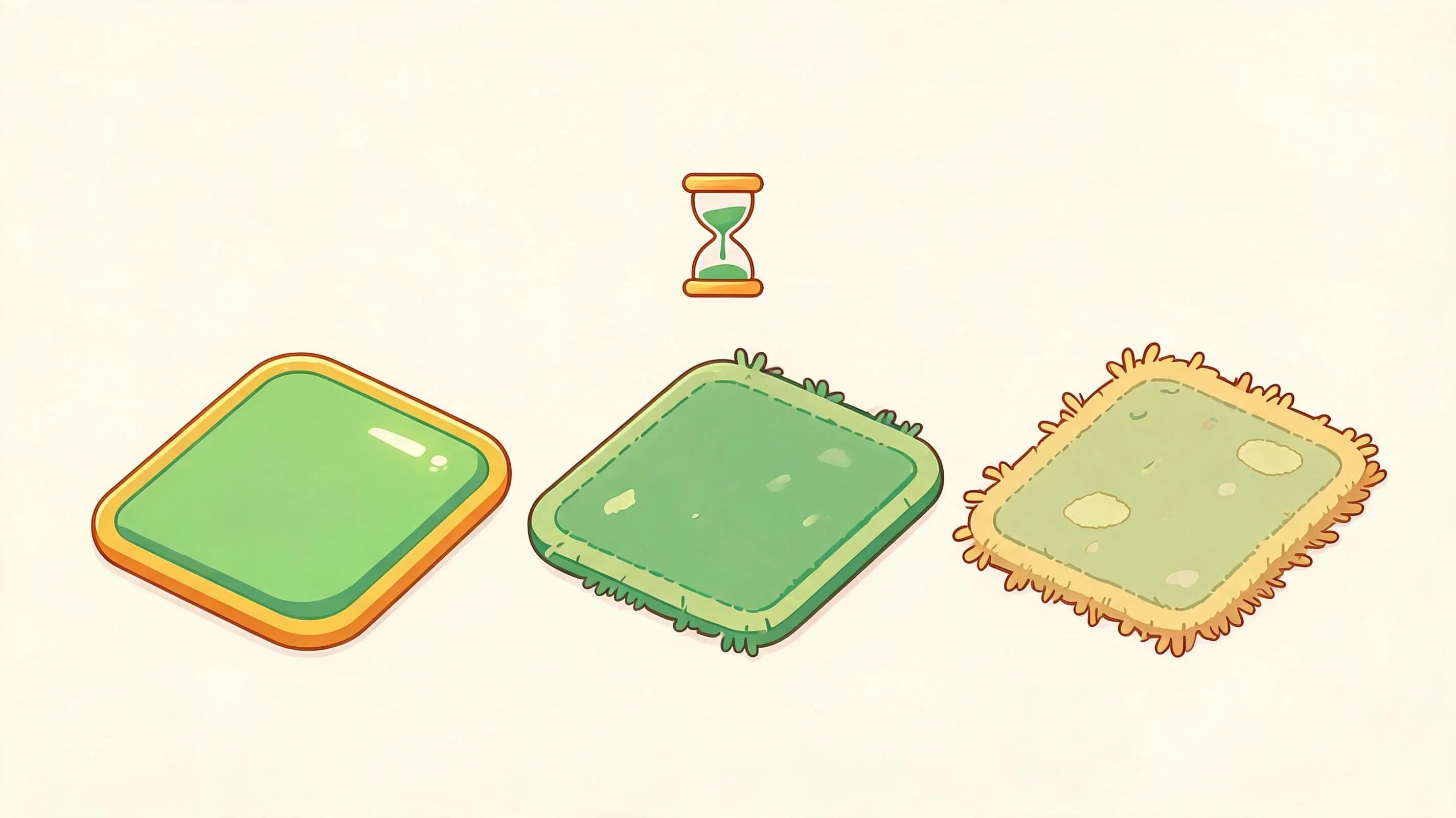
Mats fail gradually, so nobody announces the end. Industry and retailer guidance converges on a broad answer: with regular practice, expect roughly one to three years from an average mat, with well-built dense materials reaching further — Kati Kaia's lifespan overview puts premium mats at the far end of that scale and beyond.
But material is only the starting point. How you treat the mat decides which end of the range it lands on.
Lifespan by material
| Material | Typical lifespan | Notes |
|---|---|---|
| PVC | 2-4+ years | Chemically durable; surface can harden and slicken with age |
| TPE | 1-2 years | Lightest build; edges and compression points go first |
| Natural rubber | 2-5 years | Dense and grippy; hates sun and heat |
| Cork-top | 3-5 years | Cork itself outlasts the base it's bonded to |
Two patterns worth noticing. First, density correlates with longevity — high-density foams resist the compression set that kills soft ones. Second, the eco-friendly picks (rubber, cork) are also the durable ones; sustainability and lifespan overlap almost perfectly.
What shortens a mat's life
Four quiet killers explain most early retirements:
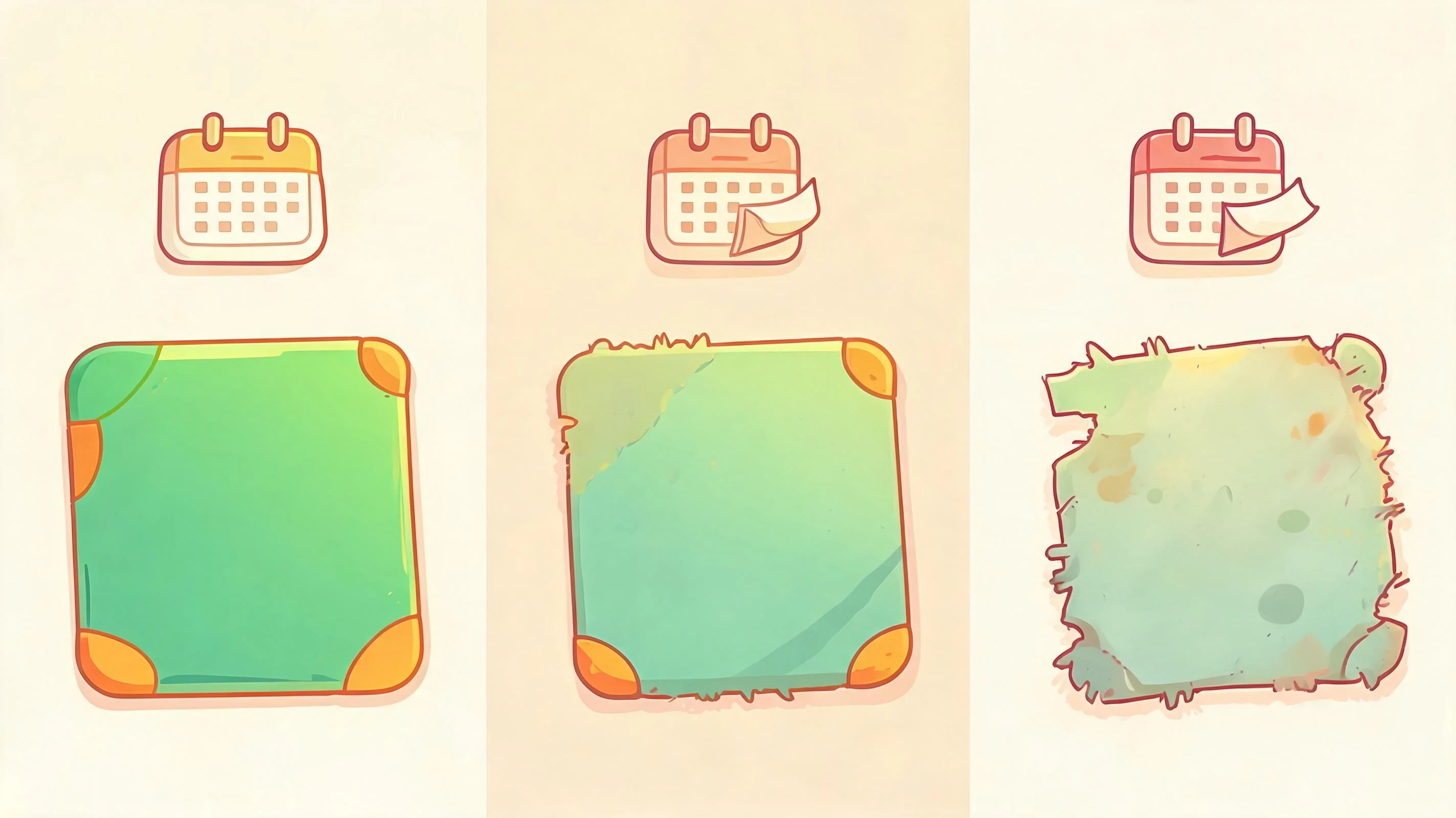
- Sunlight. UV breaks down foam polymers and fades rubber. A mat living on a sunny windowsill ages dog-years.
- Trapped moisture. Rolling up damp after hot sessions breeds bacteria that eat surfaces from inside and lock in smell.
- Heat. Hot cars and radiators warp and soften foams permanently.
- Cleaning abuse. Bleach, alcohol sprays and washing machines strip surface texture — the exact thing you bought the mat for.
The wear signals that matter
Ignore the calendar; inspect the mat:
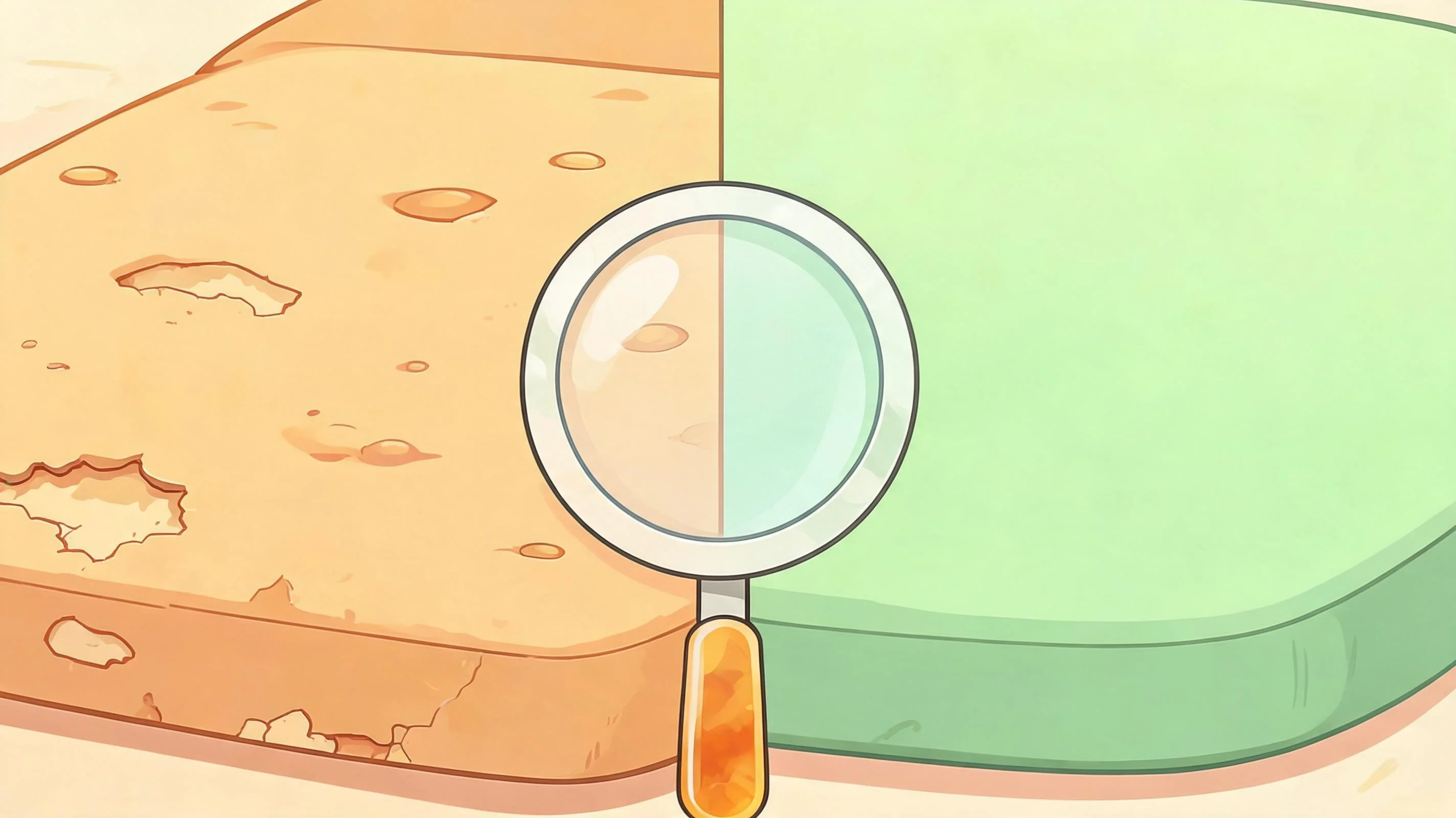
- Flaking, crumbling or shedding bits onto clothes and floor.
- Compression set — dents at knee and hand positions that never rebound.
- Lost grip — hands slide in down dog even when the mat is clean and dry.
- Persistent odor that survives a proper deep clean.
- Peeling layers or delamination on bonded constructions.
Any one of these means performance is already compromised — Hugger Mugger's longevity guide calls this replacing on function rather than age, which is exactly right.
Extending the years
Care compounds. In order of impact:
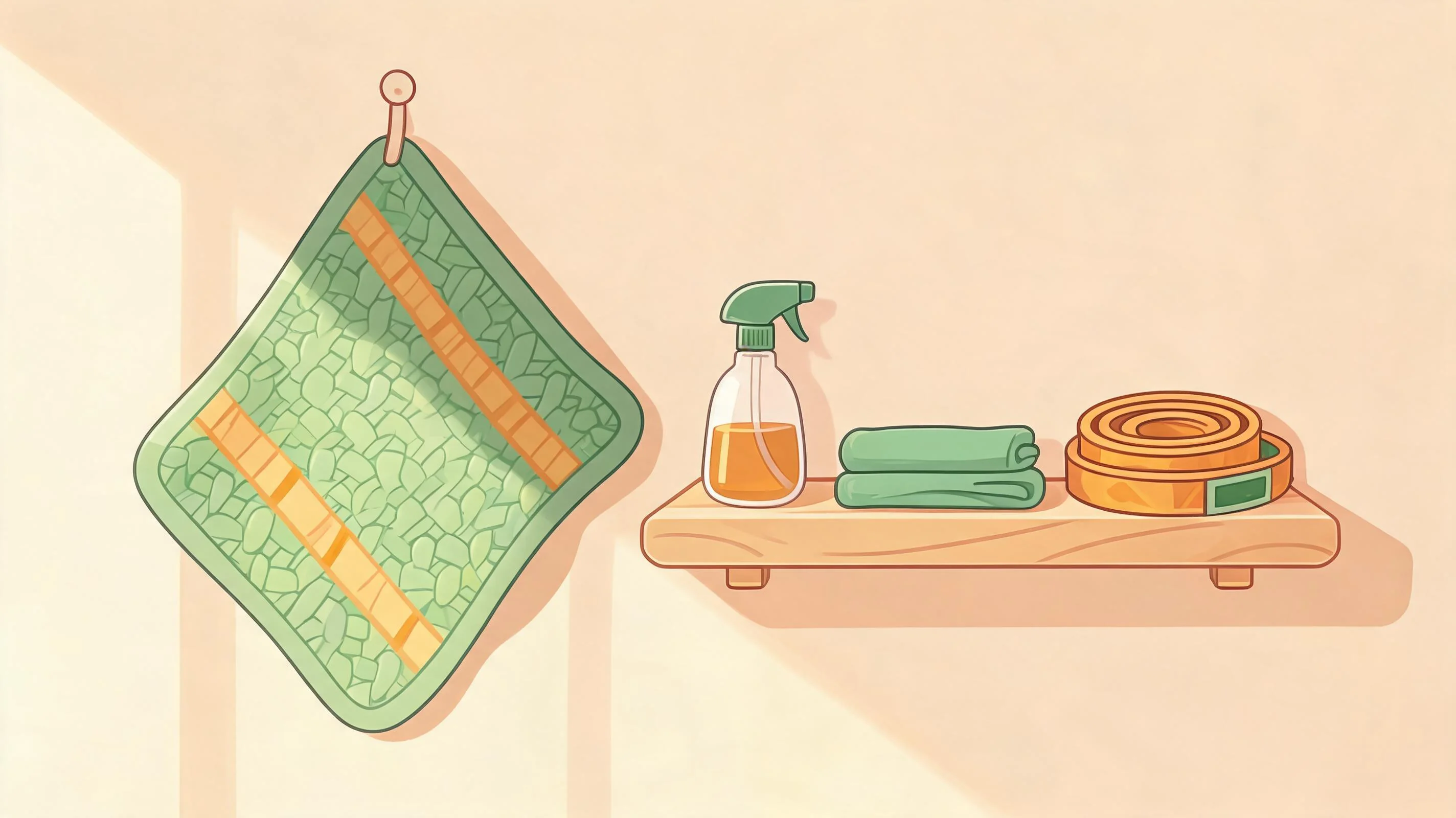
- Dry fully before storing — the single biggest lifespan lever.
- Store shaded and cool, rolled loosely practice-side-out or flat.
- Wipe after sweat, deep clean monthly with mild soap or diluted vinegar — nothing harsher.
- Rotate wear zones — vary where you place knees and hands across the mat's area.
- Start dense. Build quality is chosen once at purchase and pays out every year after — a thick high-density base like the GXMMAT Large Yoga Mat 6'x6' resists compression set that retires thinner mats within two winters, while joint-heavy practices get even more margin from a 9 mm build like the GXMMAT Extra Thick Large Yoga Mat 7'x5'x9mm.
Bottom line
Expect one to three years from ordinary builds and more from dense ones — then judge by evidence, not dates. Flaking, flat spots, slipperiness or immortal smell are the real clock. Keep the mat dry, shaded and gently cleaned, and start with density on your side; the difference between a mat that retires in eighteen months and one serving five-plus years is mostly decisions made in the first week of ownership.