
Key Takeaways
- The honest answer has three tiers: wipe after every sweaty session, a fuller clean about weekly with regular use, deep clean monthly.
- Sweat is the trigger, not the calendar — a gentle session on dry skin needs far less than hot yoga.
- Shared and studio mats need more than solo home mats; your own mat used only by you is the low end of every range.
- Over-cleaning is real damage: bleach, alcohol-heavy sprays and machine washing strip grip texture and crack foam.
- Mild soap or diluted vinegar plus full air-drying covers virtually every situation.
Two ways to ruin a mat
Most advice covers only one failure mode. Yes, an never-washed mat accumulates sweat salts, skin oils and whatever the floor contributed — a warm, damp buffet for bacteria. But the opposite error gets less press: aggressive, too-frequent cleaning with harsh products erodes surface texture faster than years of practice would. REI's care guidance draws exactly this line: regular gentle maintenance beats both neglect and bleach enthusiasm.
The question isn't really how often — it's what intensity matches which situation.
What's actually living on there
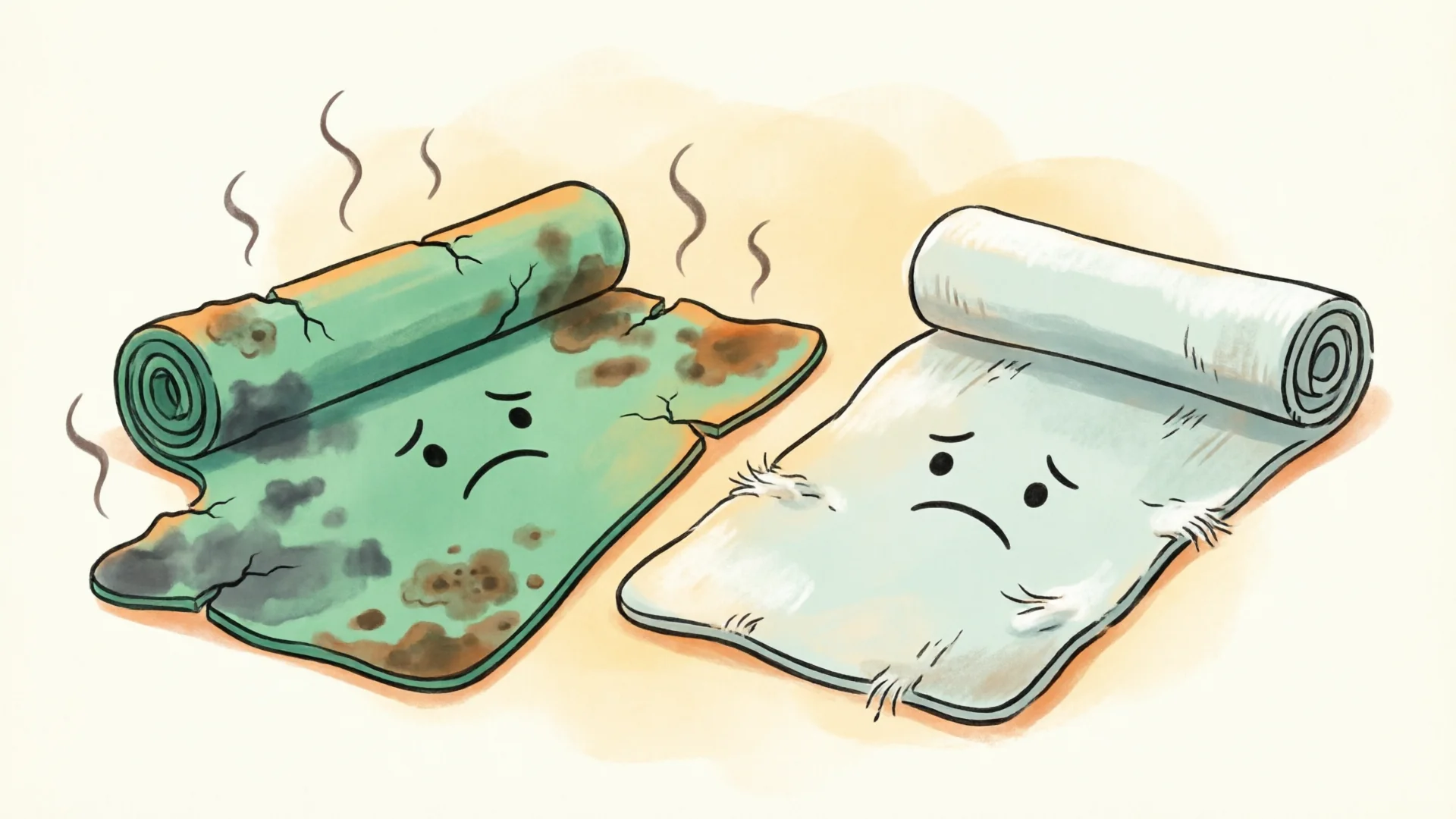
Your mat collects three things: sweat (water plus salts that feed microbes), skin cells and oils, and whatever transfers from floor to mat to face during practice. Warm rolled storage keeps all of it moist and cozy. None of this requires panic — healthy skin handles everyday microbial exposure fine — but it explains why odor and grime build fastest when sweat volume and roll-up-damp habits stack together.
The frequency framework
Match the tier to the session:
| Situation | Frequency | Method |
|---|---|---|
| Sweaty / hot practice | After every session | Quick wipe, dry before storing |
| Regular home practice, dry skin | About weekly | Soap or vinegar solution, fuller wipe |
| Any mat, any usage | Monthly | Deep clean + full air dry overnight |
Hugger Mugger's practical care guide lands on essentially the same cadence: light touch often, deeper touch occasionally, complete drying always.
Adjusting for practice type and setting
- Hot yoga and heavy sweating: every single time, no exceptions — salt residue degrades surfaces between classes otherwise.
- Studio/shared mats: treat them like gym equipment — wipe before AND after use; you don't know what the previous session left.
- Solo home mats: the low end of every range applies; your own microbes are mostly your own business.
- Floor-trained households: if the mat doubles as general exercise flooring — kids, pets, strength work — bump the weekly tier up accordingly. A budget workhorse like the CHEETE Large Exercise Mat makes a sensible high-traffic floor mat precisely because frequent wiping is part of its life anyway.
- Material check: open-cell rubber absorbs cleaners, so less liquid more often beats soaking rarely; closed-cell TPE and PVC tolerate quicker wipes freely.
How over-cleaning damages mats
Watch for these well-intentioned mistakes:
- Bleach and disinfectant sprays — oxidize and dry polymers; grip texture goes first.
- Alcohol-heavy solutions daily — same story at slightly slower speed.
- Machine washing non-machine-washable mats — waterlogged foam never dries evenly inside.
- Scrubbing brushes on smooth tops — micro-abrasion dulls the surface pattern.
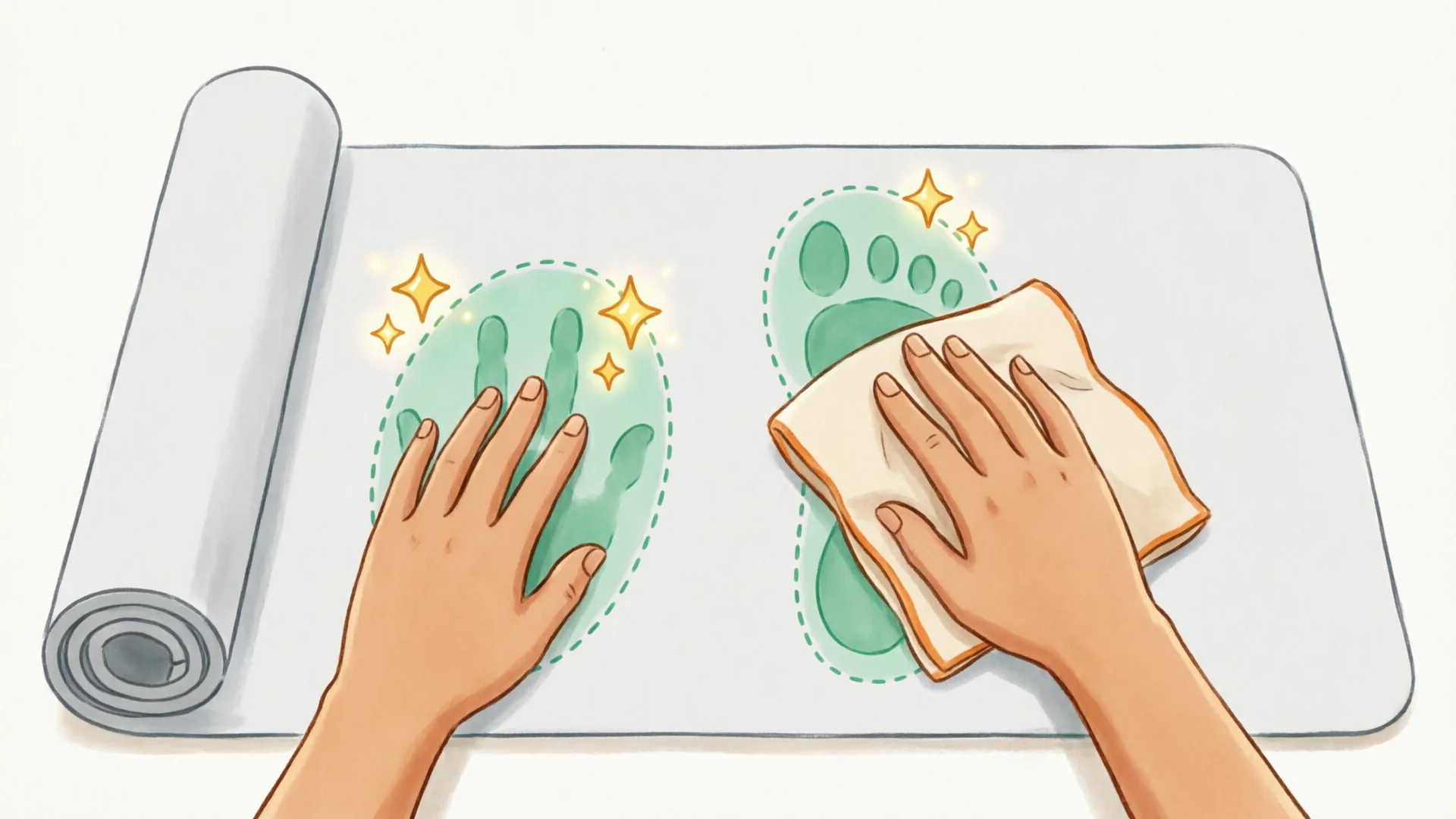
If your mat smells worse despite constant cleaning, the likely culprit isn't insufficient soap — it's rolling it up damp, which no cleaner can fix after the fact.
The quick routine worth memorizing
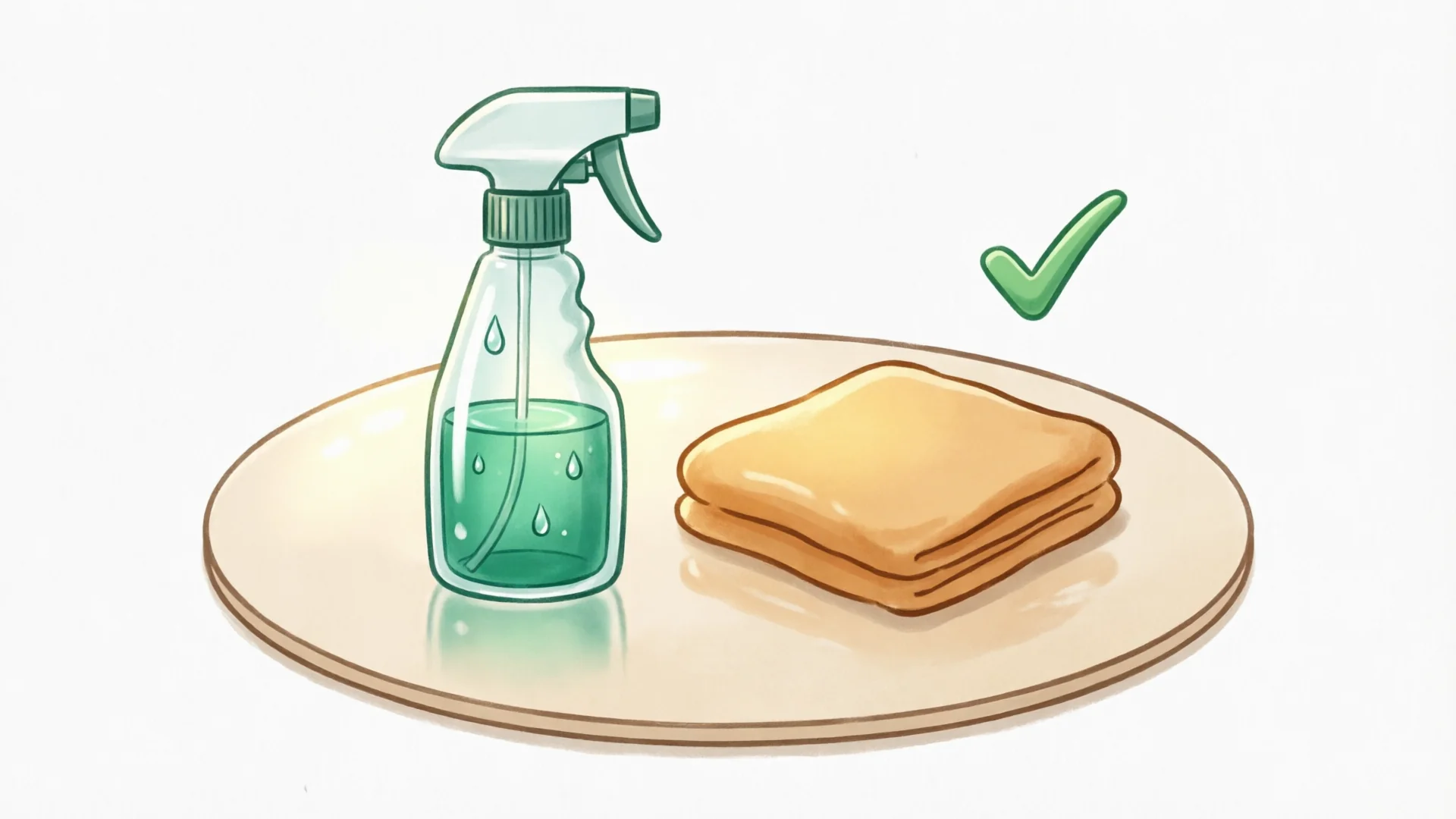
- Post-session: two sprays of diluted mild soap or 1:4 vinegar-water, wipe whole surface, hang or lay flat until dry.
- Weekly-ish: repeat with more solution and attention to hand/foot zones.
- Monthly: generous clean, second damp cloth to rinse-wipe, overnight air dry.
- Always: completely dry before it rolls back into storage.
A roomy daily-driver like the GXMMAT Large Yoga Mat 6'x4' makes step one easy — its closed-cell surface wipes in seconds and doesn't absorb cleaner, so frequent light care carries zero penalty.
Bottom line
Wipe when you sweat, wash lightly about weekly, deep clean monthly — and let drying be the non-negotiable step every single time. Match intensity to material so your cleaning doesn't become the thing that ages the mat. Do that, and hygiene stays handled in under two minutes a week while the surface outlives the habit that started it.