
Key Takeaways
- A large exercise mat pays for itself when you train with equipment, do HIIT, or want to protect a real floor.
- You get floor protection, joint cushioning and noise reduction in one surface.
- It's not worth it if you only do gentle yoga in a small space on a padded floor.
- For most home-gym setups, one large mat beats several small interlocking pieces.
The honest question
Before you drop money on a big cushioned rectangle, ask what it actually does for you. A large exercise mat is not a luxury accessory — it's functional flooring. It earns its keep in three specific ways:
- It protects your floor from scratched, dented hardwood or dinged tile.
- It cushions your joints for plank, knees, burpees and heavy holds.
- It kills noise and vibration, so the neighbors don't hear your deadlift drops.
If those three things matter to you, the mat is doing real work every single session.
What a large mat actually gives you
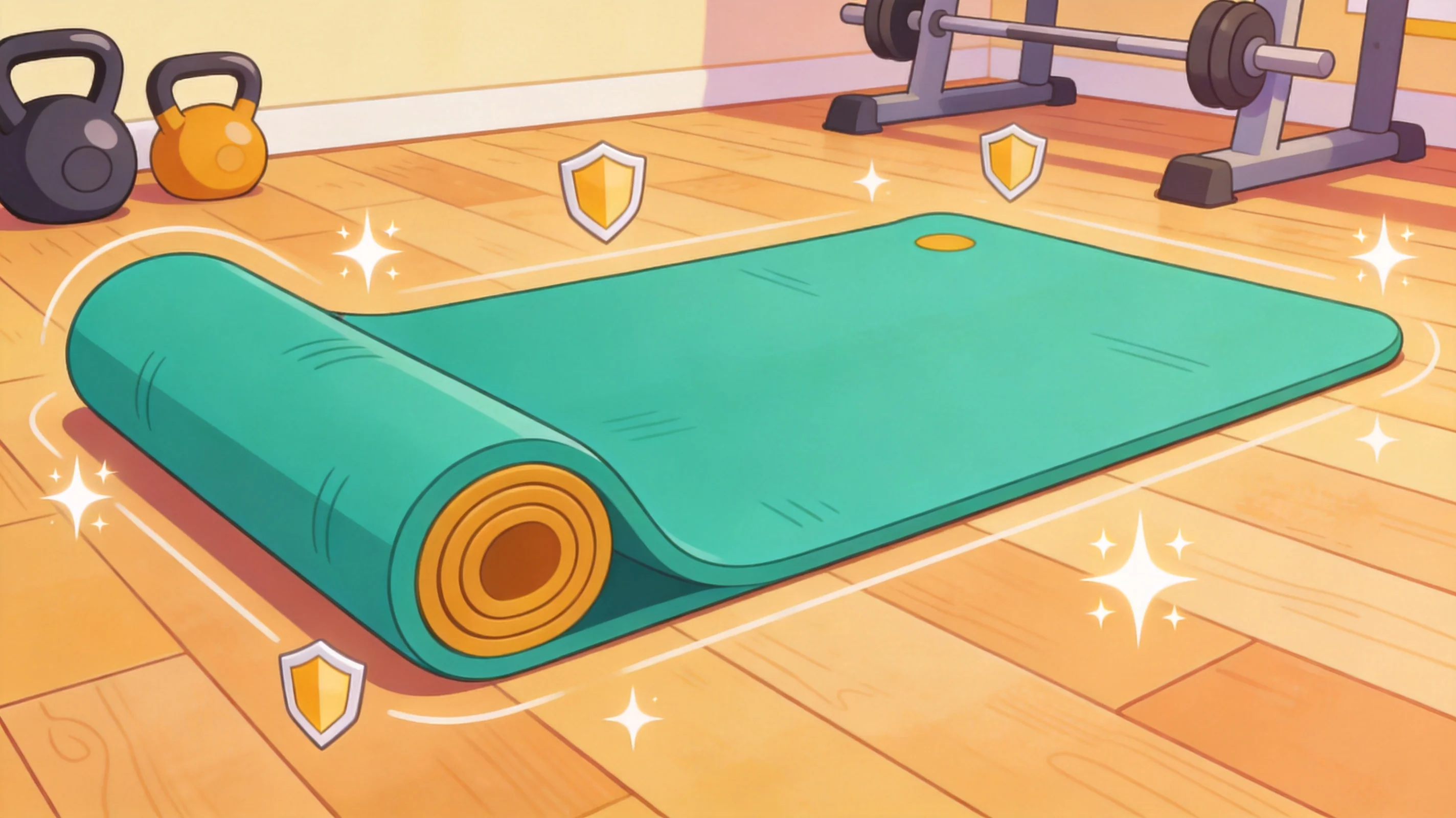
Size changes everything about a workout mat. A small mat marks a spot you practice on. A large mat becomes the floor of your workout area.
That's the key difference. With a big mat, you get a continuous, seamless surface — no tile seams to catch your toe mid-rep, no gap between mats, no grid of interlocking edges to clean. You spread out your whole session and the mat covers all of it.
The thickness does the heavy lifting. At 10-12mm, high-density foam absorbs the shock of impact before it reaches your floor and your knees. It's the difference between an echoing, dent-prone garage and a quiet, floor-safe training space.
When it's genuinely worth the money
You'll get your money's worth if any of these sound like you:
- You lift or drop weights. A thick mat is the cheapest insurance for a floor and a set of weights.
- You do HIIT or plyometrics. Burpees, jumps and sprints hammer your joints without a cushioning layer.
- You train in an apartment or above anyone. Noise reduction is worth the price on its own.
- You're tall. A large mat gives your head and heels somewhere to land.
- You want one clean workout zone. One big mat is easier than a patchwork of tiles.
Reviewers I checked on large exercise mats keep coming back to the same two words: worth it. Floor workouts on a thick mat spare the tailbone, knees and elbows that hard floors punish.
When you can honestly skip it
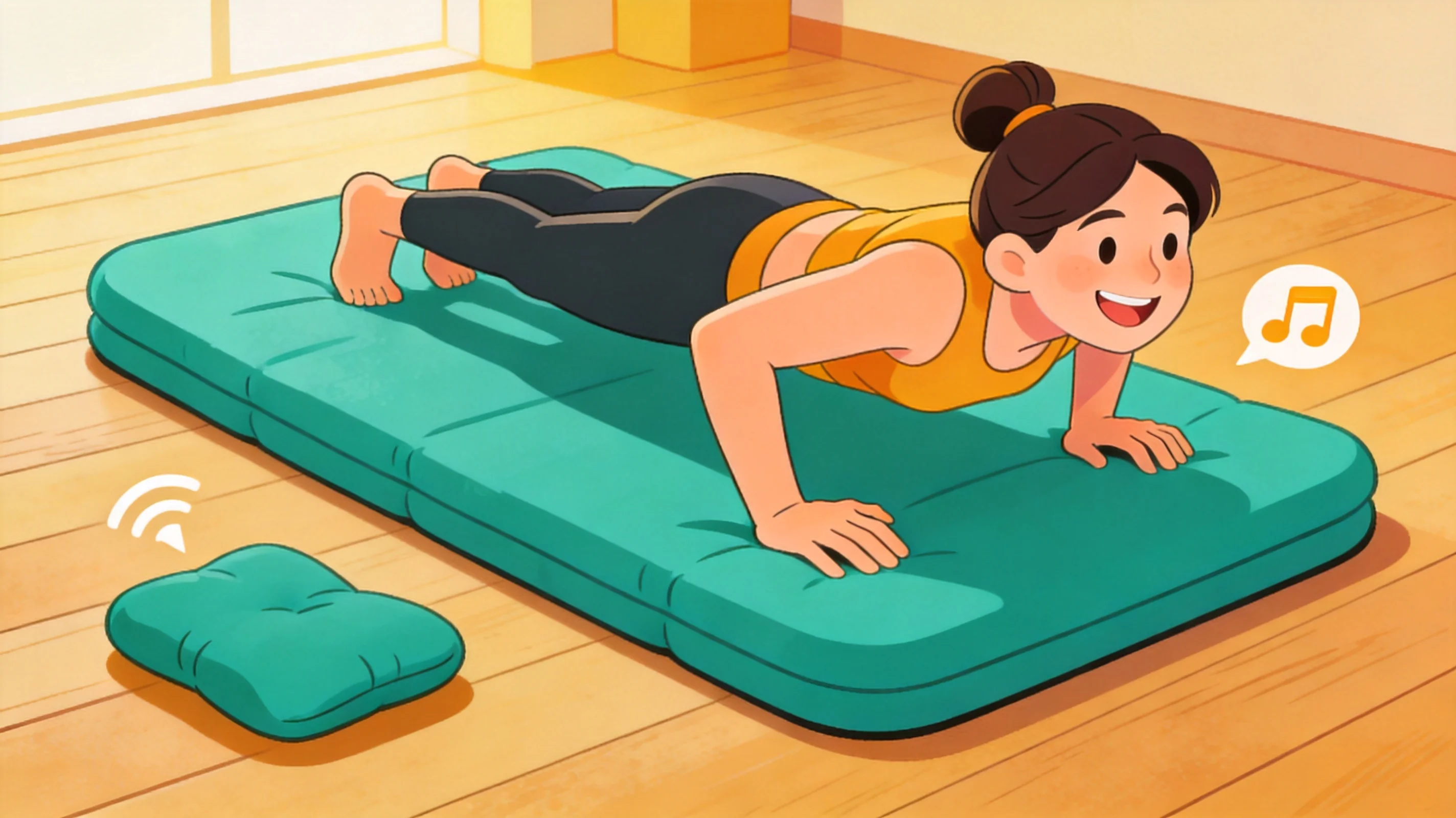
Not everyone needs one. A large exercise mat is probably overkill if:
- You practice only yoga or stretching on a studio or padded floor.
- You train in a tiny space with no room for a big roll.
- You're on a tight budget and a firm smaller mat covers your needs.
For purely balance-focused yoga, a firm standard-width mat actually beats a thick soft one — too much padding makes standing poses wobbly. So if mat as flooring isn't your need, don't buy mat-as-flooring.
Cost vs value, broken down
Think of a large exercise mat as a durable good you use for years, not a consumable. Compared with what it protects — floor refinishing, repaired equipment, physical therapy — a single mat is small change.
The real value comparison is large roll-out mat versus interlocking tiles. A big seamless mat typically wins for home workouts because it has no gaps, no edges that lift, and it rolls up when you're done. Tiles make sense when you need to permanently cover an odd-shaped room.
The verdict
Buy a large exercise mat if you train with load, impact or equipment, and you care about your floor and your joints. Skip it if you're a gentle, balance-focused yogi in a small, padded space.
For most home-gym owners, the answer to "is it worth it?" is a clear yes. It protects the two things you can't cheaply replace — your floor and your body — and it turns one room into a proper training studio.
The bottom line
A large exercise mat is worth it when it protects a real floor or real joints under real load. That's the honest truth. Match size and thickness to what you actually do, and you won't regret it.