
Key Takeaways
- A distributor buys mats in bulk, holds stock, and sells them into retail or gym channels — turning logistics and relationship skill into margin.
- Realistic gross margins sit around 30-70% depending on product, branding and how well you source.
- MOQ is the silent deal maker: 50-100 units for small suppliers, 200-500 for standard manufacturers, 1000+ for customized production.
- Territory and exclusivity should be negotiated up front — be clear whether your region is exclusive, non-exclusive or semi-exclusive.
- Do the landed-cost math before ordering: unit price + shipping + duties + defects + packaging decide your real margin.
What a mat distributor does
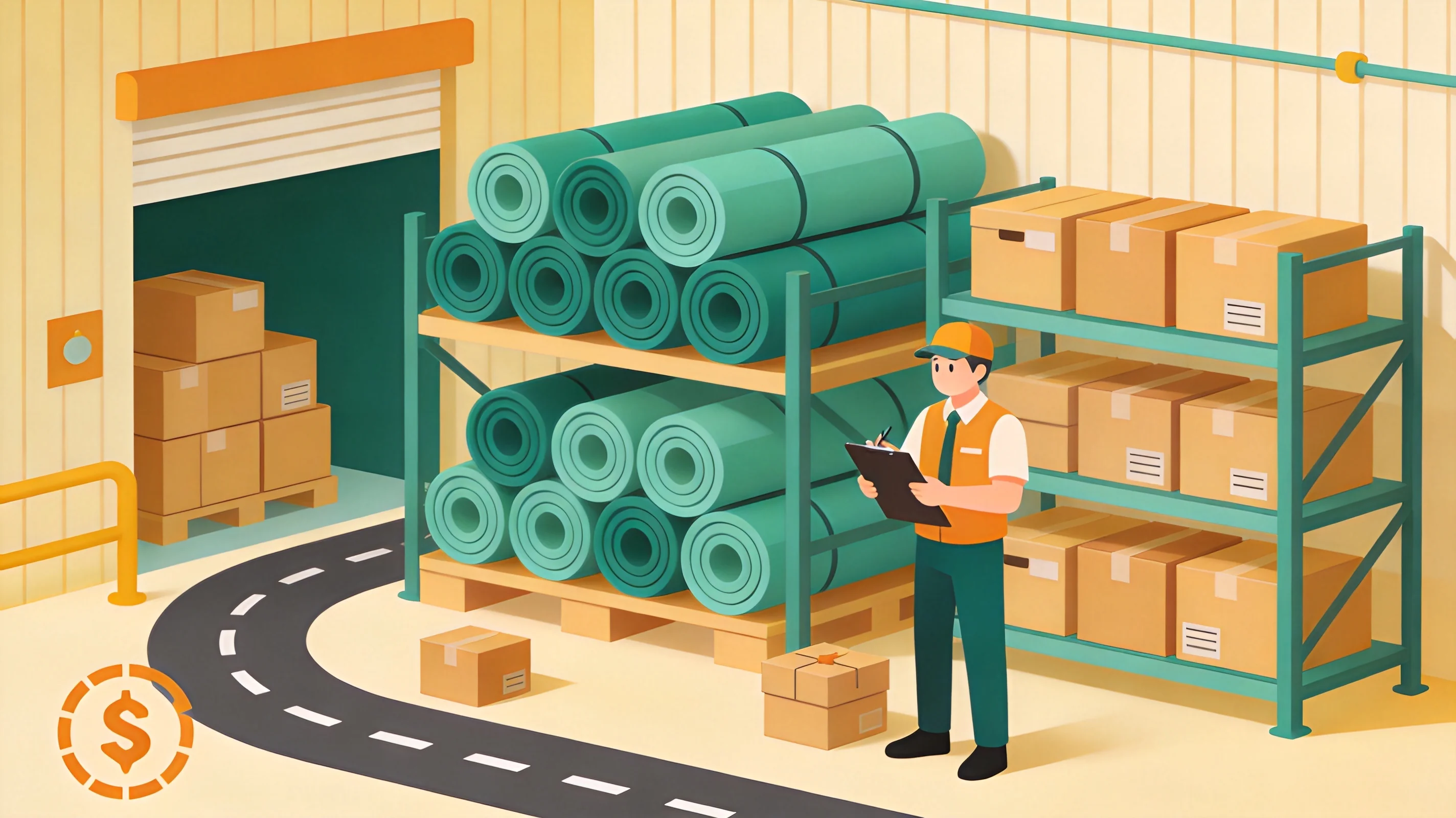
A yoga mat distributor buys mats in bulk directly from a manufacturer, holds inventory, and sells them on to gyms, retailers, studios or online stores. You are not the maker and not the end buyer — you are the middle of the channel, converting logistics, relationships and cash flow into a healthy margin.
Distribution is about trust and supply. Gyms and retailers buy from a distributor because they get consistent product, predictable delivery and someone accountable when something goes wrong. That role is exactly what a factory-focused partner such as an OEM mat maker looks for in a reseller.
Margins: what is realistic
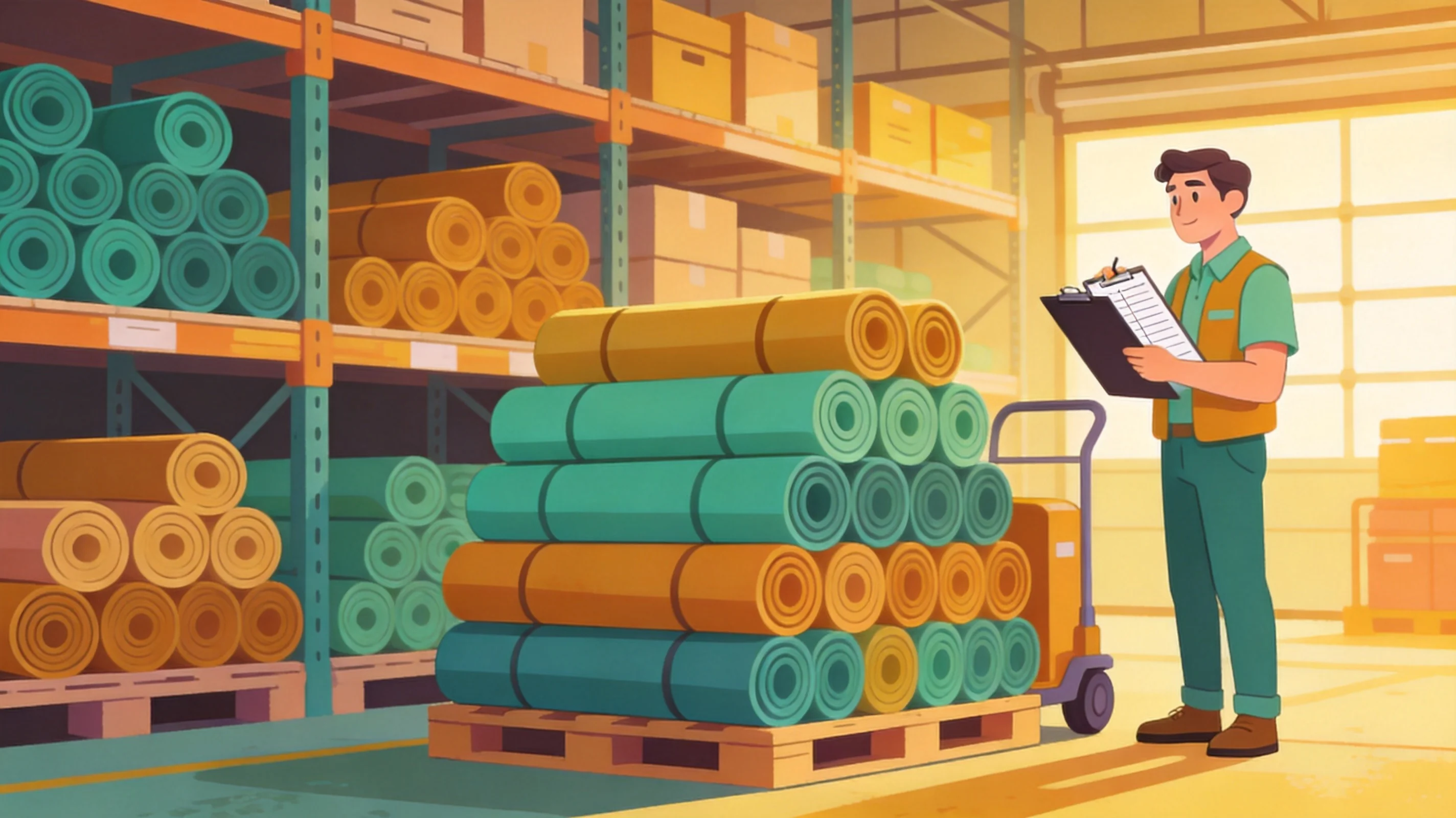
In the yoga and fitness accessories wholesale business, healthy gross margins typically land between 30% and 50% for standard products, rising higher for branded or premium lines. Sourcing efficiency drives the difference.
A common mistake is pricing off the per-unit price tag alone. Your real margin comes from landed cost — what it actually costs to get a mat to your door.
Doing the landed-cost math
Let's model a simple purchase:
- Cost per unit (bulk): $8
- Shipping and duties: $2
- Total landed cost: $10 per mat
- Selling price: $25
- Profit per unit: $15 (60% margin)
Scale that across 500 units and the revenue potential becomes clear. But the same math exposes hidden costs many distributors ignore — shipping delays, customs duties, packaging upgrades, and returns or defects.

MOQ: the silent deal maker
The Minimum Order Quantity is the smallest number of units a supplier will sell you. It shapes everything about your commitment:
- 50-100 units for small suppliers
- 200-500 units for standard manufacturers
- 1,000+ units for customized or large-scale production
Customization raises MOQ further. If you want your own packaging, logo or a specific material, expect the floor to climb. A low-MOQ configuration is a low-risk way to test the market before committing to volume.
Territory and exclusivity
Distribution agreements usually limit you to a geographical territory or a market segment — a country, a chain of gyms, or an online channel. Before signing, settle the scope: is your territory exclusive, non-exclusive or semi-exclusive?
Clear territory protection matters because you invest in promoting a product someone else could undercut. Note that strong-arm restrictions — such as forbidding a distributor from passively selling outside the territory or through the internet — can raise competition-law problems, so keep the deal reasonable.
Steps to become a distributor
- Register your business — LLC, sole proprietorship or partnership, with the tax and resale paperwork your region needs.
- Get the licenses that build trust — a business license, federal tax ID and resale tax certificate signal you are a serious channel.
- Plan your inventory and cash flow — decide your first SKU, your storage, and how much stock you can fund.
- Choose a manufacturer or OEM partner — bulk pricing, reliability and support matter more than the lowest unit cost.
- Negotiate price, MOQ, lead time and territory in one conversation, not piecemeal.
- Sell into your channel — gyms, studios, retailers or your own online store.
A manufacturer that treats you as a supply partner rather than a one-off order — like an OEM and private label mat maker that can tune product to your market — is worth more than a slightly cheaper quote.

Bottom line
Becoming a yoga mat distributor is a viable B2B model if you get three things right: realistic margins on genuine landed cost, a workable MOQ for your cash flow, and a clear, negotiated territory. Register your business, choose a reliable manufacturing partner, do the math, and grow from a low-risk test order into a steady channel. Your margin lives in the detail — track every line item.