
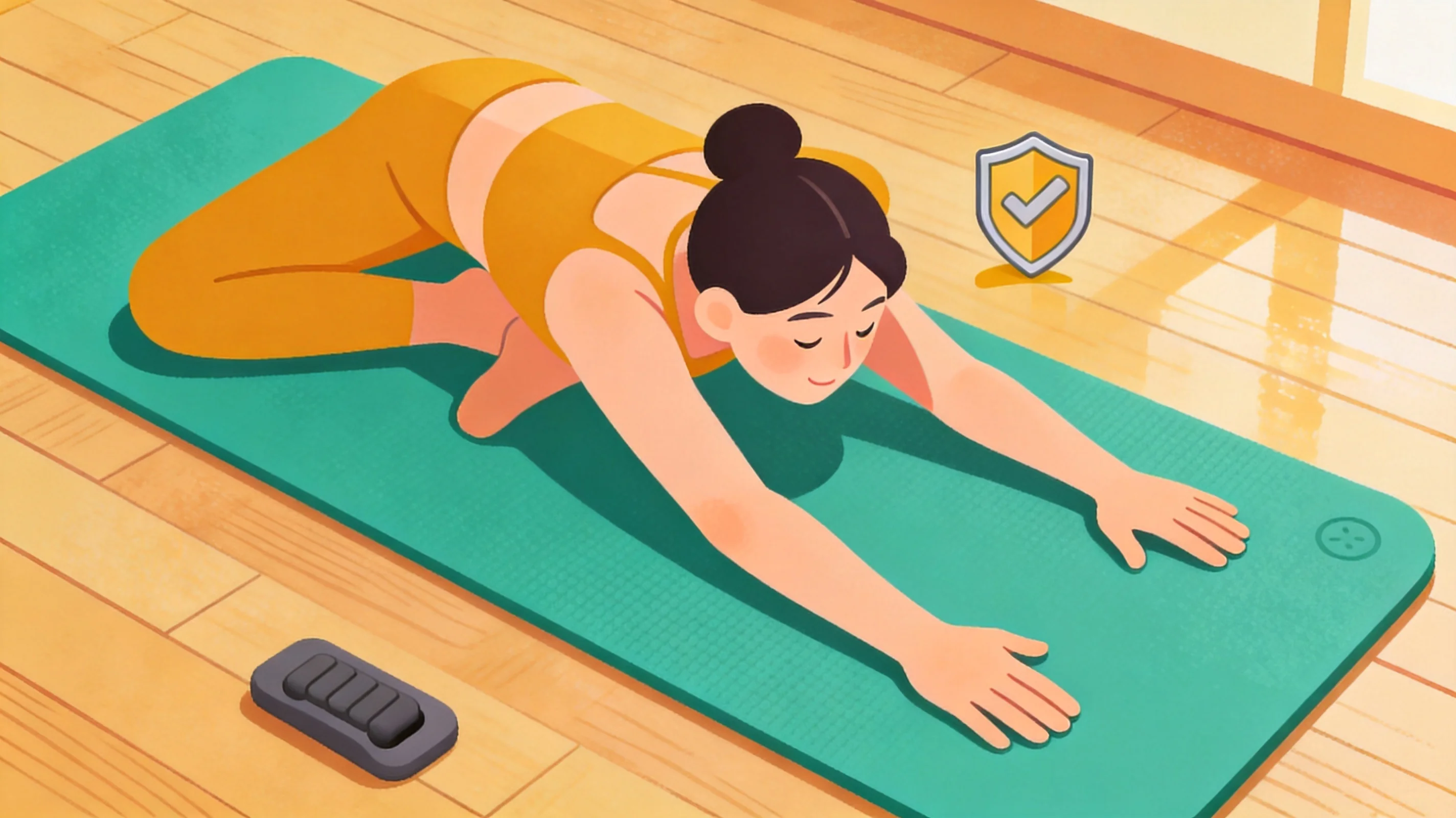
Key Takeaways
- Hard floors are slick — polished wood and tile can make mats slide mid-movement.
- Look for a non-slip backing and top so the mat stays put.
- Thickness around 4-6mm high-density cushions joints without wrecking balance.
- Keep the subfloor clean and dry so the mat itself never scratches.
- Match material to your floor — rubber and dense foam grip best on smooth surfaces.
Why hard floors are different
Hardwood and tile look great, but they're poor workout surfaces. They're slick, which makes mats slide, and hard, which hammers your joints. Add the risk of scratches from a drifting mat, and the stakes go up.
A mat for hard floors does three jobs: it grips the floor, cushions your body, and protects the surface beneath. Here's what to look for.
What to look for
Three things matter most on a hard floor:
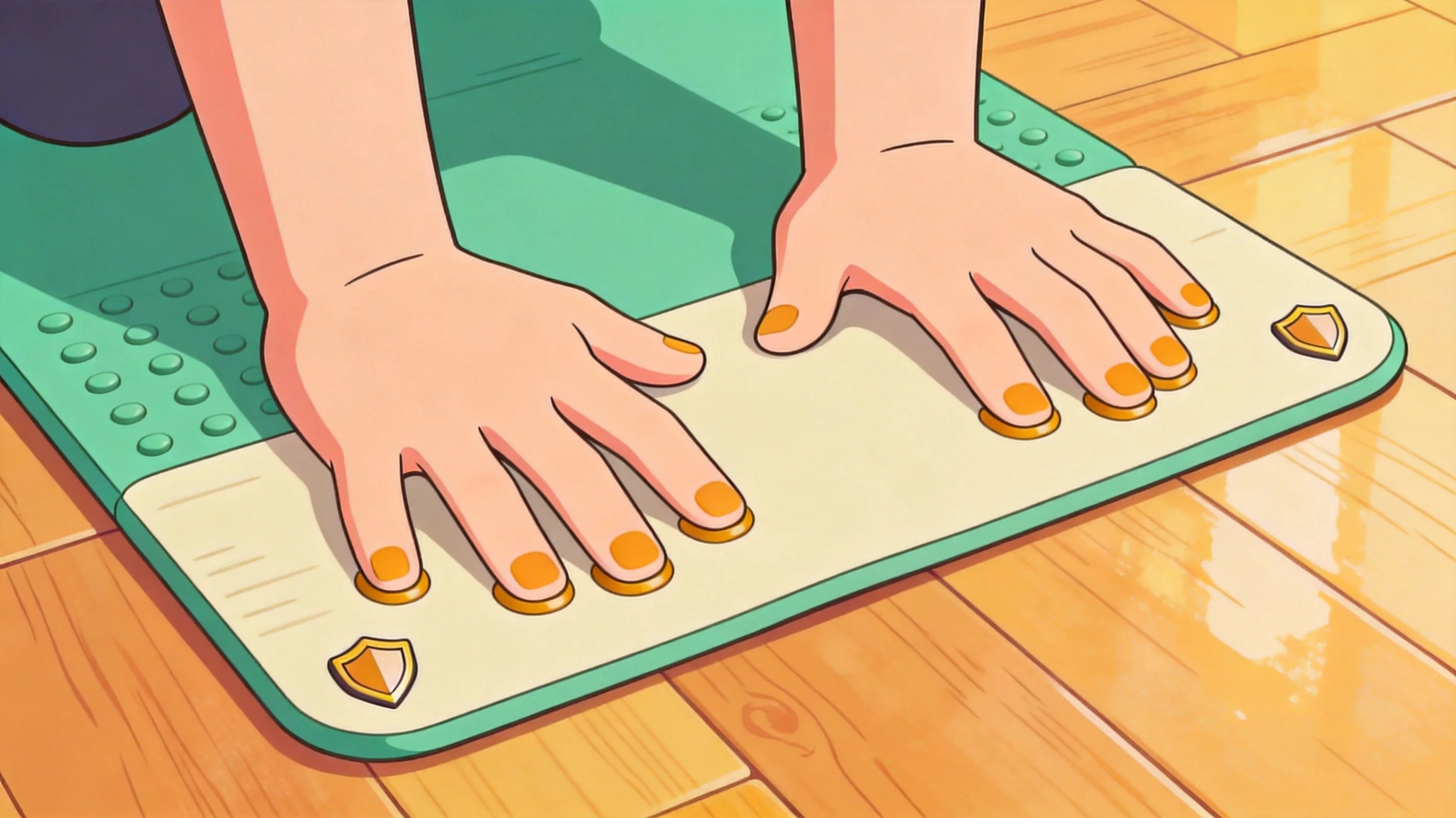
- Non-slip backing and top. Polished wood and tile are slippery; a grippy underside stops the mat sliding, and a grippy top keeps you on it.
- Right thickness and density. Around 4-6mm of high-density material cushions joints without letting you sink into instability.
- Materials that grip when smooth. Rubber and dense TPE foam hold better than slick smooth foam.
Hardwood vs tile
Each surface has its own concern:
- Hardwood: scratch-prone and often polished. Pick a mat with a soft, non-marking backing and keep the floor clean underneath.
- Tile: hard on joints and cold. A thicker, cushioned mat helps, and a non-slip backing keeps it from drifting on smooth grout lines.
Whether it's wood or tile, the backing matters as much as the cushion.
Material and grip
Choose materials that work with smooth floors:
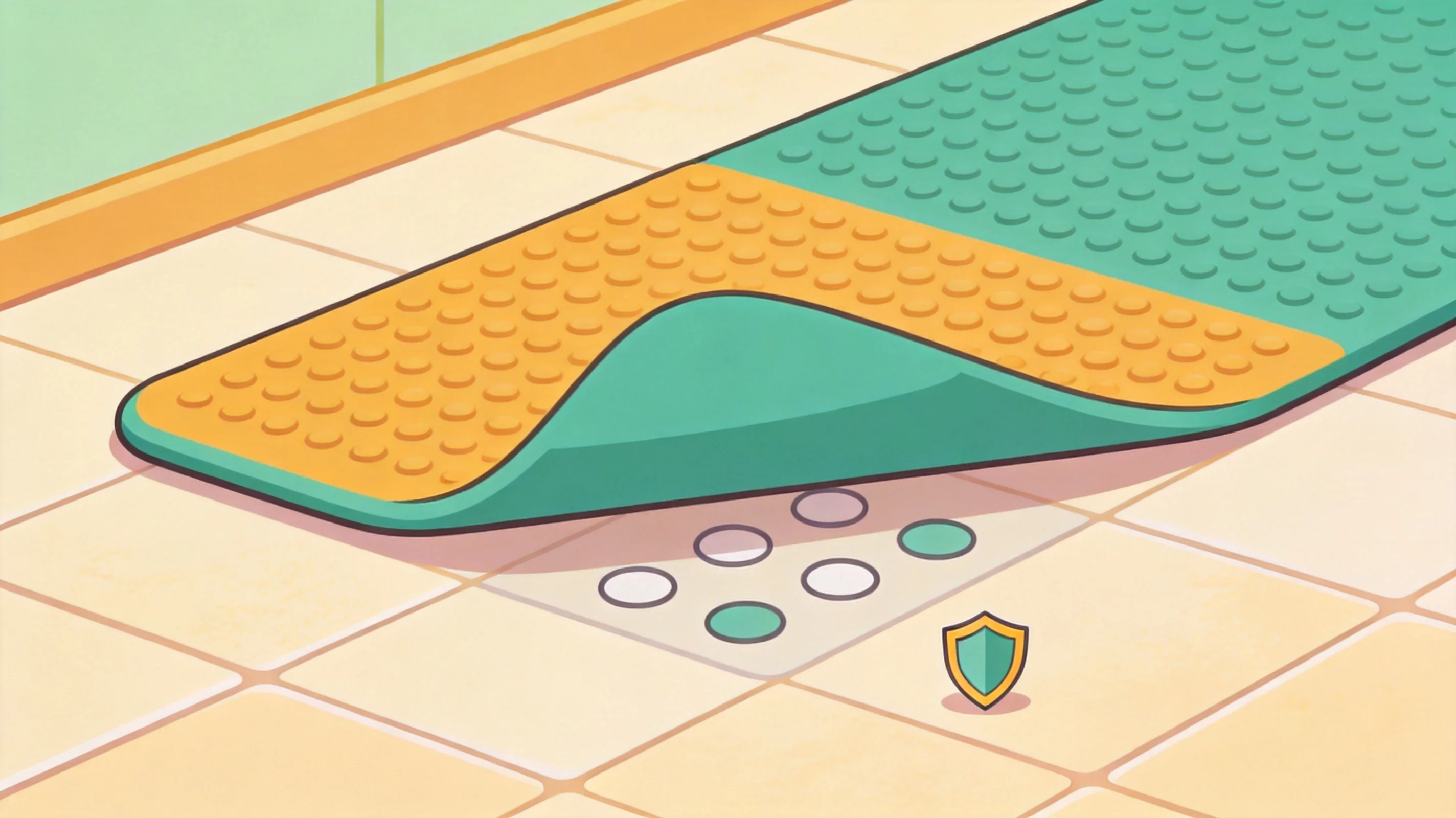
- Natural rubber: naturally grippy, dense, and supportive — a top pick for hard floors.
- Dense TPE foam: good cushion with a lighter feel and strong grip.
- Cork: naturally antimicrobial and grips well, though a firmer surface.
- Smooth PVC or plain foam: least grippy when wet on slick floors — weak for this use.
Look for mats described as non-slip on both sides to avoid sliding.
Protecting your floor
A good mat protects the floor, but only if you help:
- Keep the subfloor clean and dry. Grit under the mat is what scratches.
- Don't drag the mat across the floor; lift it when moving it.
- Check the backing periodically so embedded dirt never abrades the surface.
- Dry your feet and mat area before training to avoid moisture sitting on wood.
Bottom line
For hardwood and tile, the right mat keeps your practice grounded and your floor safe. Choose a non-slip, high-density mat around 4-6mm in rubber or dense TPE, keep the surface clean underneath, and lift (don't drag) it when you move. That protects the floor, cushions your joints, and keeps you steady on the slickest surface.

On hard floors, a good mat is the difference between a safe practice and a frustrating, floor-damaging one.