
Key Takeaways
- Private label means you sell mats made to your spec under your own brand, without running a factory.
- OEM, ODM and private label differ mainly in how customized the product is.
- Materials (TPE, PVC, natural rubber, cork) drive cost, feel and positioning.
- MOQs for private label stock mats typically start around 200-500 units; full custom colors or prints go higher.
- Nail down quality, certifications, samples and MOQ before committing to a partner.
What private label means
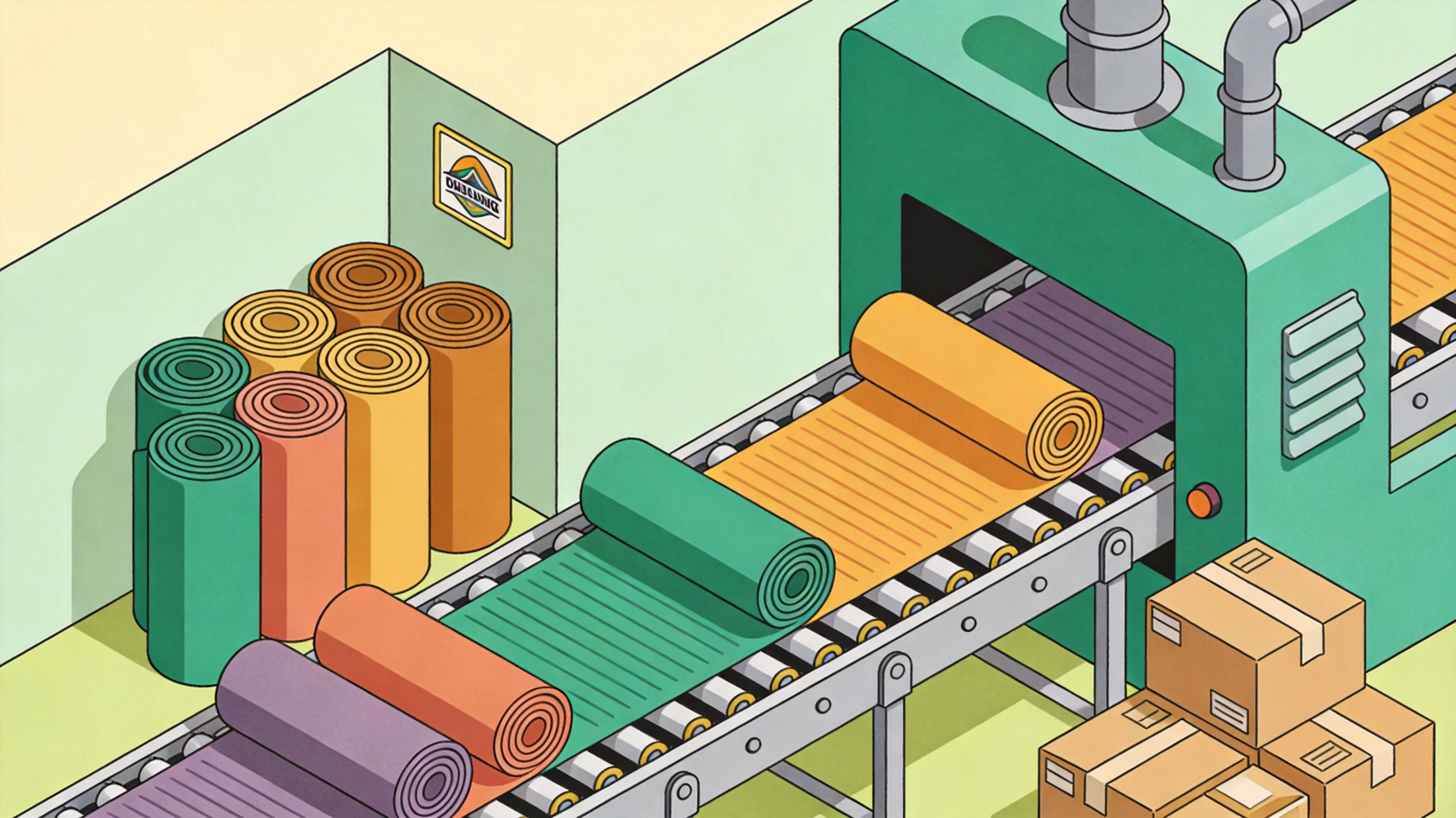
Private label (and its cousins OEM and ODM) is how most yoga mat brands get made. You design or specify the product, a manufacturer produces it with your brand on it, and you sell it under your own name — no factory of your own required.
Three terms matter:
- Private label: you start from an established mat design and customize colors, branding and packaging.
- OEM (original equipment manufacturer): the factory builds to your specifications or reference samples.
- ODM (original design manufacturer): the factory offers its own designs you can rebrand.
The right model depends on your budget, how unique you want the product to be, and your launch timeline.
Materials: what you can build with
Your material choice shapes cost, feel and brand story:
- PVC: budget option, durable and familiar — the most common entry-level mat material.
- TPE foam: lighter, eco-friendlier and non-toxic; a popular modern choice.
- Natural rubber: premium, grippy and sustainable — a strong positioning play.
- Cork: naturally antimicrobial, grippy when wet, firm and upmarket.
Also decide thickness (from thin travel mats to thick 6-10mm+ cushions) and size (standard, long, wide, oversized).
Production essentials
Beyond material, confirm these manufacturing basics:
- Thickness and density — this drives feel, comfort and stability.
- Surface texture — smooth, textured or printed affects grip.
- Closed or open cell — affects cleaning and sweat absorption.
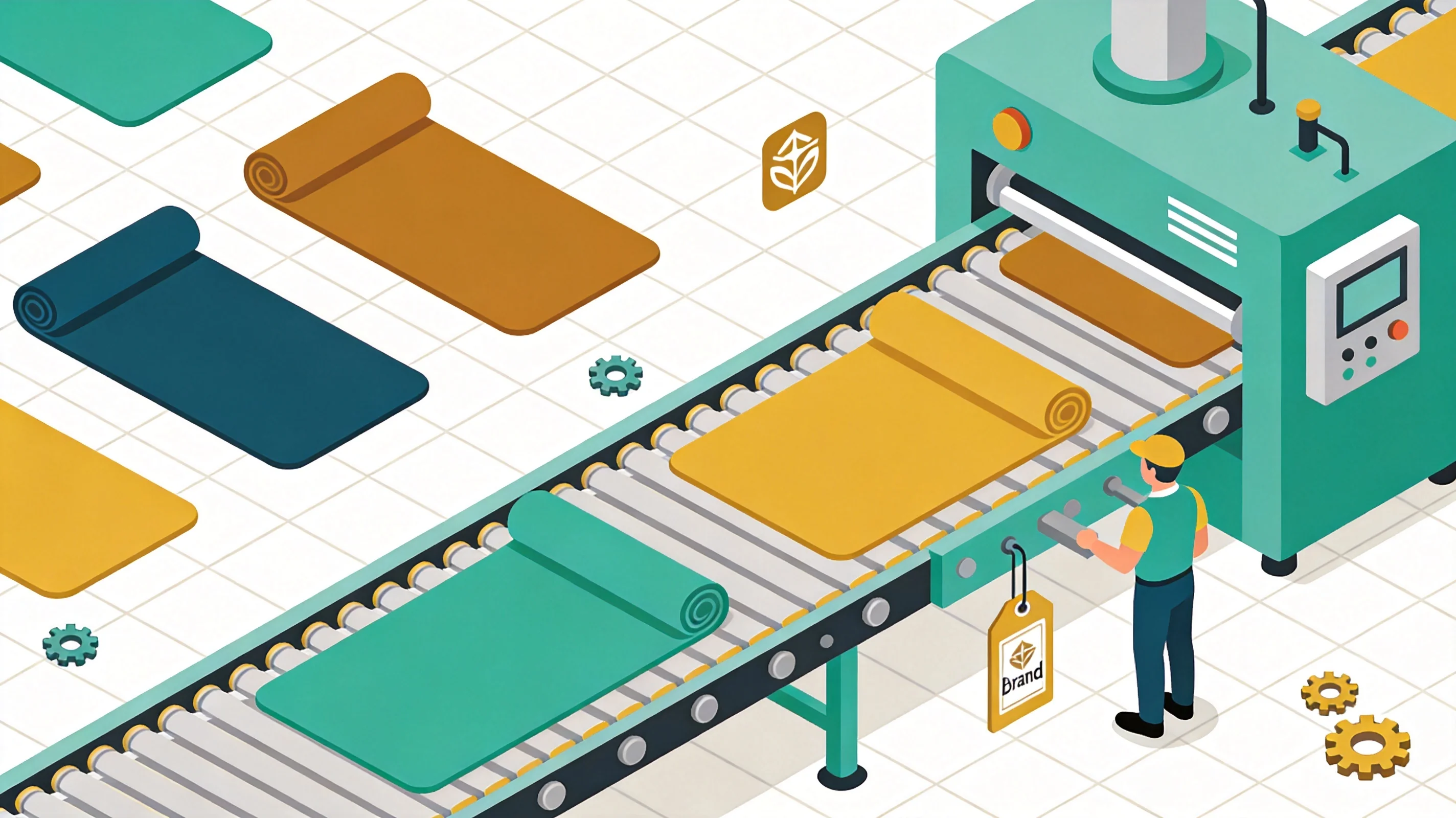
- Production process — a reputable factory handles cutting, bonding, printing and finishing in-house or with vetted partners.
Choosing a manufacturer
A good partner is worth more than a low quote. Screen on:
- MOQ (minimum order quantity): stock-branded mats may start around 200-500 units; custom colors or all-over prints are higher.
- Samples and prototyping: ordering samples first is non-negotiable.
- Certifications: ask about non-toxic, eco and quality standards.
- Track record: request references and inspect their quality-control process.
- Lead time and reliability: confirm production and shipping timelines.
Ask for a pre-production sample before any bulk order.
Customization options to offer
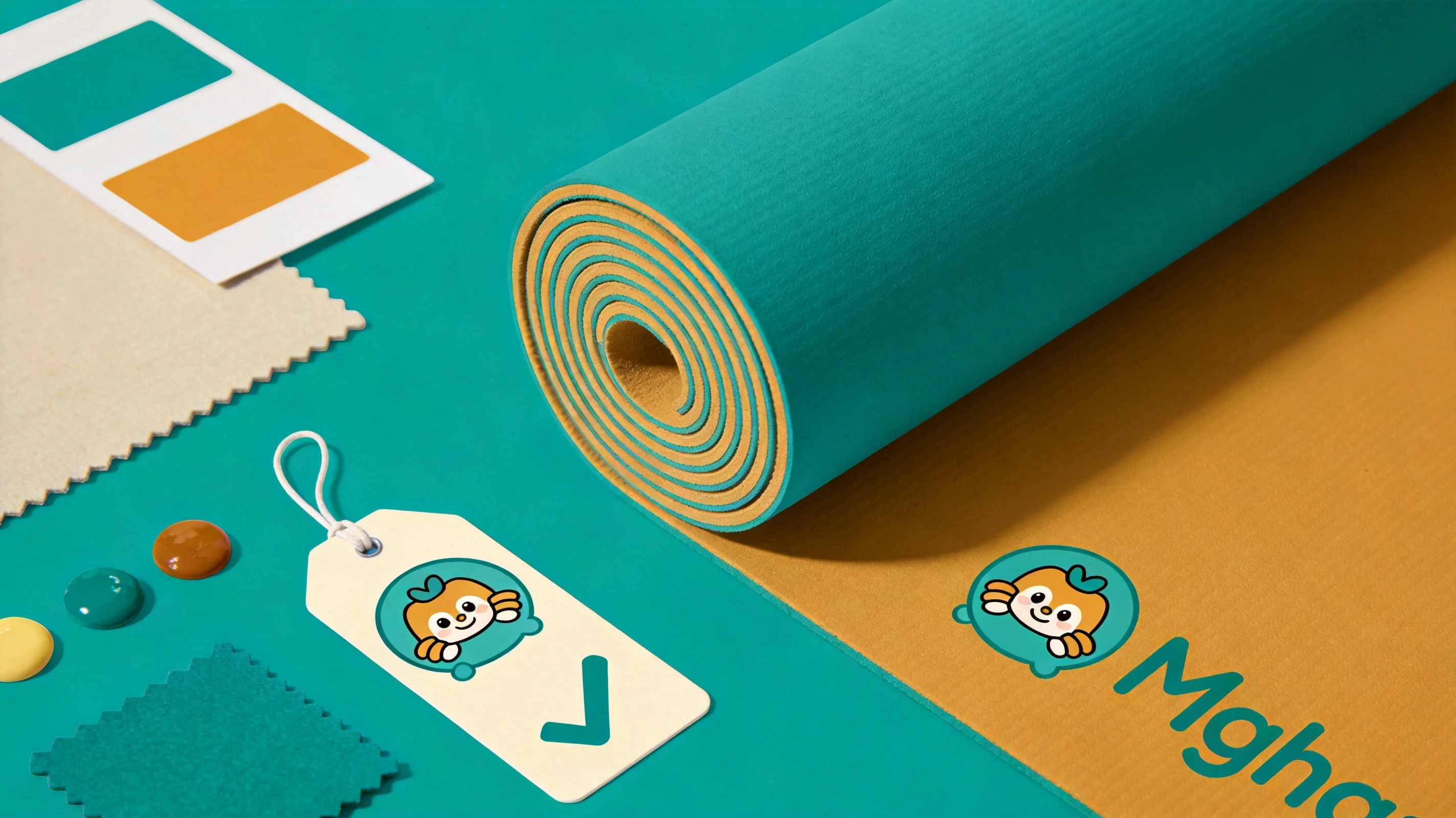
Most manufacturers support a wide range of personalization:
- Colors and surfaces — match your brand palette.
- Logos and prints — screen-printed or printed directly on the surface.
- Packaging — branded bags, tubes or retail-ready boxes.
- Accessories — straps, carry bags, blocks sold alongside mats.
Cost and pricing reality
Plan your pricing around the real drivers:
- MOQ sets your up-front commitment and unit leverage.
- Unit cost scales with material, thickness, size and print complexity.
- Shipping and duty add up, especially for cross-border orders.
- Sampling and NRE (non-recurring engineering) can add one-time costs for custom tooling.
Model your margin before you lock the order.
Launching your brand
Getting the product is step one. To actually sell:
- Position clearly — budget, premium, eco, or performance-driven.
- Build compliant packaging with correct labels and certifications.
- Create a story around your materials and values.
- Start with a focused SKU range and expand as demand grows.
Bottom line
Private label yoga mat manufacturing trades a factory for a partner — you design, they build, you sell. Choose materials that tell your brand story, vet the manufacturer on samples, MOQ and certifications, and start with a focused, well-margined range. Do that, and you can launch a real yoga mat brand without owning a single machine.
Your brand, their factory, and a growing market — private label makes yoga mat ownership possible.