
Key Takeaways
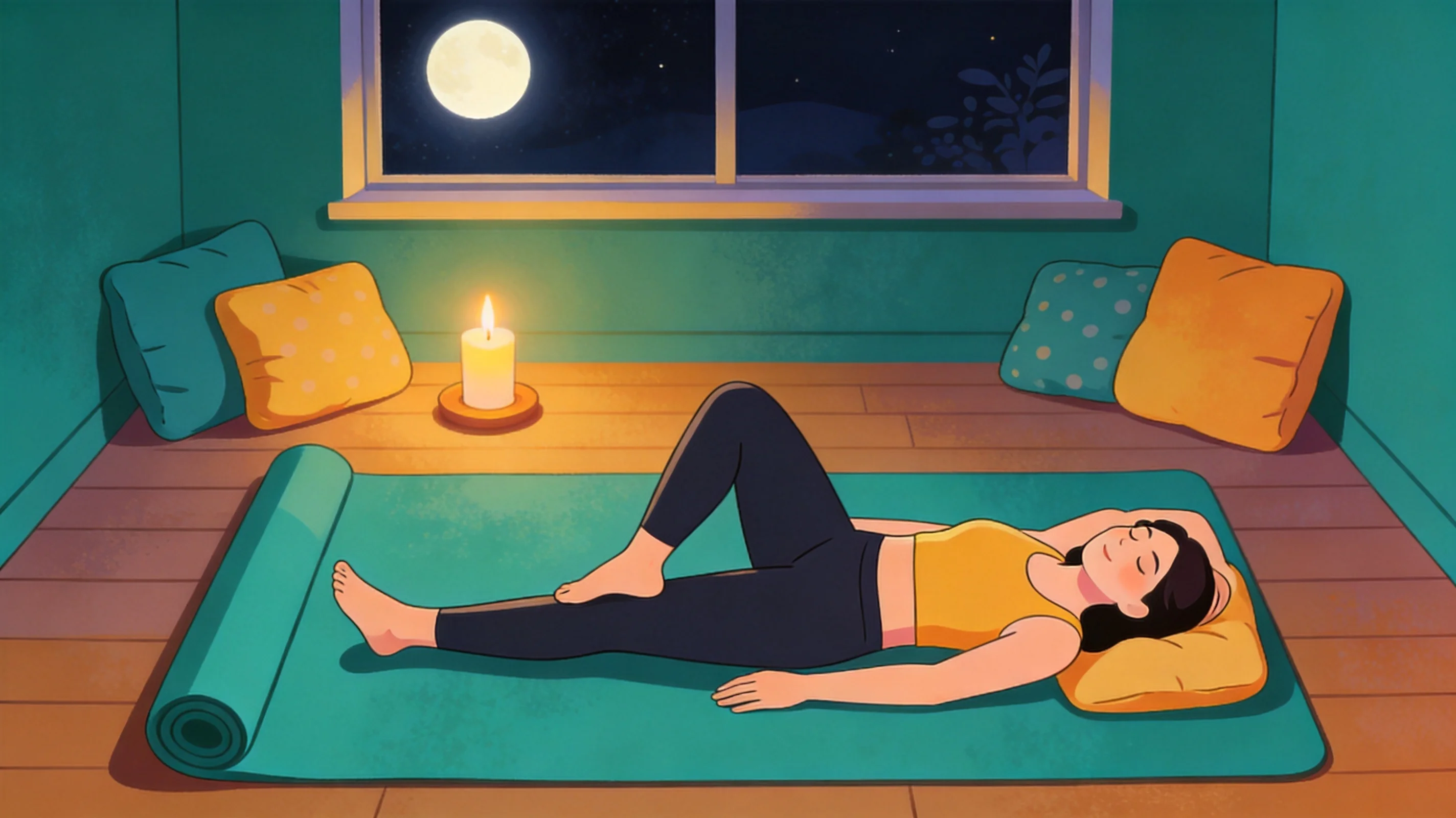
- Slow, gentle evening yoga shifts your nervous system toward rest — the opposite of a workout.
- Set up once, repeat nightly: dim light, a quiet corner, and a mat that's always ready.
- A simple 10-20 minute sequence of forward folds, twists and legs-up poses is enough.
- Cushioning matters more at night — you'll be on the floor longer, moving less, in deeper holds.
- Consistency beats duration; ten minutes nightly outperforms an hour occasionally.
Why evening yoga helps sleep
Your body needs a runway from day to night. Evening yoga provides it through slow breathing, long exhales and floor-based shapes that ask almost nothing of your muscles. Sleep researchers and publications like The New York Times have highlighted short evening routines as an accessible way to downshift before bed — no equipment beyond quiet and something soft to sit on.
Unlike morning flow, nothing here should raise your heart rate. If a pose feels like exercise, you've gone too far — back off until it feels like relief.
Setting up your space
The easier your setup, the more often it happens:
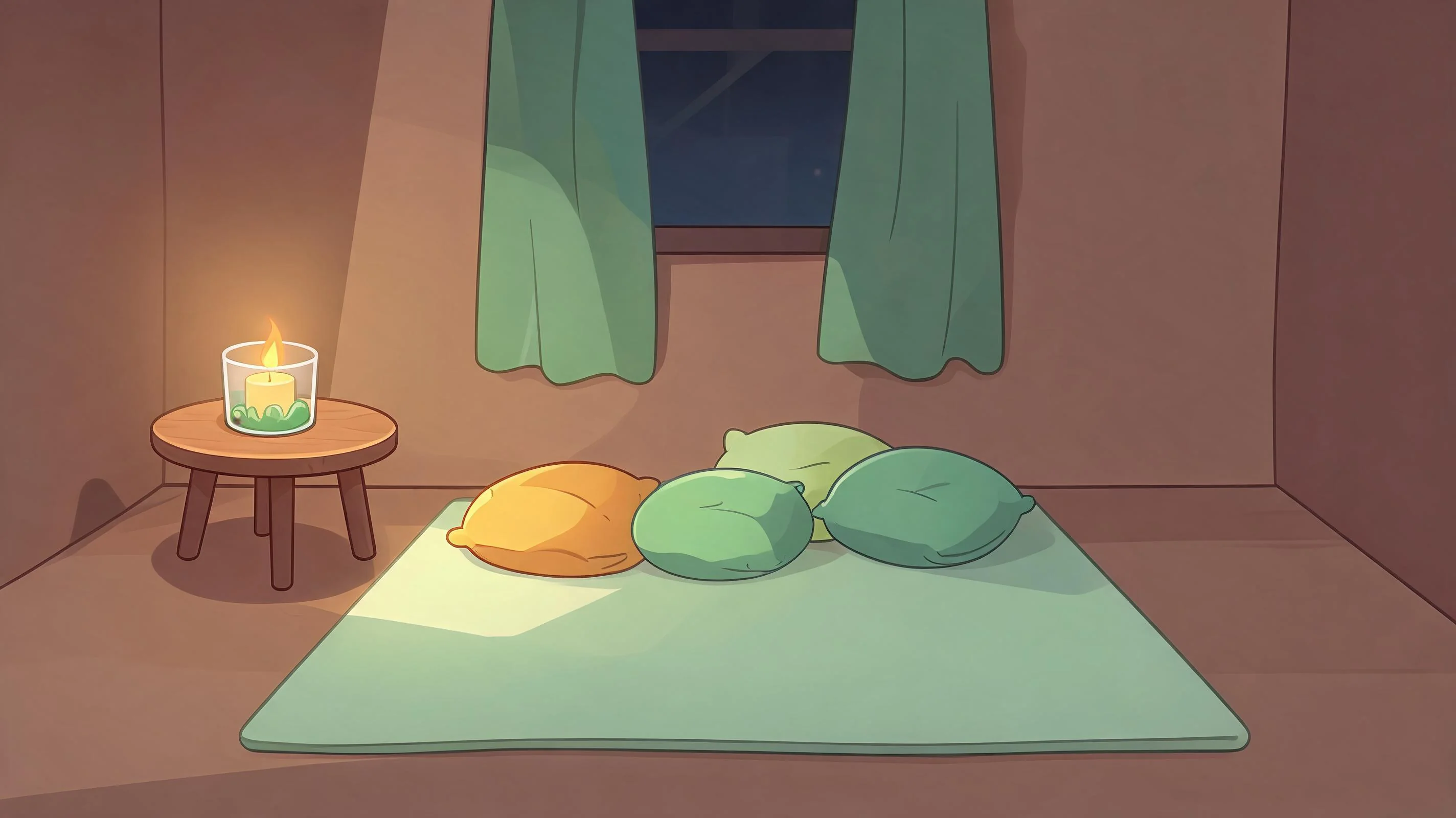
- Pick one corner and leave the mat unrolled if you can — friction kills habits.
- Dim the lights or practice by a single warm lamp; bright light delays melatonin.
- Keep props nearby: a pillow or folded blanket for under knees and head.
- Cool the room slightly — bodies fall asleep easier in cooler air.
- Phone on silent, face down, ideally outside the room.
A simple 10-20 minute evening sequence
Move slowly; hold each shape 1-3 minutes; breathe out longer than you breathe in:
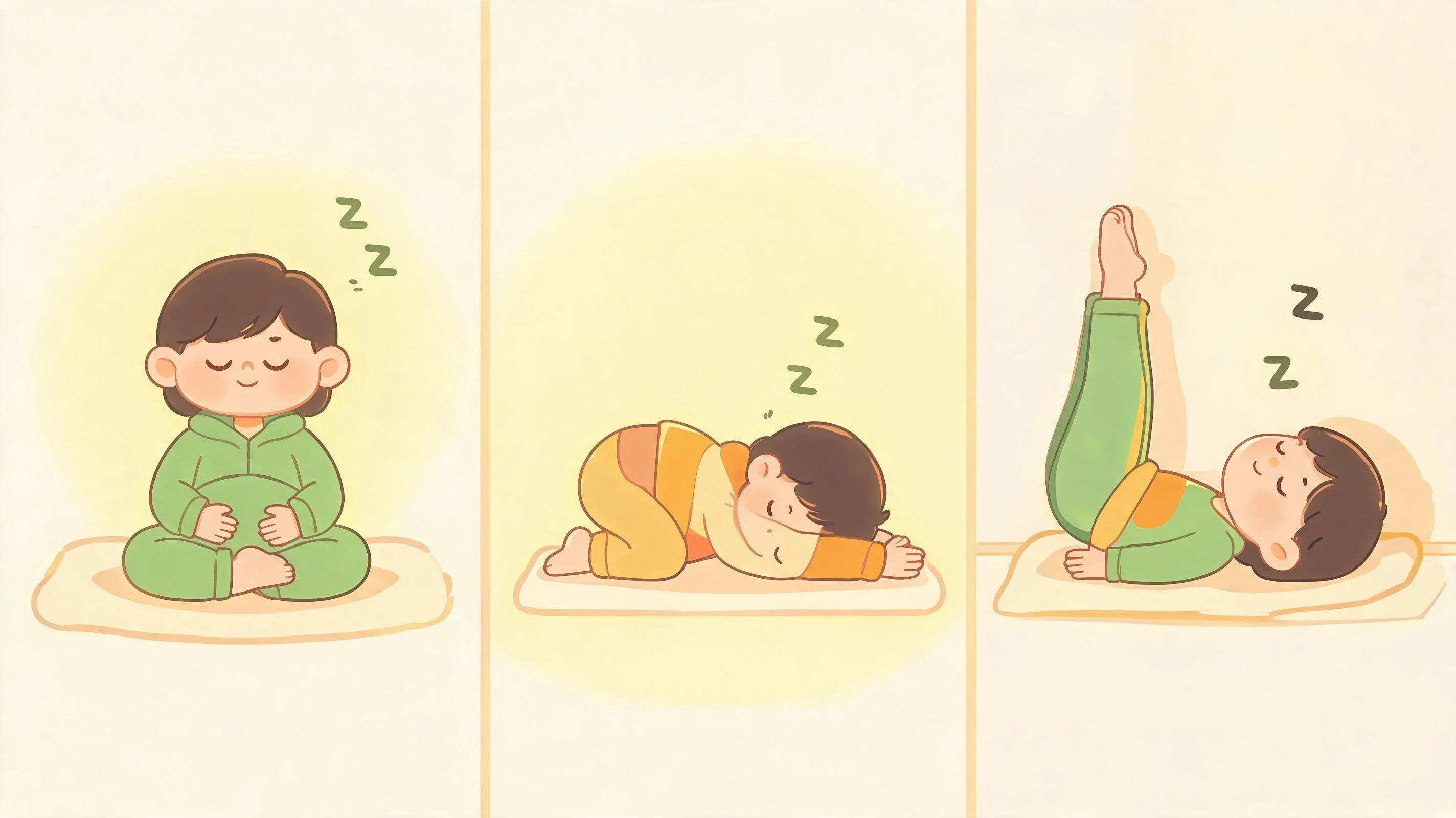
- Easy seated breath (2 min) — sit cross-legged on the mat, eyes closed, long exhales.
- Cat-cow, very slow (2 min) — let the spine move at the pace of your breath.
- Child's pose (2-3 min) — knees wide, arms forward or by your sides.
- Seated forward fold (2 min) — fold only as far as comfortable, head supported on a cushion.
- Supine twist, each side (2 min) — knees drop gently to one side, shoulders grounded.
- Legs up the wall (3-5 min) — hips near the wall, heels resting, arms open.
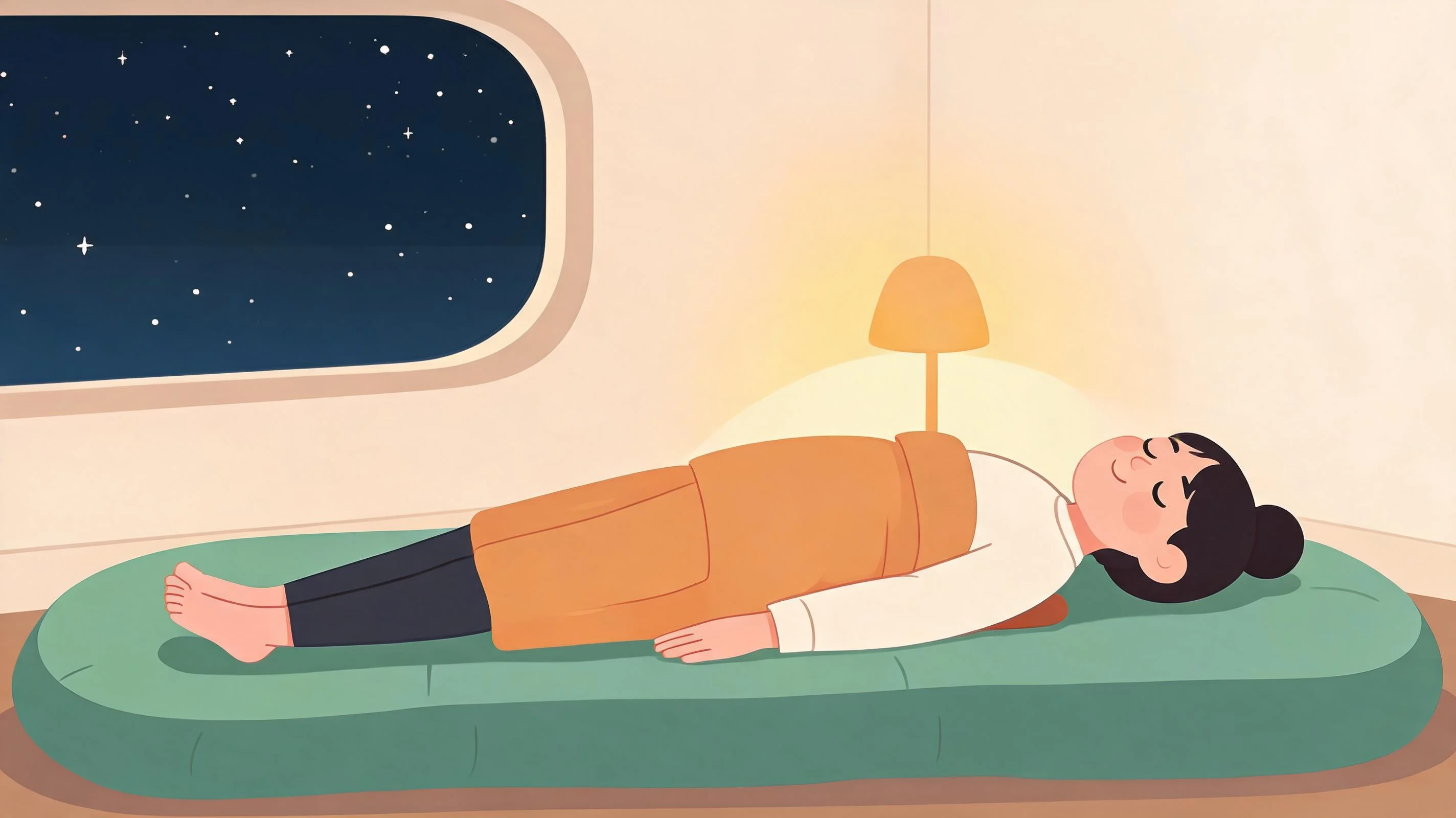
- Savasana in bed or on the mat (2-5 min) — body heavy, breath natural, then stay.
That's the whole routine. No strength work, no balance challenges — just positions that tell your body the day is over.
Why your mat matters more at night
Evening practice spends minutes in each pose with almost no movement between them — the exact conditions where thin mats fail. Pressure accumulates on ankles, knees, hips and spine contact points, and discomfort pulls your attention exactly when you're trying to release it.
What works:
- High-density cushioning (8 mm+) that supports without bottoming out.
- Warm-feeling surface — cold PVC makes relaxation harder; foam-like surfaces feel better at night.
- Extra size so you can stretch out fully in savasana without negotiating edges.
- Easy-clean surface, because sleepy hands still spill herbal tea sometimes.
This is where a large-format mat quietly transforms the ritual. The GXMMAT Large Yoga Mat 6'x6' gives you room for the whole sequence — including legs-up-the-wall without repositioning — while its dense 7 mm base keeps bony points comfortable through long holds.
If you share the practice with a partner or want space for a bolster and blanket spread, the GXMMAT Extra Thick Large Yoga Mat 7'x5'x9mm layers 9 mm of padding over a full 35 square feet — effectively a temporary rest corner that rolls away in the morning.
Habits beyond the mat
- Same time every night anchors the habit and the sleep signal.
- Dim screens an hour before, or let the routine replace scrolling entirely.
- Extend your exhales — longer breaths out cue the parasympathetic system.
- End in silence rather than immediately jumping into bed activity.
Bottom line
Evening yoga for sleep doesn't need ambition — it needs repetition, dimness, and a surface kind enough to keep you lying still. Set up one quiet corner, run the same gentle sequence nightly, and give yourself a mat with real cushioning and room to sprawl. Do that most nights, and the routine becomes the bridge your body walks from busy to asleep.