

Key Takeaways
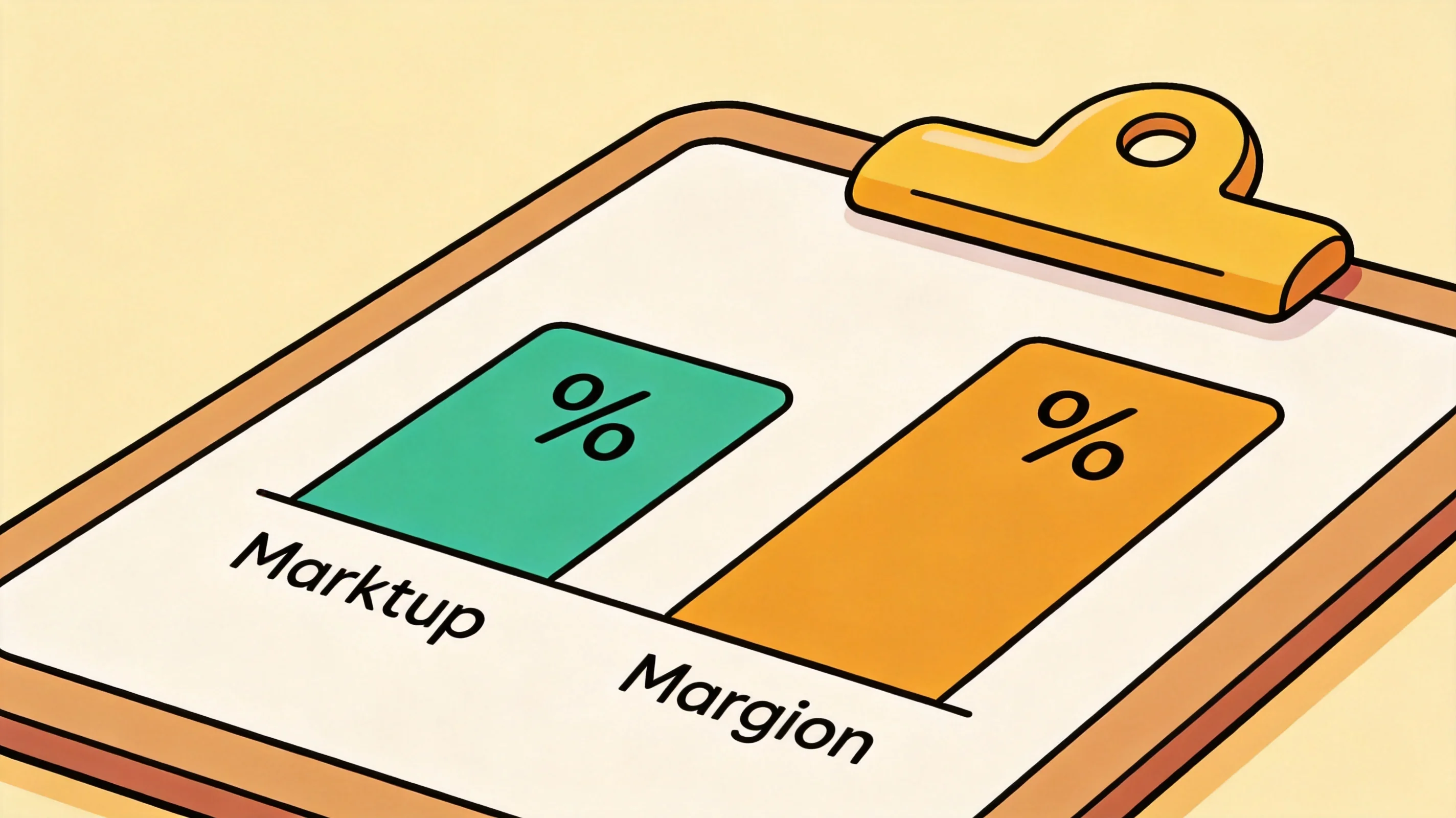
- Markup and margin are not the same. Margin divides profit by selling price; markup divides profit by cost. For the same sale, margin is always lower.
- A 50% markup equals a 33% margin — confusing the two gets expensive at higher price points.
- Start from landed cost, not just the unit price: FOB + freight per unit + duty + inbound handling = your true cost.
- Target a 45-70% gross margin on mats, depending on material, channel, MOQ and positioning.
- Hidden costs — returns, platform fees, payment processing — can erase a good margin if you don't price them in.
Why margin math matters
Two resellers buy the same mat for $10. One sells at $20 and celebrates a 100% margin. The other sees you're only keeping 50% of the selling price and quietly prices better. Knowing the difference is not accounting theory — it's the difference between a profitable line and one that quietly bleeds.
Let's get the fundamentals right first.

Markup vs margin
Both use the same dollar figures — cost and selling price — but they divide differently:
- Markup = profit ÷ cost.
- Margin = profit ÷ selling price.
Example: an item costs $8. You add $2 and sell it for $10.
- Markup = $2 ÷ $8 = 25%
- Margin = $2 ÷ $10 = 20%
Because the selling price is higher than cost, margin is always lower than markup for the same deal. The gap widens as percentages rise:
- 25% markup → 20% margin
- 50% markup → 33.3% margin
- 100% markup → 50% margin
Want a 40% margin? You need a 66.7% markup. Want 25% margin? Apply a 33.3% markup. Getting this wrong costs real money.
Start from landed cost
Your margin is only as good as your cost figure. If you price on the unit price alone, you'll understate cost and overstate margin. Correctly:
Landed cost = FOB price + freight per unit + duty + inbound handling
Only once you know the true per-unit cost to your door can you calculate an honest margin.
Margin math in action
A realistic mat wholesale example:
- Wholesale price: $25
- Landed cost per unit: $10
- Gross margin = ($25 - $10) ÷ $25 = 60%
Most mat buyers should target 45-70% gross margin, depending on material, channel, MOQ, packaging and positioning.
For resellers working a wholesale-to-retail model, distribution-style margins (wholesale price minus landed cost, over wholesale price) typically run 40-50%, while direct-to-consumer margins on retail price can run 60-75% — with higher operating costs to match.
Hidden costs that eat margin
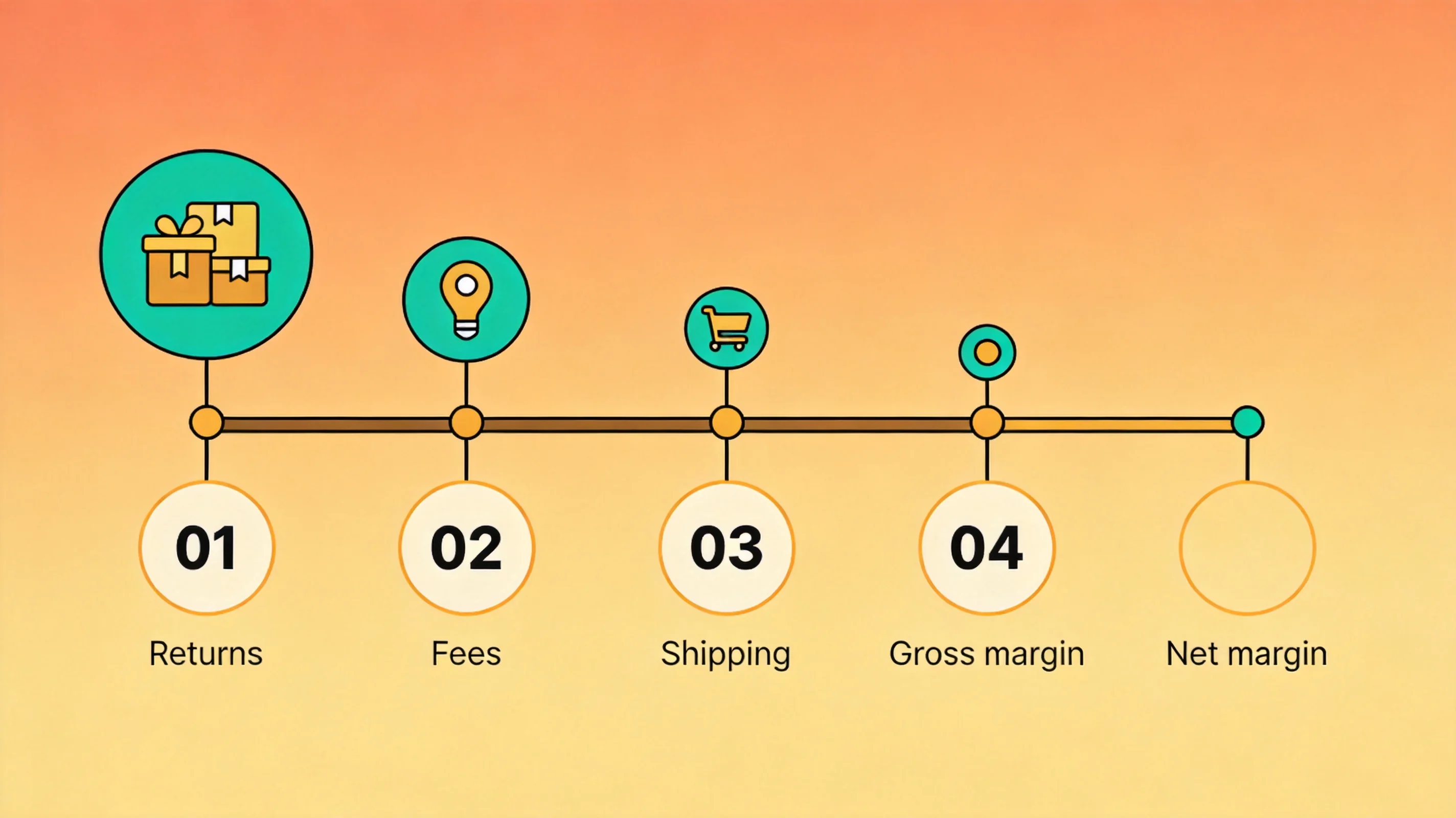
Gross margin is your starting point, not your finish line. These quietly eat profit:
- Returns — a return rate multiplied across your margin
- Platform and marketplace fees — a fixed cut of every sale
- Payment processing — card-processing fees per order
- Storage and fulfillment — holding and shipping cost
- Customer service — time spent resolving issues
A channel formula to remember: divide revenue into landed cost and platform fees, then adjust for returns to get your realized margin — the number that actually pays the bills.
What's actually realistic
Put it together across a mat business:
- Gross margin: 45-70% on mats is achievable and healthy for most resellers.
- Net margin: expect single-to-mid double digits once operating costs are subtracted — that's normal and fine.
- Material matters: premium or branded products support higher margins than commodity stock mats.
If your mats sell with zero margin, no volume fixes it — you just lose faster.
Bottom line
Reselling mats is profitable only if the math works. Distinguish margin from markup, price from landed cost, and price in the hidden costs before you set a single price. Target a realistic 45-70% gross margin, and don't let returns or fees quietly steal it. Get the fundamentals right and the margins take care of themselves. And if you want to move from slim resale spreads to healthier branded margins, working with an OEM and private label partner is the step that takes you from trading someone else's product to owning the price.