
Key Takeaways
- You need less space than you think — roughly the footprint of your mat plus arm's length on each side.
- Pick by light and quiet first, floor surface second: natural light and low traffic beat square footage.
- The mat is the anchor of the corner — everything else arranges around it.
- Visible gear gets used: keep the mat unrolled or within one motion of ready.
- Two or three personal touches — light, a plant, quiet sound — turn spare meters into somewhere you want to be.
You need less space than you think
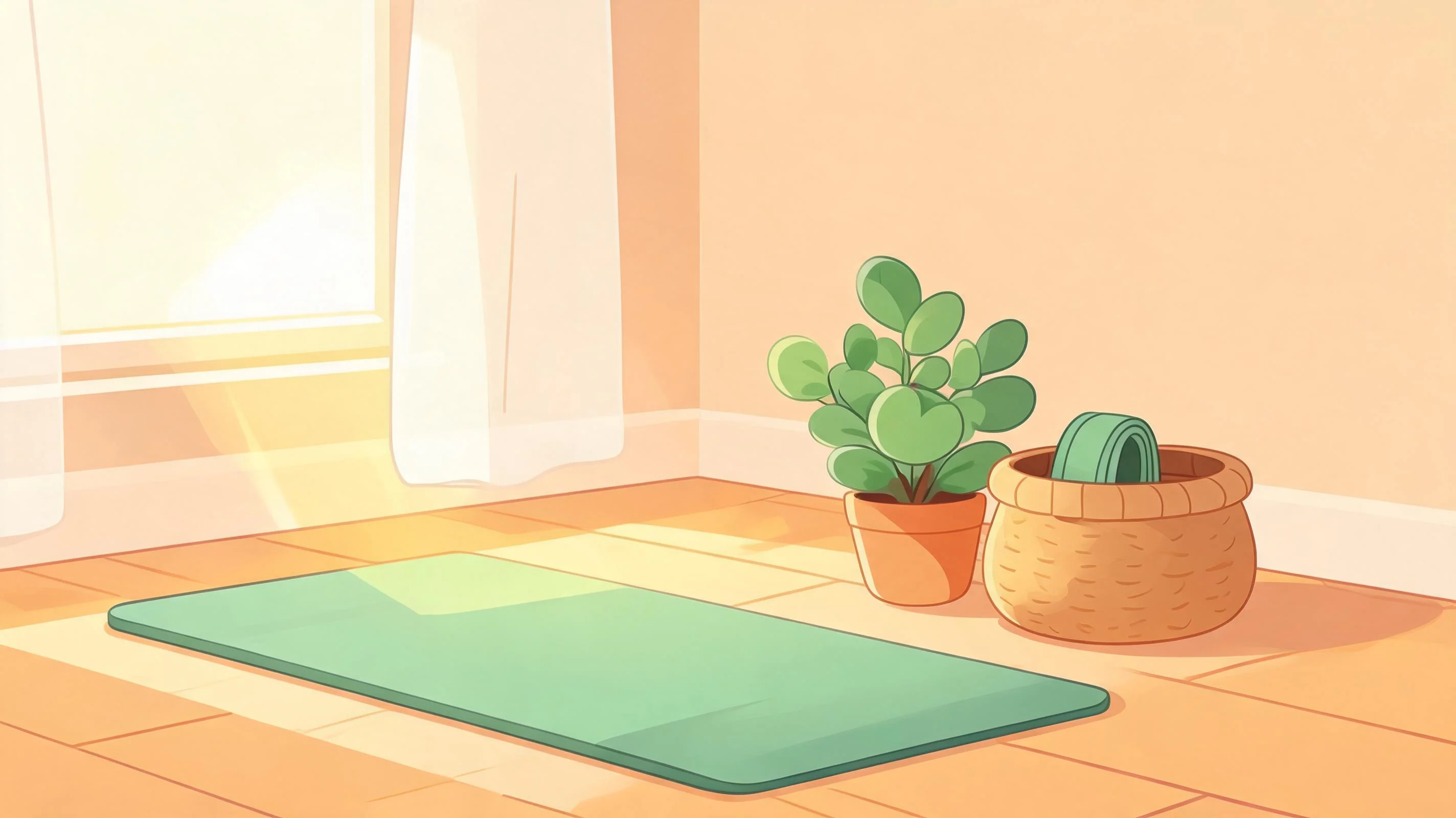
The mental image is a sunlit studio with wooden floors. The reality that works is humbler: about 2 by 2.5 meters fits a full practice — arms wide in warrior II, a lunge in any direction, savasana without touching furniture. Forbes' piece on making space at home makes the same point: consistency of place matters more than grandeur of it.
If your home has a corner that size — beside a bed, at the end of a sofa, under a window — you have a yoga space waiting to happen.
Choosing the corner
Score your candidates against three things:
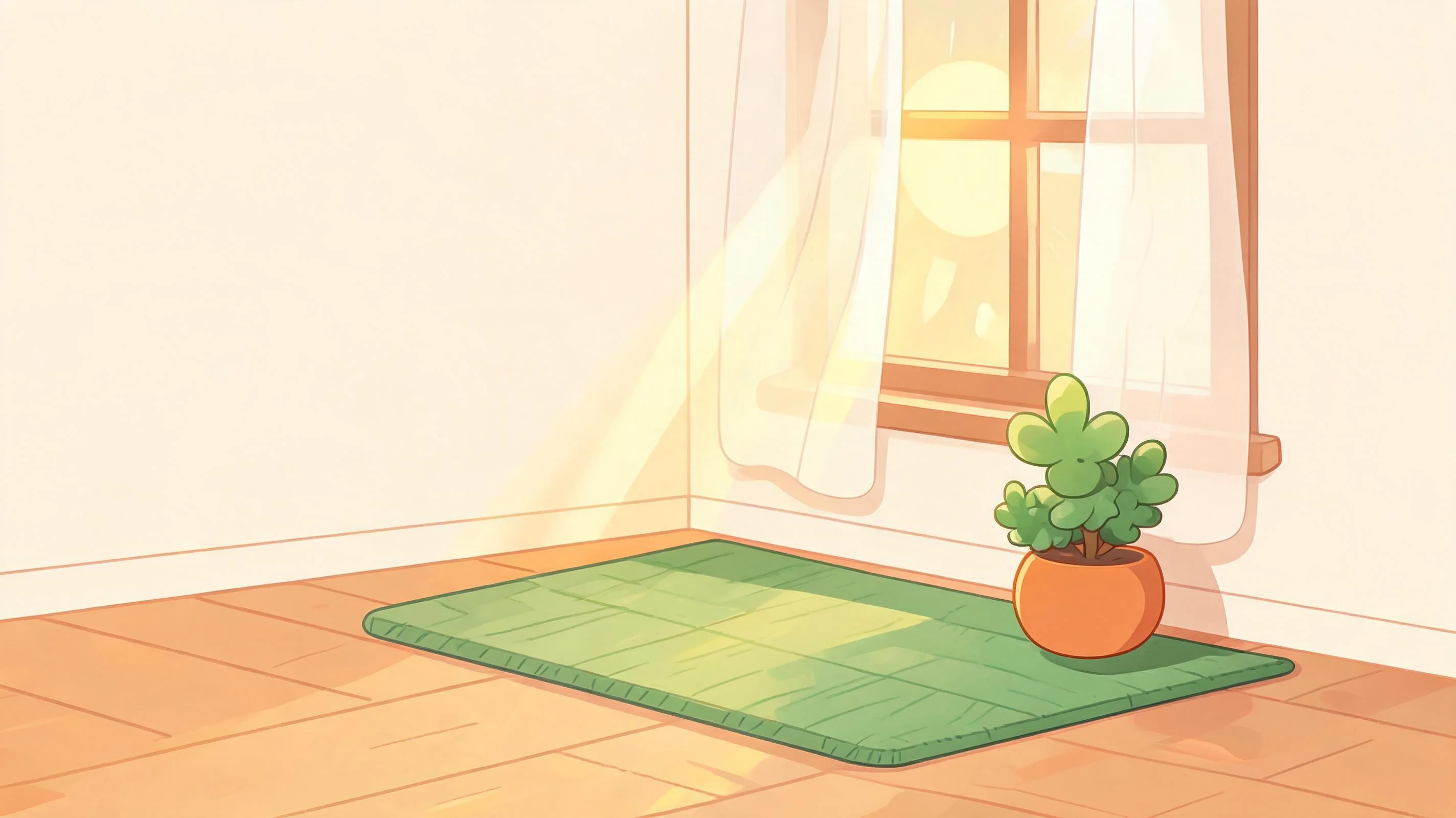
- Light. Natural light lifts morning practice; a warm lamp covers evenings. Avoid harsh overhead-only spots.
- Quiet and traffic. Not in the walking path between kitchen and bathroom. Corners behind sofas work surprisingly well.
- Floor surface. Hard floors are ideal (easy cleaning, stable grip); thick carpet wobbles balances but forgives knees. Any surface works once a mat is down — which brings us to the anchor.
The mat is the anchor
Everything in a small-space setup arranges around one object: the mat. It defines the zone visually when unrolled and packs the entire practice into a single rolled column when guests come.
For tight spaces, size honestly:
- A standard-width mat fits narrow corners but ends flows early.
- A large-format mat like the GXMMAT Large Yoga Mat 6'x4' turns 2×2 meters into a genuine practice zone — no more measuring every warrior pose against the wall.
- If your corner allows a bit more, stepping up to a GXMMAT Large Yoga Mat 6'x6' gives square footage for diagonal flows and props without claiming a whole room.
Because these mats are dense and durable, leaving them unrolled permanently doesn't damage them — and an always-visible mat is quietly the strongest habit trigger you can install.
Storage and tidiness
Small homes punish clutter. Keep the corner honest:
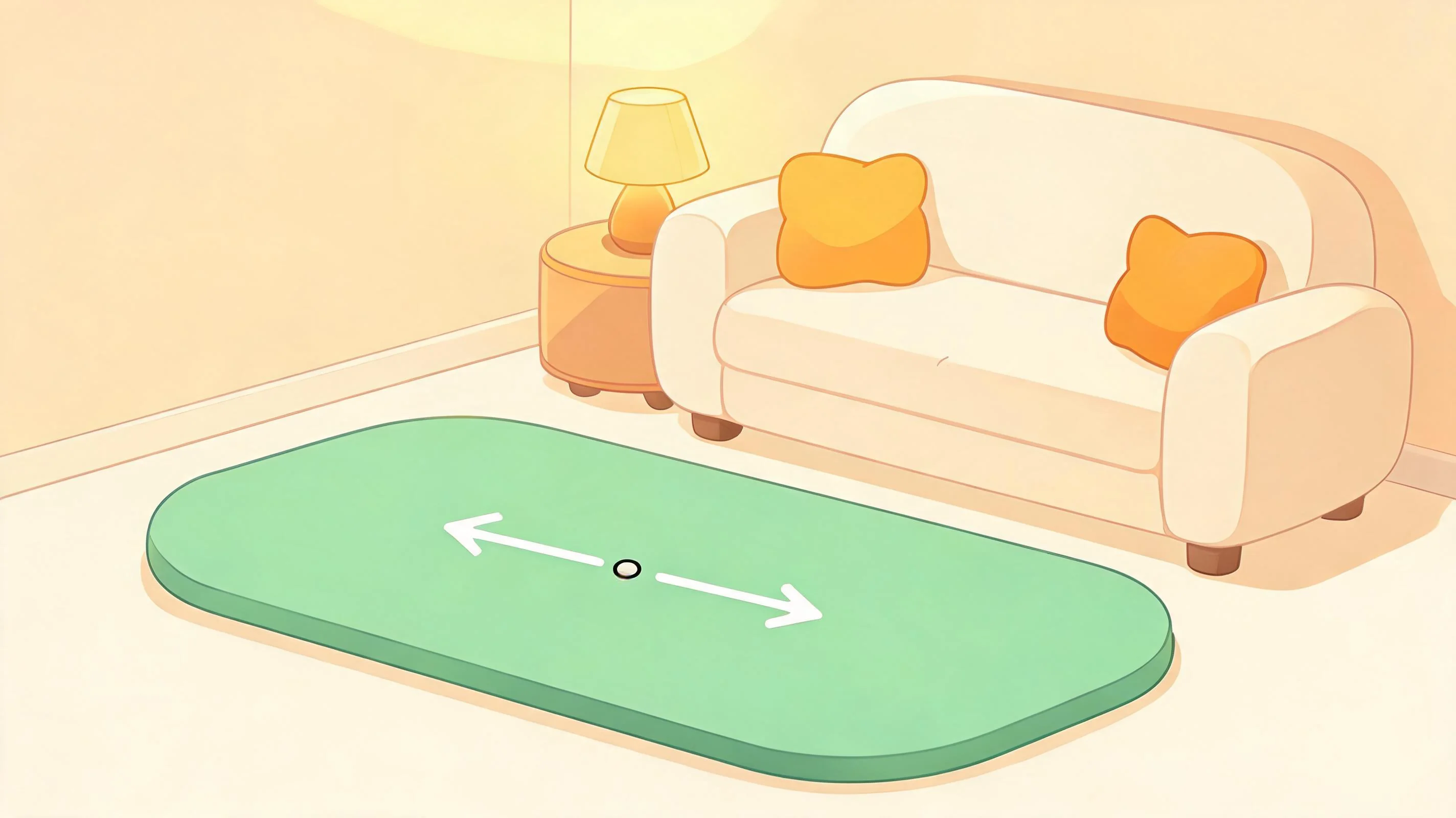
- One basket for blocks, strap and towel — nothing else lives there.
- Vertical hooks for a rolled mat if you must put it away; a wall hook costs nothing and keeps the floor clear.
- No multipurpose creep — the chair that migrates into the corner never leaves. Guard the boundary.
Make it somewhere you want to be
Two or three touches do it:
- Light: morning sun or one warm lamp on a dimmer mood.
- Green: one plant changes how a corner feels completely.
- Sound: a small speaker for ambient playlists, or nothing at all if silence is your luxury.
- Optional: a candle or incense you only light during practice — scent becomes a ritual cue over time.
Home-yoga guides from Peloton to independent teachers converge here: the space should lower friction, not decorate ego. A mat, light, air and quiet outperform expensive decor.
Bottom line
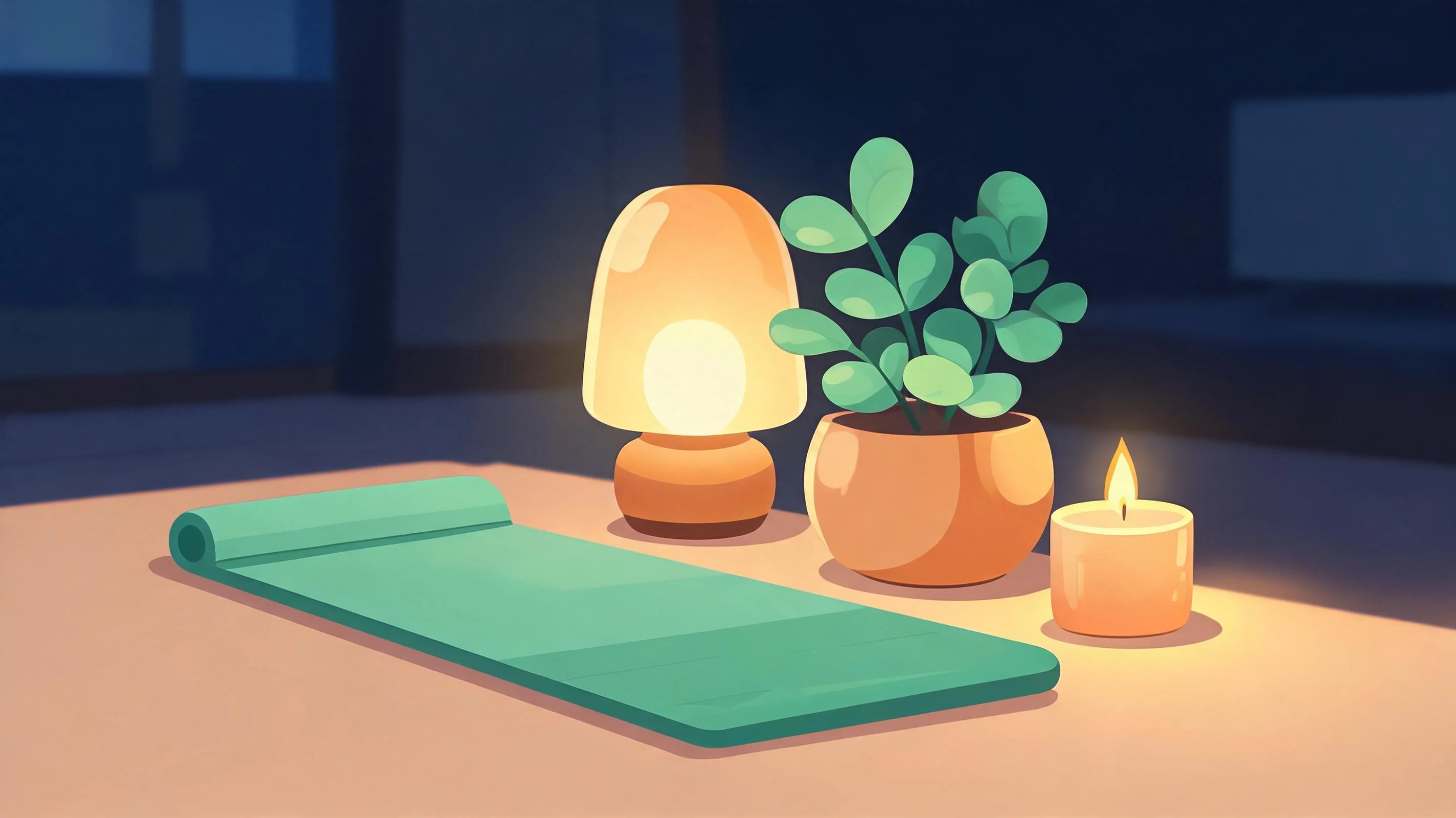
Claim roughly two by two-and-a-half meters near light and away from foot traffic, drop in a dense mat sized to the space, add a basket and one warm touch, and leave the mat visible. That's the whole formula — a corner that asks nothing of you except showing up, which is exactly what a home practice needs.