
Key Takeaways
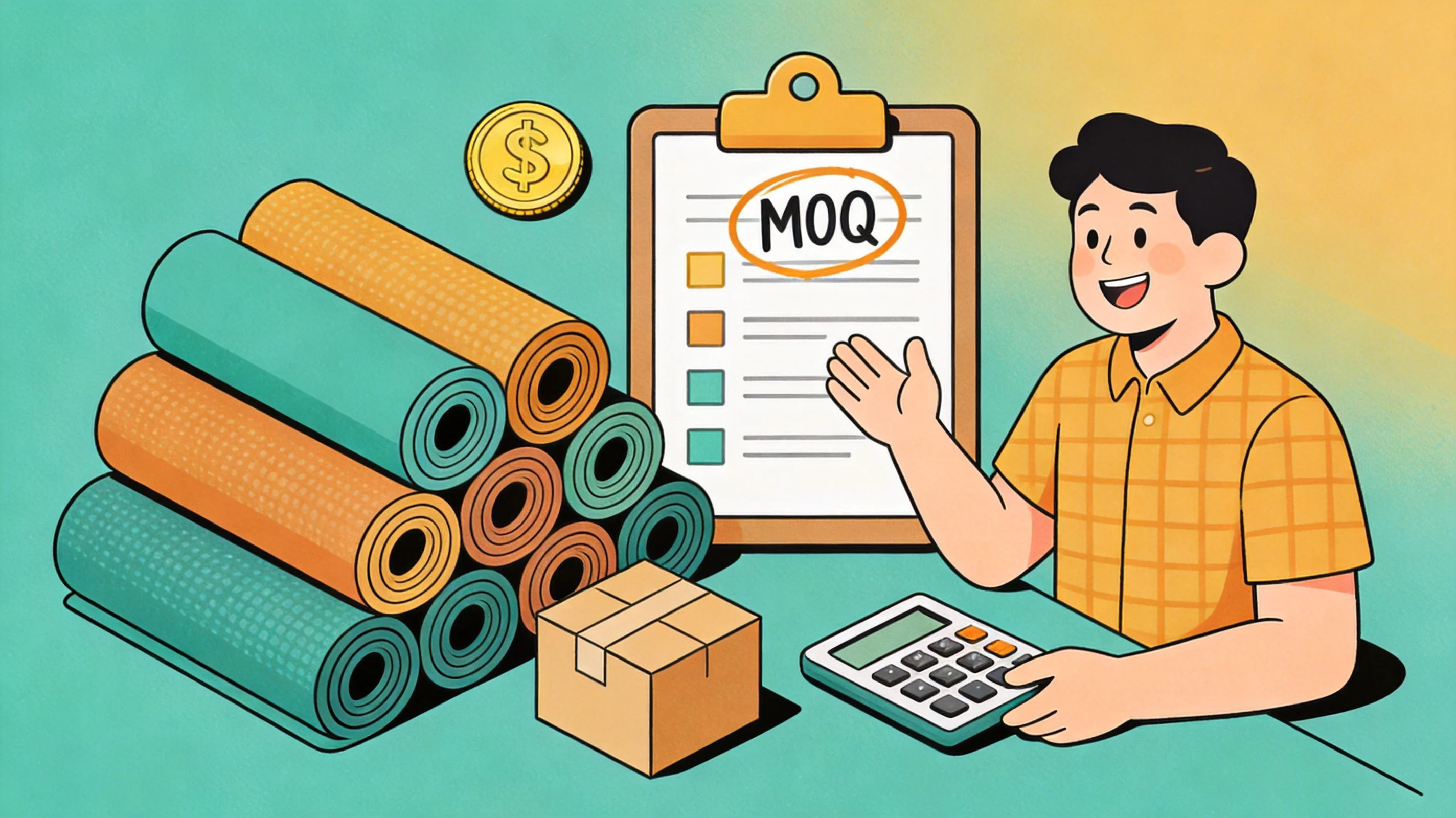
- MOQ (minimum order quantity) is the smallest number of units — or smallest dollar total — a supplier will accept in a single order.
- Suppliers set MOQs to stay profitable; small orders often cost more to admin and pack than the margin they return.
- Typical mat MOQs: stock mats 500-1,000; customized mats 1,000-3,000; test orders as low as ~300; samples as low as 1.
- MOQ affects more than a number — it drives cash flow, inventory risk and your per-unit price. Smaller runs cost more per unit.
- You can negotiate lower by simplifying specs, cutting SKUs, consolidating the run and committing to more volume over time.
What MOQ is
MOQ stands for Minimum Order Quantity — the fewer number of units, or minimum dollar value, a supplier requires before they will sell to you. It is the smallest purchase that still makes sense for them to produce, pack and ship.
Why do suppliers set MOQs? Because processing small orders often costs more than the margin they return. There are admin, picking, packing and shipping costs regardless of order size. An MOQ ensures a supplier doesn't lose money on a tiny order and that a buyer is genuinely committed to carrying the line.
For you, the MOQ is the gate into wholesale pricing. Understand it, and you control your cash flow and unit cost.
Typical MOQs for mats
Mat MOQs vary by how customized the product is:
- Stock mats (standard construction): roughly 500-1,000 pieces
- Customized mats (logo, packaging, materials): 1,000-3,000 pieces
- Market test orders: around 300 pieces — a low-risk entry point
- Sample orders: as low as 1 piece, to validate quality before committing
- Bulk/wholesale orders: 5,000+ pieces for deep volume pricing
Standard industry MOQs are often 500-1,000 for basic mats, climbing to 1,000-3,000 for custom work. Some suppliers offer a 100-piece MOQ with a fast lead time as a low-risk market test.
How MOQ affects you
The MOQ isn't just a number to hit — it shapes three things:
- Cash flow. A higher minimum means a bigger upfront outlay before you sell anything.
- Inventory risk. Larger buys mean more stock that could sit if demand stalls.
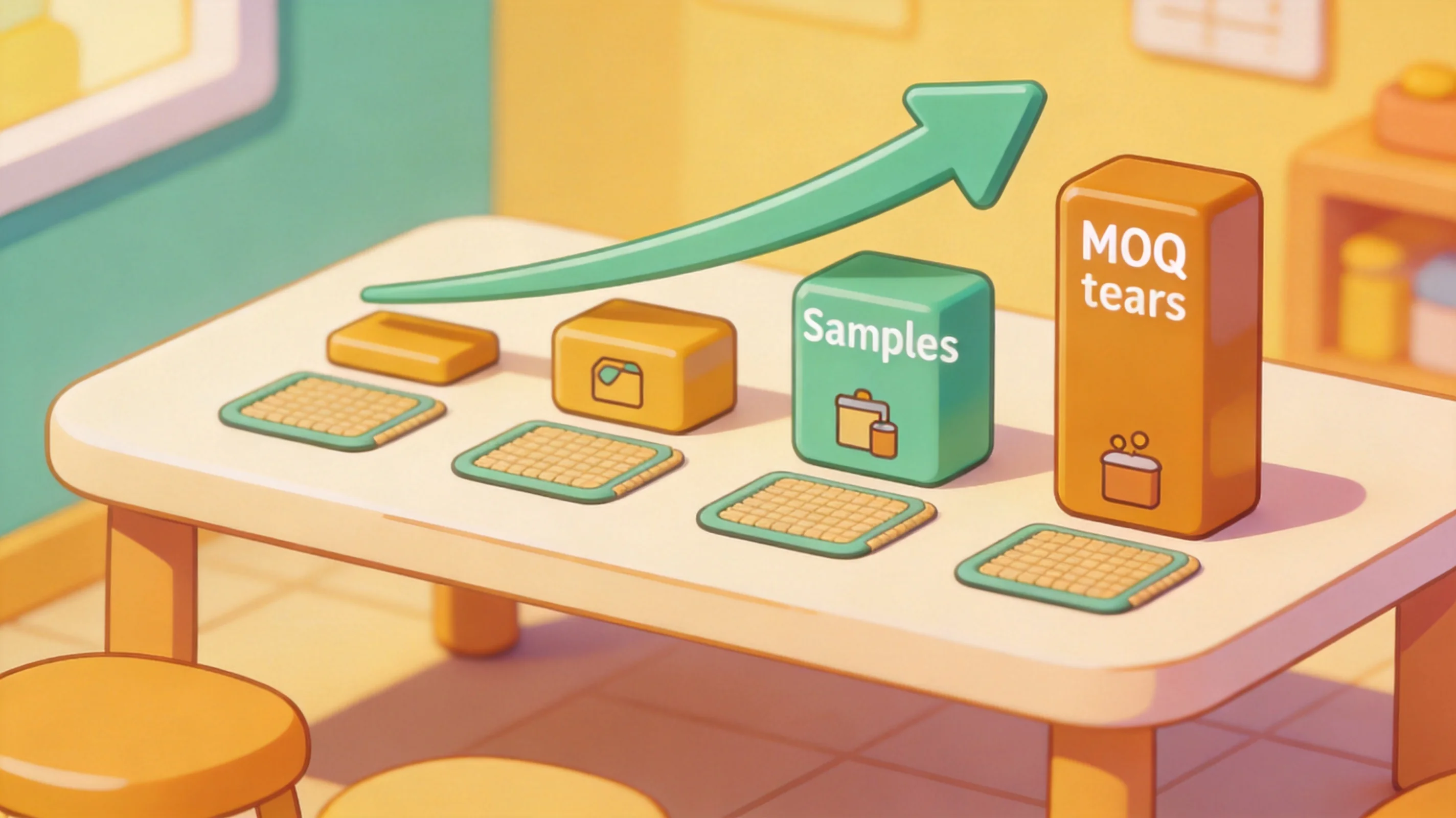
- Per-unit price. Smaller runs cost more per unit; larger runs unlock discounts. Your minimum order and your unit price are traded against each other.
If you're a reseller or a small studio, a huge MOQ can tie up cash in mats you aren't sure you can move. That's why negotiating the right minimum matters as much as the price.
How to negotiate a lower MOQ
The suppliers who get flexible are the ones who see a serious, low-risk buyer. Before asking, do the things that make you easier to serve:
- Ask what they already offer. Suppliers often have standard materials, colors, thicknesses and packaging on hand. Pick from those first — it lowers production complexity and the minimum.
- Simplify your specs. Custom materials, colors and molds raise MOQs. Staying nearer to a stock product keeps the floor low.
- Reduce your SKUs. One or two products sells better and lets you consolidate one larger run instead of many small ones.
- Consolidate and forecast. Commit to reordering, standardize packaging and combine your demand into one order.
- Trade price for minimum. Offer a slightly higher per-unit price in exchange for a lower MOQ — many suppliers accept this.
- Commit to a longer relationship. Suppliers are more willing to lower a minimum if you commit to steady business over time.
- Buy excess stock. Factories clearing inventory will often let stock go at a much lower MOQ.
When a factory is eager to enter a market, they will often agree to a far lower MOQ in exchange for the account. Use that leverage.
A practical entry strategy
You don't have to bite off the full wholesale minimum on day one. A phasing approach de-risks the buy:
- Order samples — validate quality, feel and delivery first.
- Run a small test order (~300) for your counter or smallest channel.
- Sell and measure before reordering.
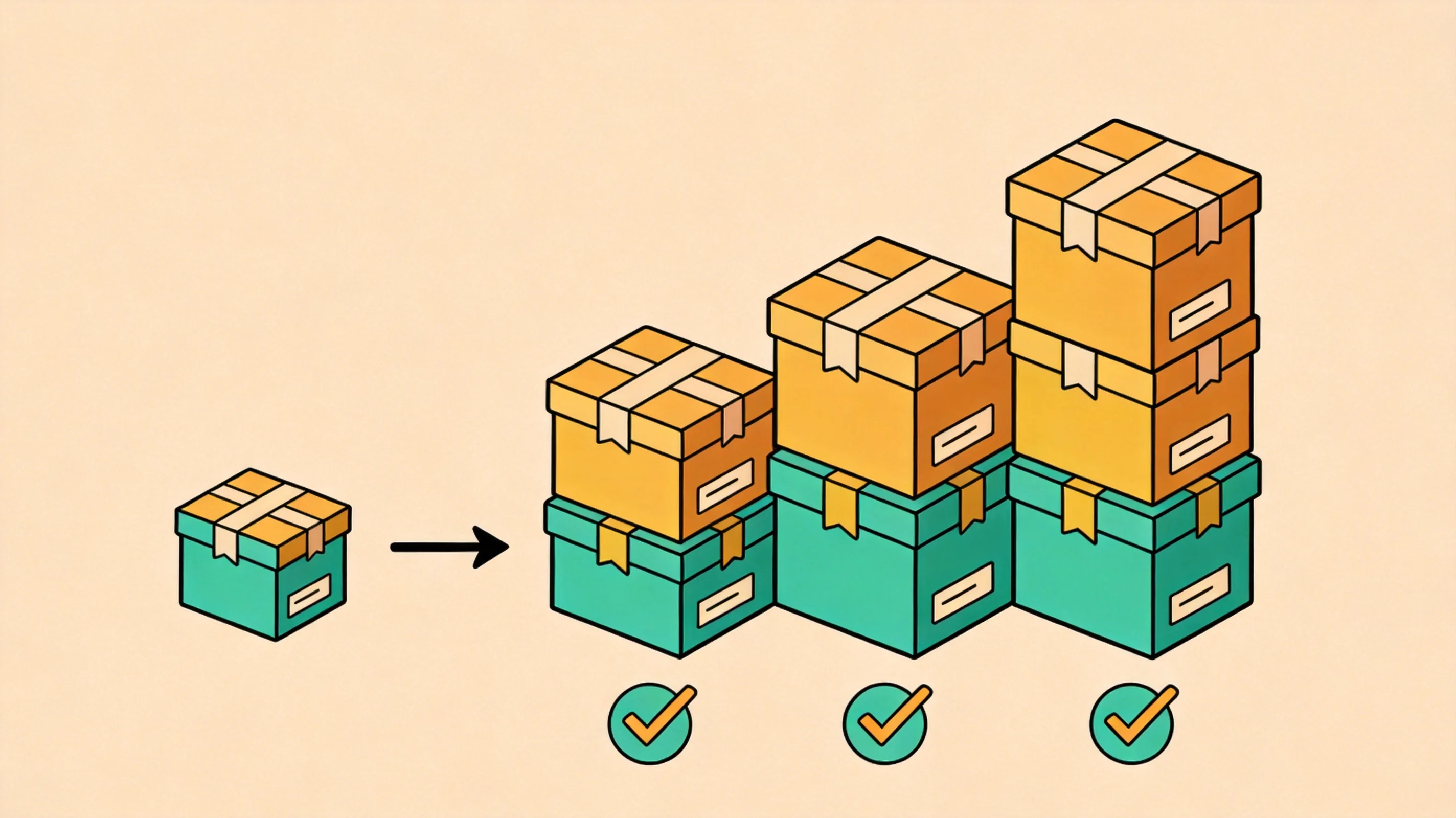
- Scale into larger MOQs once demand and reorders justify the volume and lower unit price.
This way the MOQ works for you instead of against you, and you grow into volume pricing on evidence, not hope.
Bottom line
MOQ is simply the smallest order a supplier will accept, and it exists because small orders aren't profitable to serve. But you're not stuck with the first number you hear. Simplify specs, trim SKUs, consolidate volume, trade price for minimum, or buy excess stock — and you can negotiate a floor that fits your cash flow. Match your buy to a phased plan, and the MOQ stops being a barrier and becomes a lever you control.