
Key Takeaways
- Vinyasa wants firmness and wet-dry grip — you are moving, balancing and sweating on your feet.
- Yin wants generous, dense cushioning — you are parked on knees, hips and sacrum for minutes at a time.
- Thickness is the biggest divergence point: 4–6 mm suits flow, while 8–10 mm or more suits long-held floor poses.
- Material matters in both directions: grippy surfaces protect flow; high-density foam protects stillness.
- A large, dense home mat covers both styles better than two compromises.
Two styles, two sets of demands
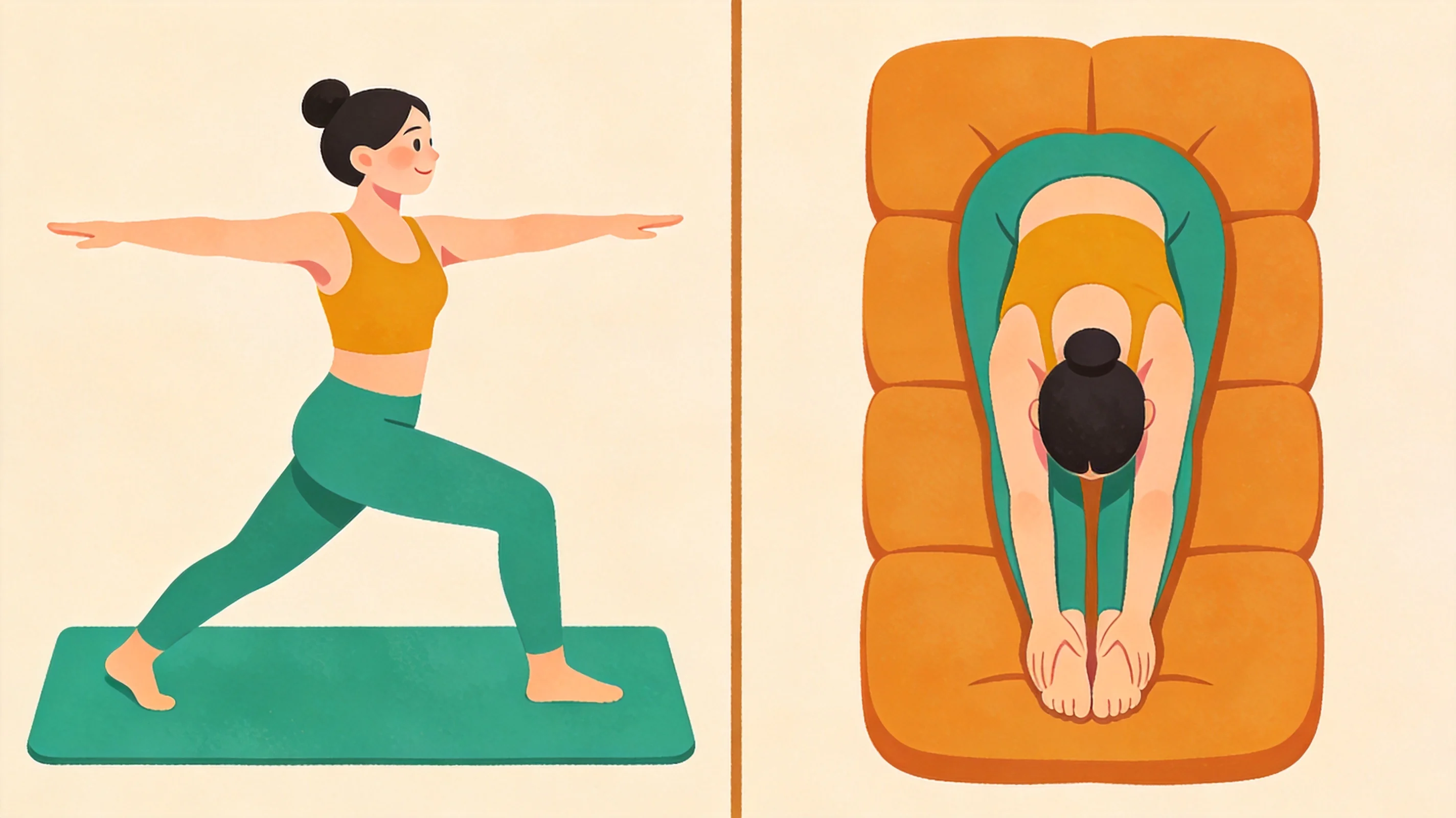
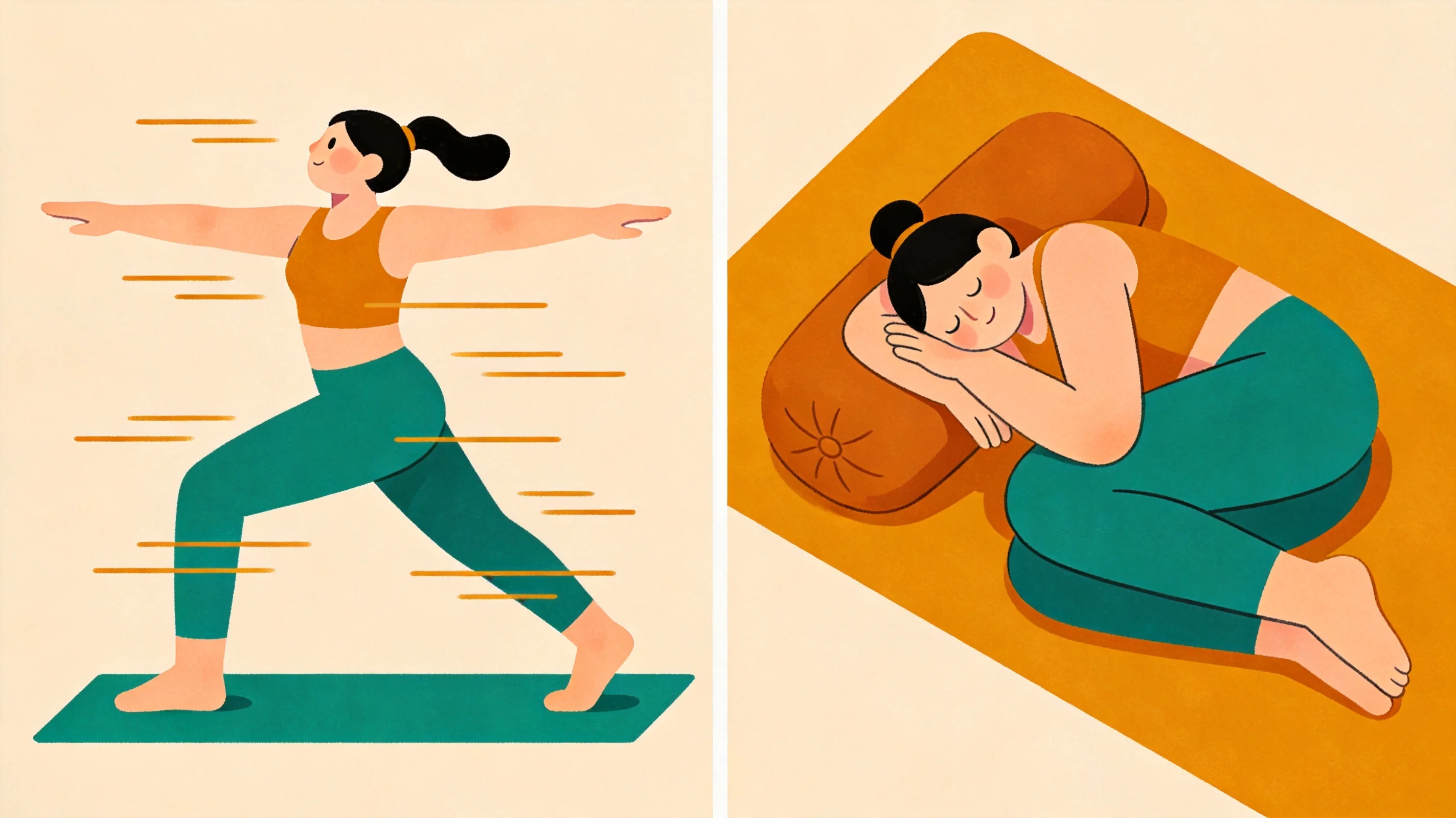
Put a vinyasa class and a yin class side by side and they barely look like the same activity. Vinyasa links breath to movement: continuous transitions, standing sequences, planks and balances, a body that warms as it flows. Yin does the opposite — a handful of floor-based shapes held for three to five minutes each, targeting connective tissue while the body cools toward the floor.
That difference in physics lands directly on your mat. In flow, the mat is a performance surface: it must anchor hands and feet through chaturanga dandasana and stay put during quick weight shifts. In yin, the mat is furniture: it must cradle bony pressure points that bear your full weight without moving at all. One product, asked to do two nearly opposite jobs.
Side-by-side: what each style asks of a mat
Here is the honest scorecard:
| Factor | Vinyasa | Yin |
|---|---|---|
| Priority | Grip and stability | Cushioning and comfort |
| Ideal thickness | 4–6 mm, dense | 8–10 mm+, high-density |
| Surface feel | Tacky, secure under hands and feet | Soft-touch, forgiving |
| Pressure points | Wrists and palms mid-flow | Knees, ankles, hips, sacrum |
| Sweat factor | High — moisture management matters | Minimal |
| Balance risk | Real — too soft destabilizes | None — floor-bound practice |
Notice which row drives everything else. Because vinyasa includes real balance work, softness has a cost there; because yin has none, softness becomes pure profit. That single asymmetry explains almost every recommendation below.
Material and grip considerations for each
For vinyasa, surface grip is non-negotiable. Natural rubber, PU tops and textured TPE all hold their own as palms warm up and sweat appears. Smooth PVC is the classic flow-failure material: fine until class three, then a ski slope.
For yin, grip matters mainly where you enter and exit poses. What changes most is density versus plushness. Style guides consistently recommend at least 5–6 mm of padding for yin, with 6–8 mm ideal for longer holds — enough that ankles and knees never meet hard flooring during a five-minute dragon pose. Ultra-thick soft foams work here precisely because nothing about yin requires standing balance.
Cushioning: where the styles truly diverge
In flow practice, your joints get relief through movement — weight shifts constantly, so no single point loads for long. In yin, gravity wins for minutes at a time, and pressure accumulates exactly where bone meets floor. The mat is the only thing between them.
That is why dedicated yin practitioners often add a folded blanket or cushion under sensitive spots even on decent mats. If your mixed practice leans heavily toward slow floor work, prioritize density over everything: a high-density mat supports without bottoming out, so your sit bones rest on foam rather than hardwood.
One mat or two? Practical setups for mixed practice
Most people alternate styles within the same week, so the practical question is whether one mat can serve both honestly. Three setups work:
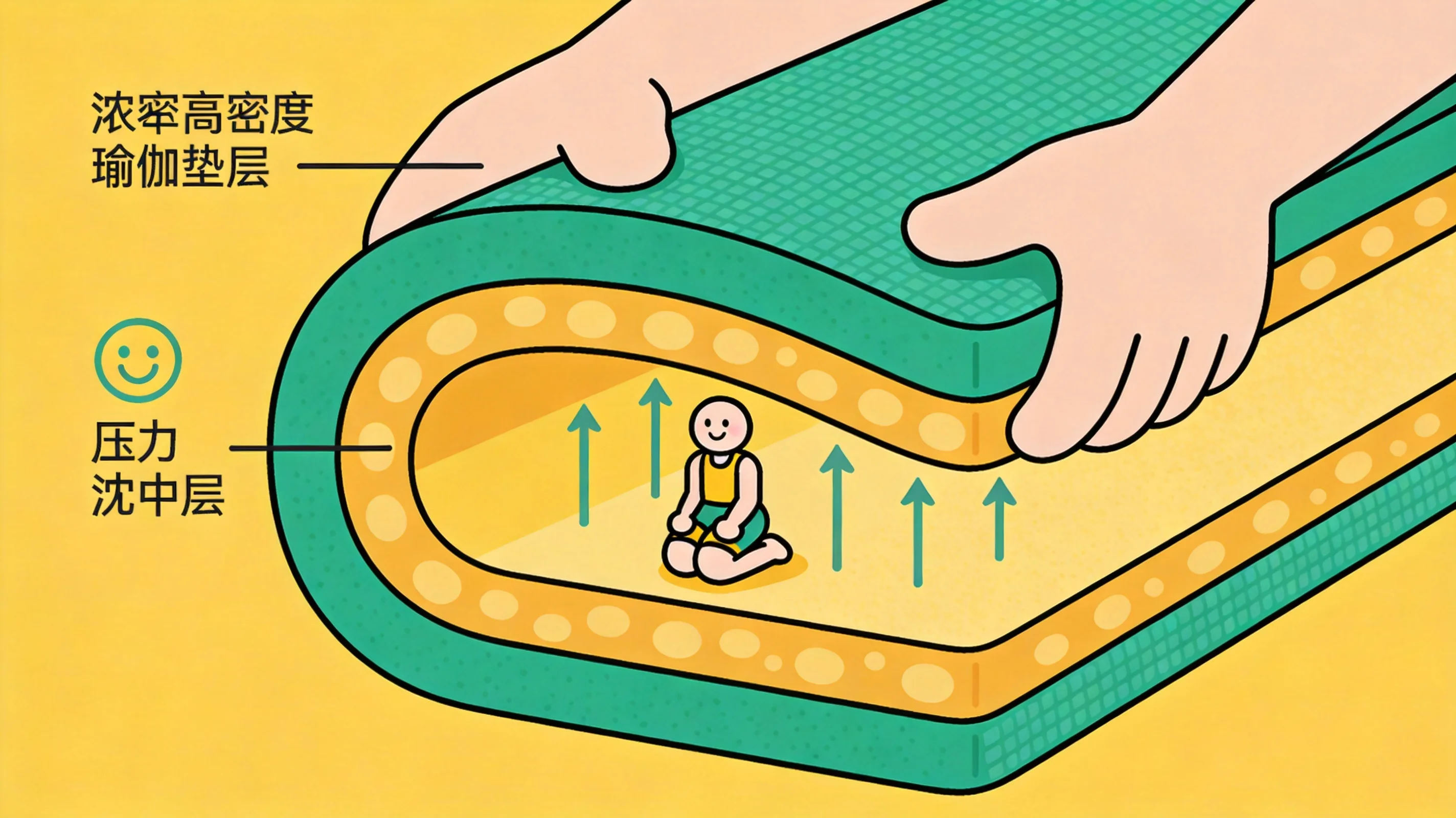
- The hybrid dense mat. An 8–10 mm high-density mat with a grippy surface splits the difference well — firm enough for standing work, kind enough for floor holds.
- Flow mat plus props. Keep a standard mat and fold a blanket under knees and hips for yin sessions.
- The large-format approach. At home, extra square footage serves both styles: room to travel in sun salutations, room to sprawl in swan.
That last option is where oversized formats quietly win. The GXMMAT Large Yoga Mat 6'x4' gives flow practitioners genuine travel space — no more sliding off the edge mid-burpee — while its dense base keeps standing balances honest.
If yin dominates your calendar, lean further into cushioning. The GXMMAT Extra Thick Large Yoga Mat 7'x5'x9mm pairs 9 mm of high-density padding with a full 35-square-foot footprint, so long hip openers land on supportive foam instead of your living-room floor — and there is still room for a bolster when a pose wants one.
Bottom line
Yes, different styles genuinely pull mats in different directions — but not irreconcilably. Buy grip first if vinyasa fills your week, density first if yin does, and let a large, high-density mat with a grippy surface cover both. Your practice will change over the years; a mat sized and built for the whole range will not need to.