
Key Takeaways
- BPM is your primary tool, not genre or personal taste — match the tempo of the music to the energy of each section of your class.
- The playlist follows the energy arc: sparse opening, building middle, peak intensity, then taper to stillness.
- Style-specific BPM ranges matter: Hatha drops everything 10-15 BPM lower; Power shifts 10-15 higher; Yin stays at 50-70 throughout.
- Transitions between songs matter as much as the songs themselves — use crossfade, sequence compatible keys, and test the full playlist before teaching.
- Build a rotating library, not one playlist used forever — repetition kills the sense of presence and discovery.
Why music selection is a teaching skill
A high-energy EDM drop during savasana does not just feel off — it actively works against what you are trying to create. The key to choosing music for yoga is not finding songs you like. It is matching the tempo of the music to the energy of each section of your class.
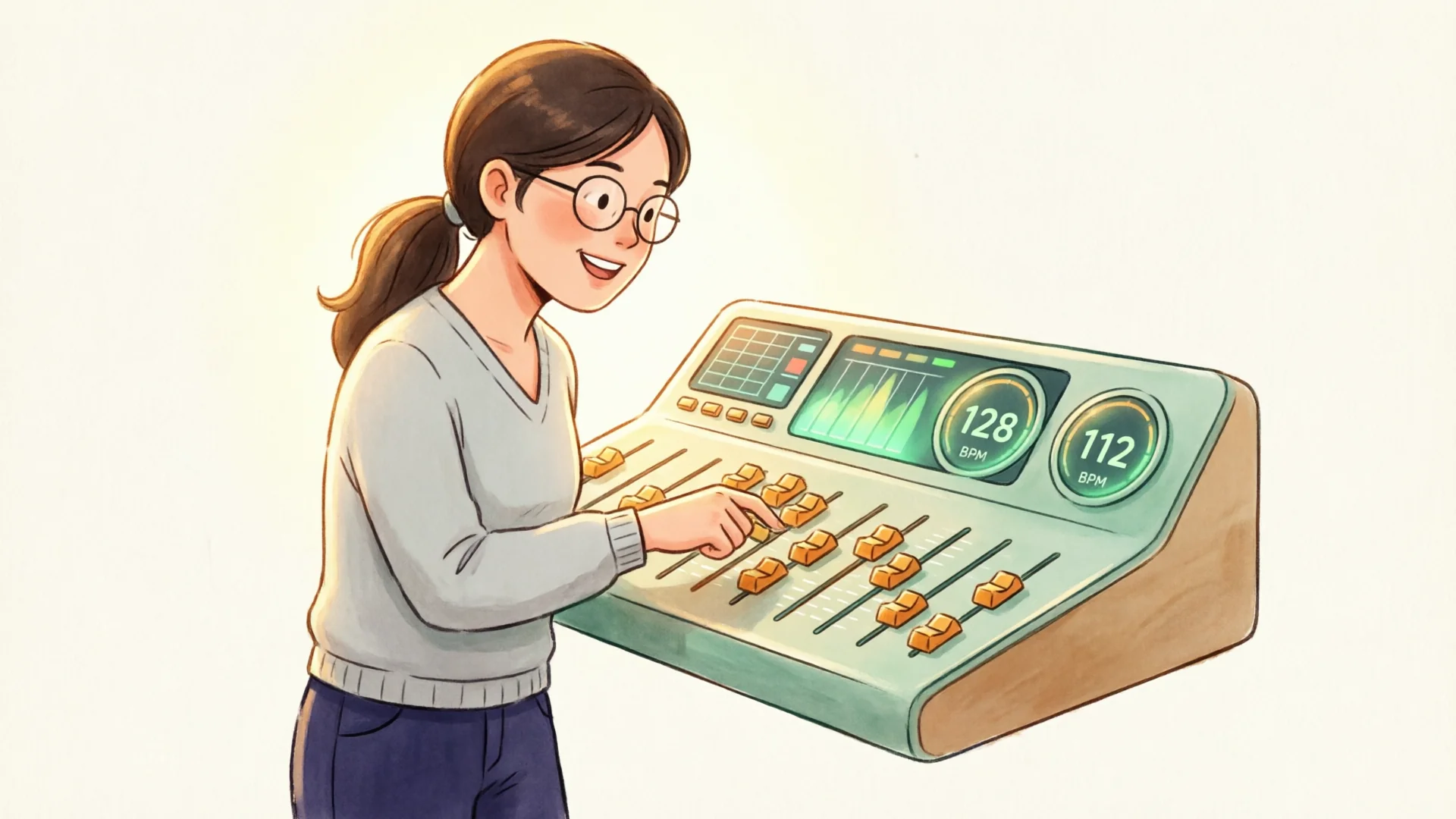
Your resting heart rate sits around 60-80 BPM, and research shows that music tempo influences heart rate, breathing rate and perceived exertion. For yoga instructors, this means BPM is a tool: slower music encourages deeper breathing and stillness, faster music supports dynamic movement and builds energy.
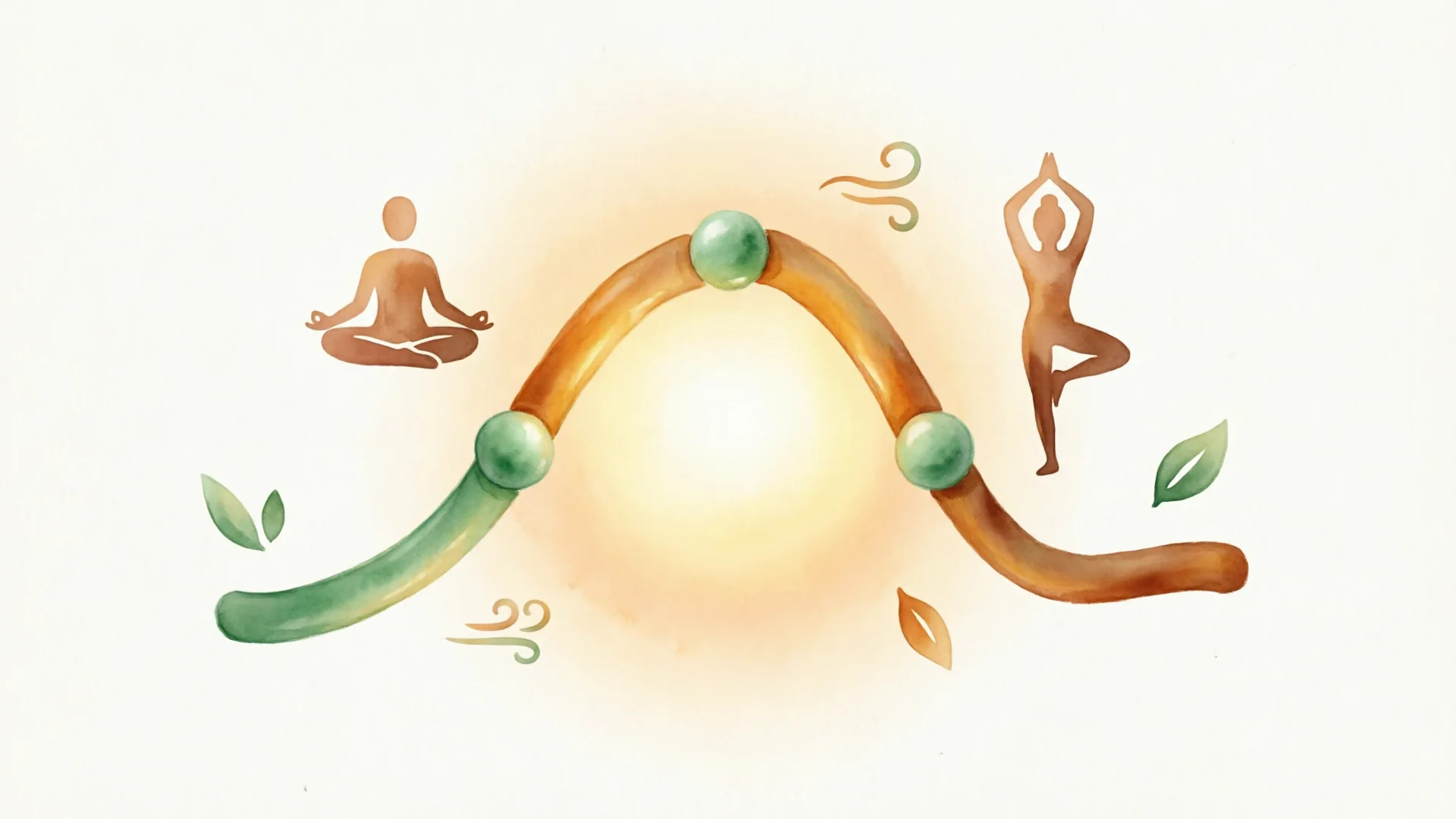
The BPM framework by section
Here is a section-by-section BPM guide for a standard 60-minute vinyasa class:
| Section | BPM Range | Energy Quality |
|---|---|---|
| Opening / centering | 55-70 | Ambient, meditative, sparse |
| Warm-up / sun salutations | 70-90 | Building, gentle rhythm matching breath-linked movement |
| Standing flow | 85-110 | Moderate to high, steady beat supporting flowing transitions |
| Peak sequence | 100-120 | High energy, strong rhythm, the most dynamic part of class |
| Cool-down / floor work | 65-80 | Decreasing, winding down toward stillness |
| Savasana | 50-65 | Minimal, ambient, no strong beat, some instructors go silent |
Style adjustments
- Hatha: drop everything 10-15 BPM lower — longer holds need music that supports stillness, not movement.
- Power / Ashtanga: shift everything 10-15 BPM higher — faster pace, greater physical demands.
- Yin: stay in the 50-70 BPM range throughout — deep holds and surrender, music should barely register.
- Restorative: 40-60 BPM or ambient soundscapes with no discernible beat at all.
Genre selection by class phase
The most effective playlists do not just match tempo — they match energy quality. A 90 BPM electronic track with heavy bass feels very different from a 90 BPM acoustic guitar piece, even though they are the same tempo.
Opening and savasana
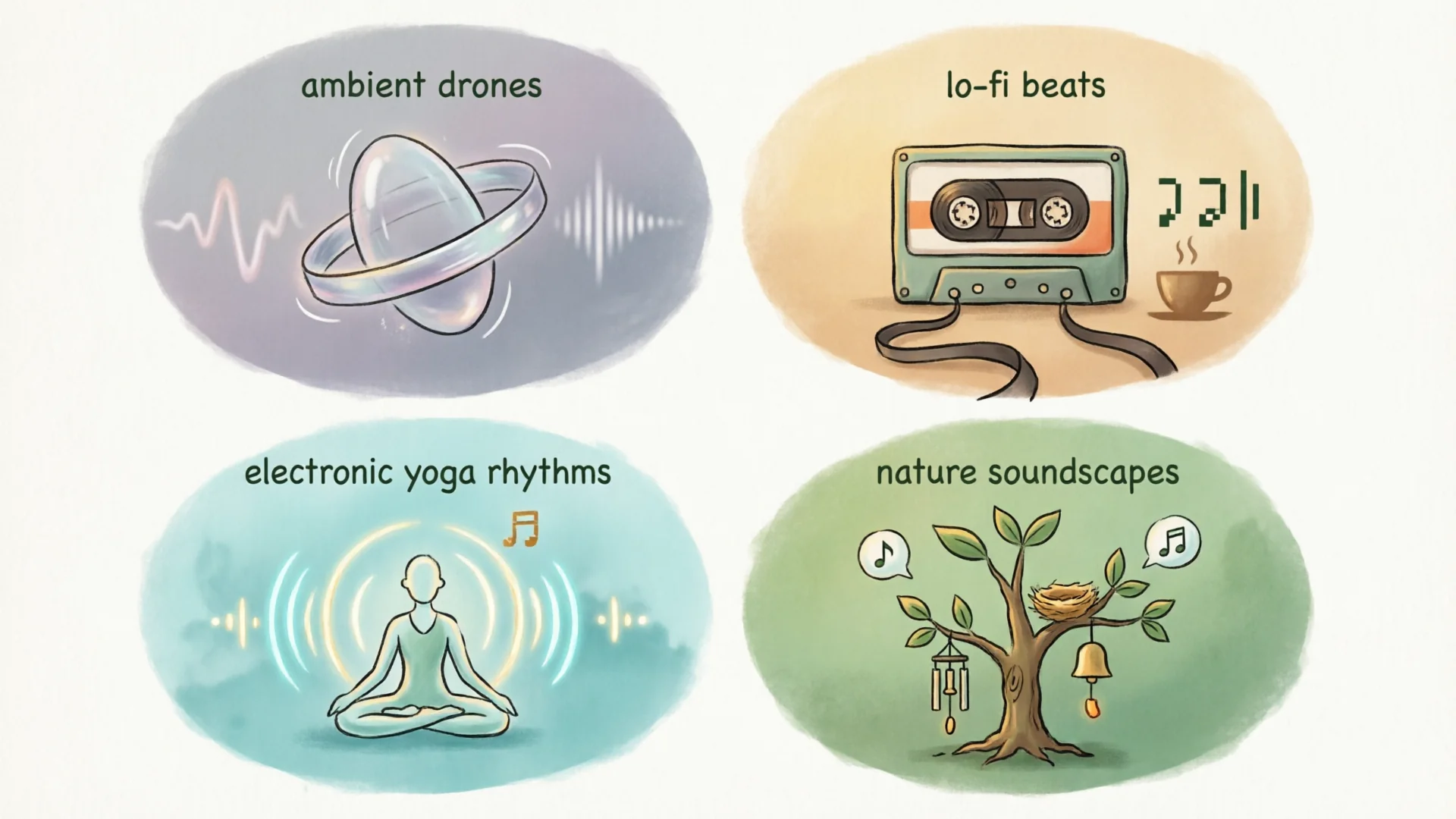
Ambient, drone, nature soundscapes, acoustic guitar instrumentals, classical strings, kirtan-inspired tracks. Artists to explore: East Forest, Deuter, Estas Tonne.
Warm-up and cool-down
Lo-fi, downtempo, acoustic singer-songwriter, chillhop. Familiar enough to feel grounding, slow enough to not rush the breath. Artists: Bonobo, Khruangbin, Iron and Wine.
Standing flow and peak
World music, electronic yoga beats, indie folk with energy. Rhythmic enough to move to, interesting enough to not feel like a gym playlist. Artists: Beats Antique, Trevor Hall, Odesza.
Tip: lyrics can be distracting during poses that require focus. Consider instrumental tracks for your peak sequence and save lyrical songs for warm-up or cool-down when cognitive load is lower.
Building the playlist
Match track count to section duration
A 10-minute section needs 2-3 songs. Do not put 8 songs in a 5-minute warm-up. Make the playlist a few minutes longer than the session so it never runs out mid-pose.
Manage transitions
Even if every individual song is perfect, the transitions between tracks can quietly sabotage the flow state you are trying to cultivate. A sudden shift in key, tempo, volume or sonic texture pulls students out of their bodies.
- Use crossfade settings: a 5-10 second crossfade eliminates jarring silence or hard cuts.
- Sequence songs with compatible keys and tempos — if two songs clash back-to-back, they do not belong next to each other.
- Use purpose-built yoga music composed as extended mixes or continuous sets rather than individual songs.
- Test your playlist all the way through before class.
Disable shuffle
The order is the point. A random shuffle mid-class signals a lack of preparation and breaks the intentional arc.
Style-specific playlist structures
60-minute vinyasa
| Phase | Time | Music |
|---|---|---|
| Breath work | 0-5 min | Relaxed, calm |
| Warm-up | 5-10 min | Still relaxing but with a beat emerging |
| Sun A's | 10-15 min | Eases into movement, encourages building power |
| Sun B's | 15-20 min | Peak energy of the hour, strong rhythm |
| Core | 20-25 min | Pleasant, steady beat you can move to |
| Standing sequence | 25-45 min | Energetic but calm melody, combating fatigue |
| Cool-down | 45-55 min | Beautiful, meditative, safe and peaceful |
| Savasana | 55-60 min | So chill you forget it is there, or silence |
Yin or restorative
Long ambient pieces with no beat at all. Single tracks of 10-20 minutes avoid transitions during long holds. The music should barely exist — present enough to create a container but not interesting enough to pull attention.
Volume and practical details
- Music should be loud enough to create atmosphere and mask minor external sounds, but never so loud that students cannot hear your cues or their own breath.
- Adjust volume down significantly for savasana — everyone is still and hypersensitive to sound.
- Test in your actual teaching space, not just at home.
- Download playlists before class and set phone to airplane mode — nothing kills savasana like a notification sound.
Build a rotating library
Rather than creating one playlist and using it endlessly, build a rotating library organized by class style, time of day, season or energy. Suggested categories:
- Dynamic flow playlist (60-75 minutes) with a clear arc from warm-up through peak and back to savasana.
- Slow flow or yin playlist (60-90 minutes) with lower tempos and spacious pacing.
- Morning energizer playlist (30-45 minutes) with brighter tones and moderate tempo.
- Restorative or evening wind-down playlist (60 minutes) with very slow, grounding music.
- Dedicated savasana library with several long-form, drone-based tracks.
Students who hear the same playlist every week start to anticipate transitions and lose the sense of presence. Rotate, refresh, and let your music evolve with your teaching.
When silence is the right choice
Plenty of experienced teachers practice and teach in silence. Traditional Ashtanga rooms typically use none — the sound of collective breathing becomes the rhythm. Silence sharpens body awareness and removes any risk of the playlist steering your pace.
A reasonable approach: music for dynamic practice when motivation is low, silence for meditation and at least some sessions per week, so the practice never depends on a soundtrack.
The best playlists are the ones your students never consciously notice — they just feel the class flow more deeply because the music is doing its job beneath the surface.