
Key Takeaways
- Yoga can help a sore back — but only if the practice is safe, and the mat is part of that safety.
- Density matters more than softness: a mat that bottoms out transfers pressure straight to your spine.
- Aim for roughly 6-10 mm of high-density material for back-focused practice; ultra-soft thick foam destabilizes movement.
- Grip is protection too — slipping mid-pose is how backs get strained.
- Size gives you escape room — extra space means fewer awkward compensations when a pose needs adjusting.
Can yoga help back pain?
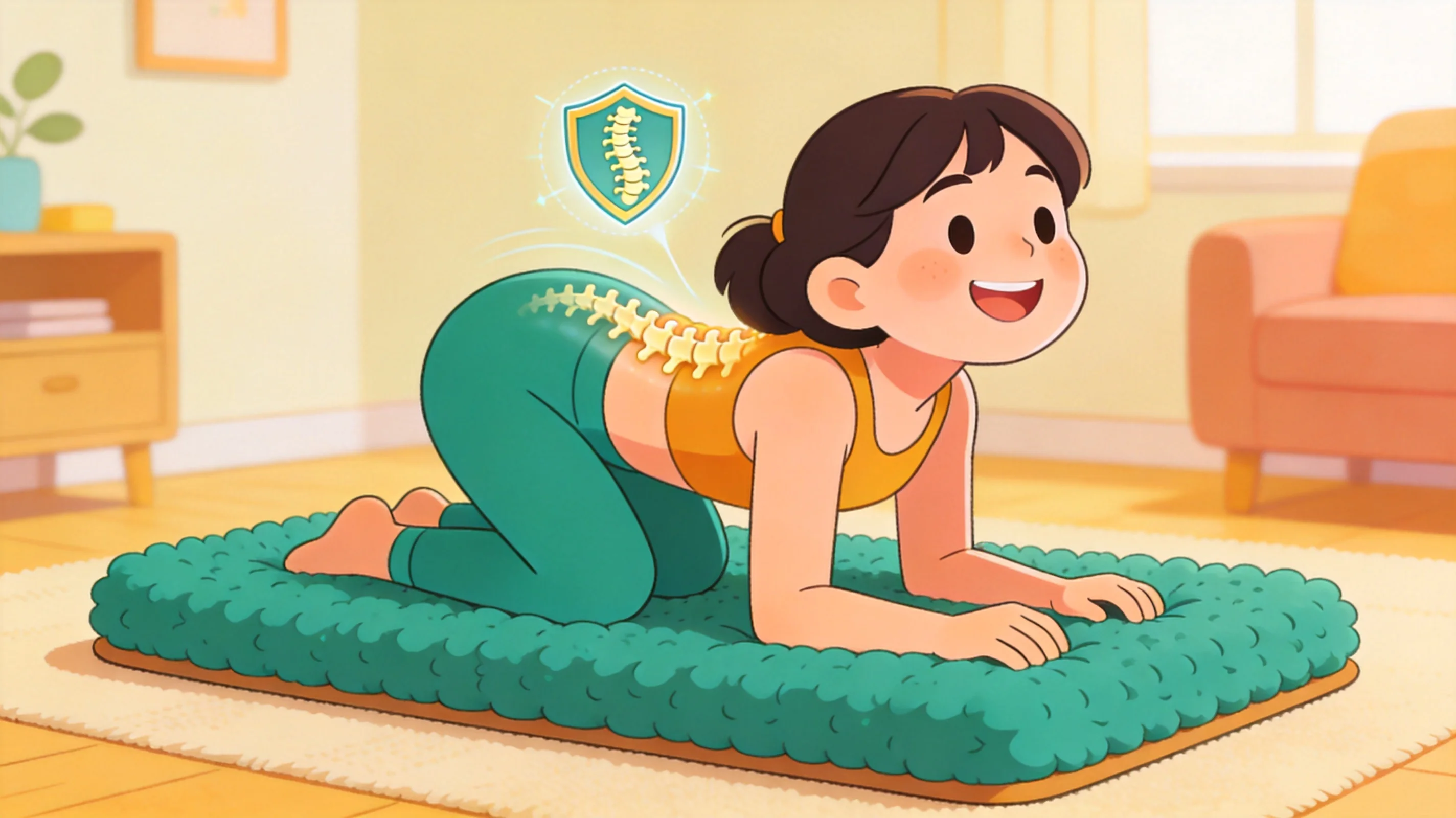
Done gently and with good support, yes — clinical guidance increasingly accepts yoga as part of a conservative care plan for chronic low back pain, alongside movement quality and gradual progression. Harvard Health notes that the safe way to do yoga for back pain involves working within your range and avoiding positions that load the spine aggressively.
But here's the part most articles skip: your equipment is part of the therapy. A mat that lets your vertebrae slam into hardwood on every seated roll-through undermines everything else you're doing right.
What actually helps: cushioning vs support
These get confused constantly:
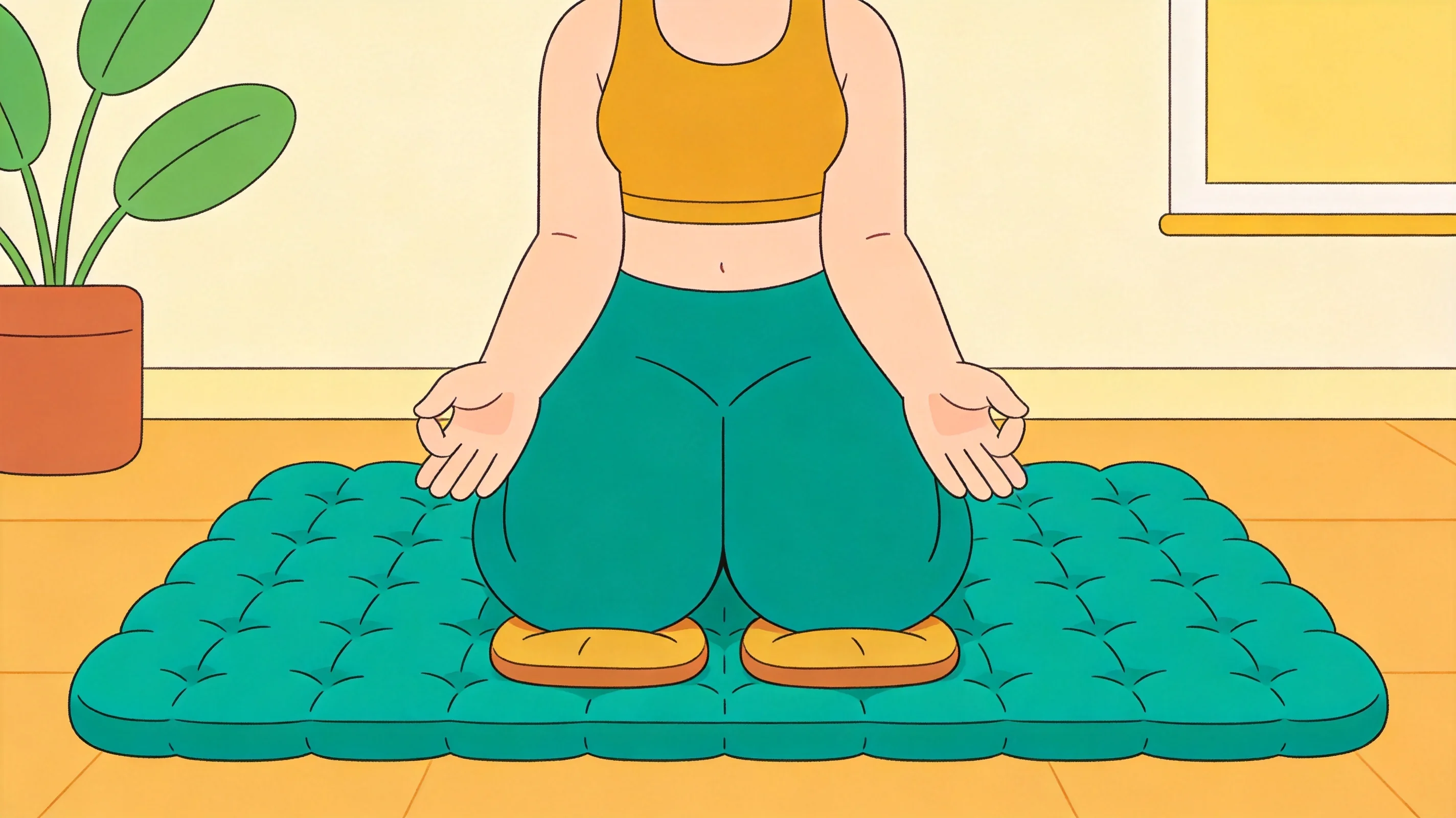
- Cushioning absorbs impact — knees rolling through, sitting bones landing.
- Support resists compression — it keeps joints from sinking through to the floor.
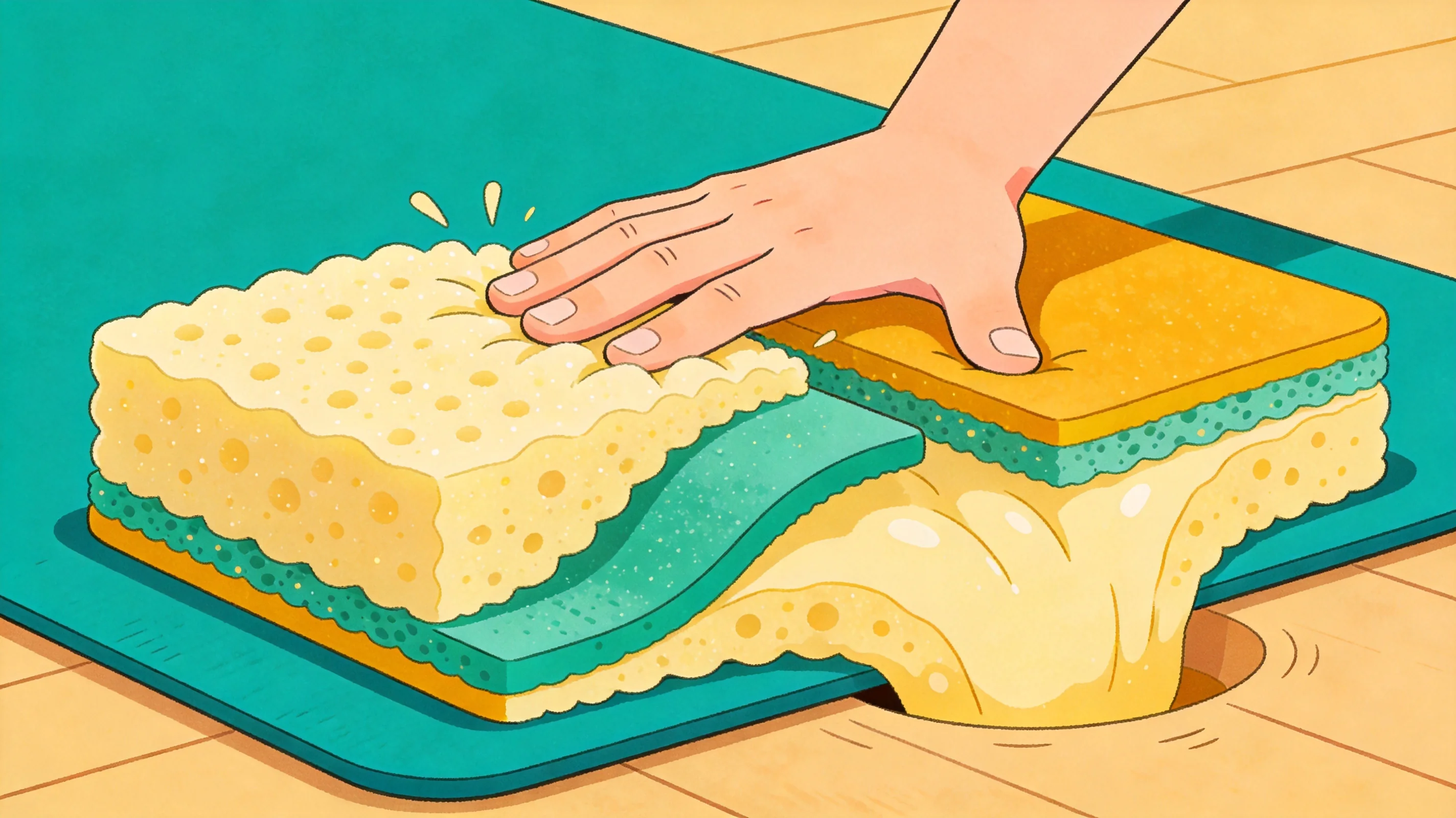
A marshmallow-soft mat has cushioning but no support. Your knee sinks until bone meets ground, just more slowly. What a sore back needs is high-density foam: material that compresses slightly under load and then pushes back, distributing pressure instead of surrendering to it.
Thickness and density guidance
For back-conscious practice:
- 4-5 mm works for standing-heavy flows if you have no acute sensitivity.
- 6-8 mm of dense foam is the sweet spot for most people managing back discomfort.
- 9-10 mm+ suits floor-based therapeutic practice — long-held stretches, restorative work — where you're parked on the same contact points for minutes.
The trap is buying thickness without checking density. Press your thumb into any mat you're considering; if it sinks easily all the way to the floor beneath, so will your sacrum.
Grip and surface: stability protects your back
Back-safe practice depends on controlled movement. When your hands slide forward in downward dog or feet skid in a transition, your lower back pays for the correction. A grippy top surface and a non-slip underside are injury prevention, not luxury features — especially if you practice on smooth floors.
Material-wise, textured TPE, natural rubber and PU-topped constructions hold up best as hands warm and sweat appears. Smooth PVC is the one to be skeptical of.
Size: give yourself room to move safely
A cramped mat forces compensation — shortened stances, twisted transitions, poses adapted around the edge rather than your body. Extra length and width mean you can adjust position freely without falling off, which matters double when your back already moves carefully. That's a big reason larger-format mats have become popular for home practice: the GXMMAT Extra Thick Large Yoga Mat 7'x5'x9mm pairs 9 mm of high-density padding with a 35-square-foot footprint, so sensitive knees and sit bones land on real support while every pose keeps room to spare.
If your practice mixes yoga with gentle strength or stretching work, an oversized exercise format does the same job even bigger — the GXMMAT Extra Large Exercise Mat 6'x10' covers an entire practice zone at 12 mm, which physical-therapy-style floor routines appreciate.
Practice habits that multiply your mat's benefit
- Warm up the spine gently before deeper ranges — cat-cow before deep twists.
- Bend the knees generously in forward folds; let the hamstrings off the hook.
- Avoid loaded end-range twists, especially early.
- Use props without apology — blocks bring the floor closer in standing poses.
- Stop at sharp pain, always; muscular stretch is fine, nerve-type pain is not.
Bottom line
For a back-sensitive practice, choose density over softness, keep thickness in the 6-10 mm high-density range, demand real grip top and bottom, and buy enough size that no pose ever gets adapted around the edge of the mat. Pair that mat with patient, prop-friendly habits and your yoga becomes something your back looks forward to — not braces for.