
Key Takeaways
- Pregnancy hormones relax your ligaments, so joints need more protection than usual — dense cushioning of 8 mm or more is worth considering.
- Stability still rules: a firm, grippy surface beats a squishy one as balance shifts with your center of gravity.
- Room to widen your stance matters by the second trimester; extra width keeps kneeling and seated poses comfortable.
- Always practice with your healthcare provider's approval, and treat the mat as one part of a safe, supported setup.
What changes during prenatal practice
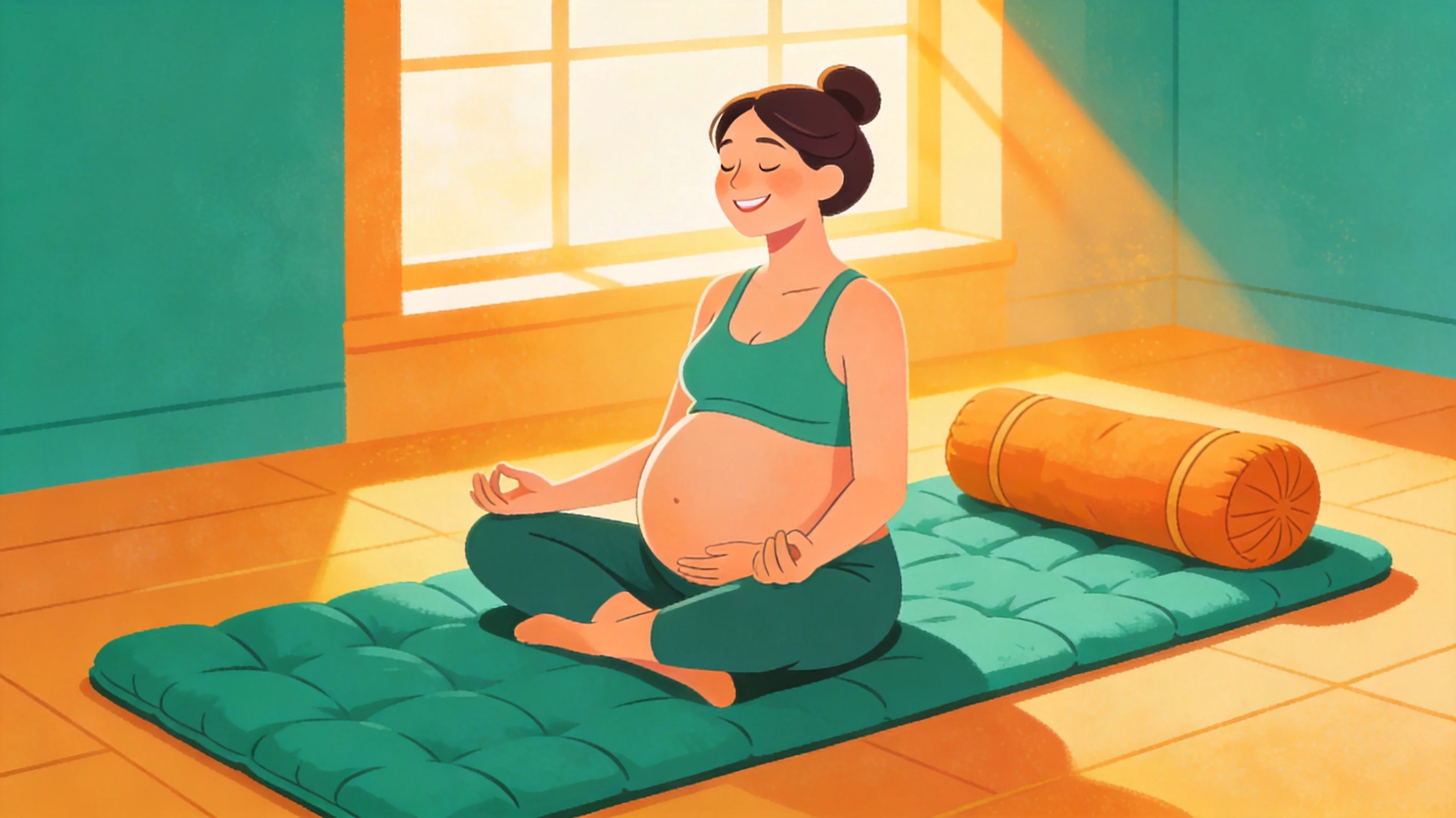
Prenatal yoga is gentler in pace but harder on equipment than it looks. As pregnancy progresses, the hormone relaxin loosens ligaments throughout the body, blood volume rises, and the growing bump shifts your center of gravity forward. Kneeling feels different. Getting down to the floor and back up becomes its own mini-practice. Pressure points multiply — knees, hips, wrists, tailbone.
A mat that felt fine before pregnancy can suddenly feel thin and unforgiving. The good news: the fix is straightforward, focusing on three qualities — cushion, stability and space.
Cushion: thickness and density for changing bodies
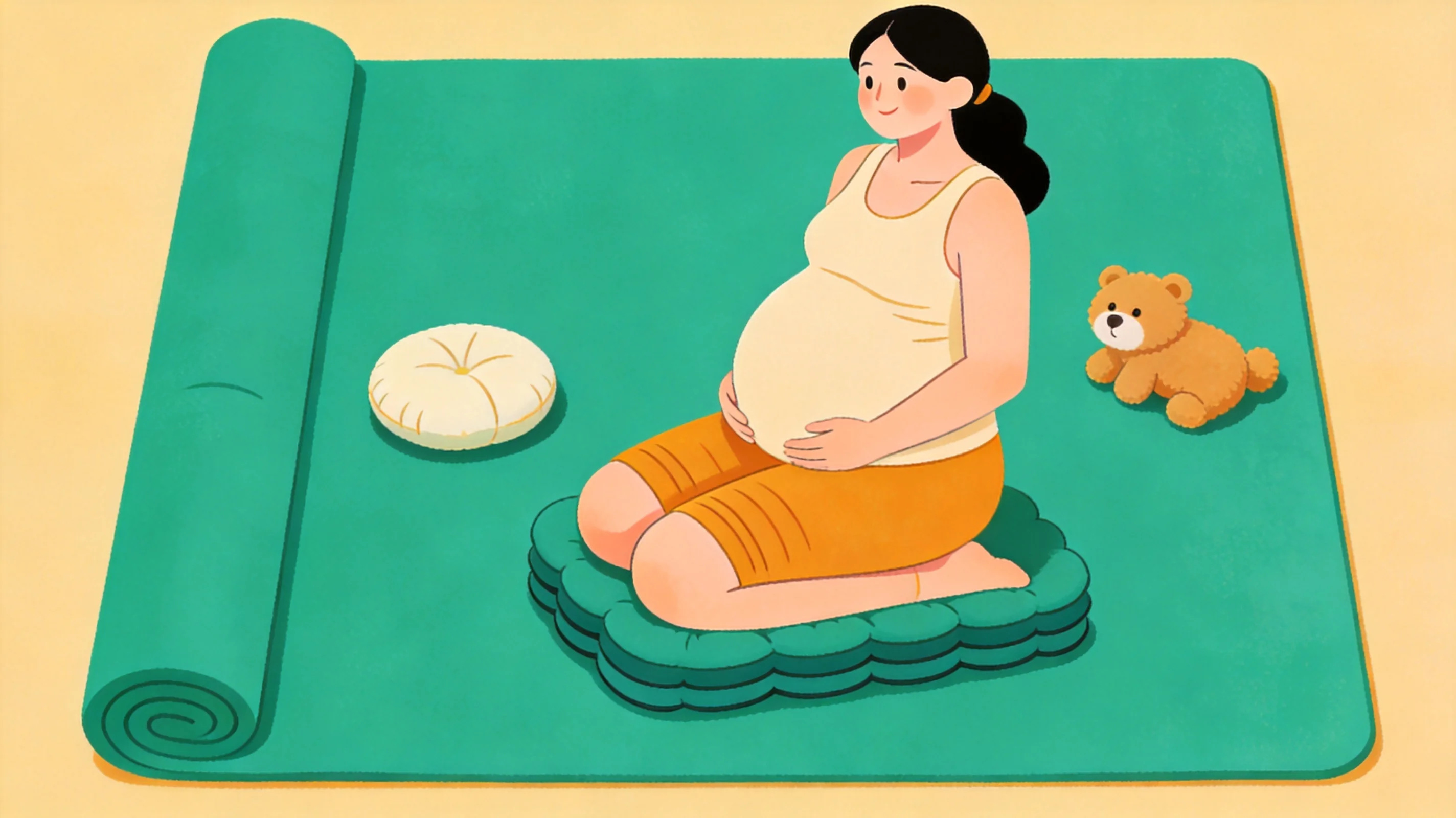
For prenatal practice, err generous:
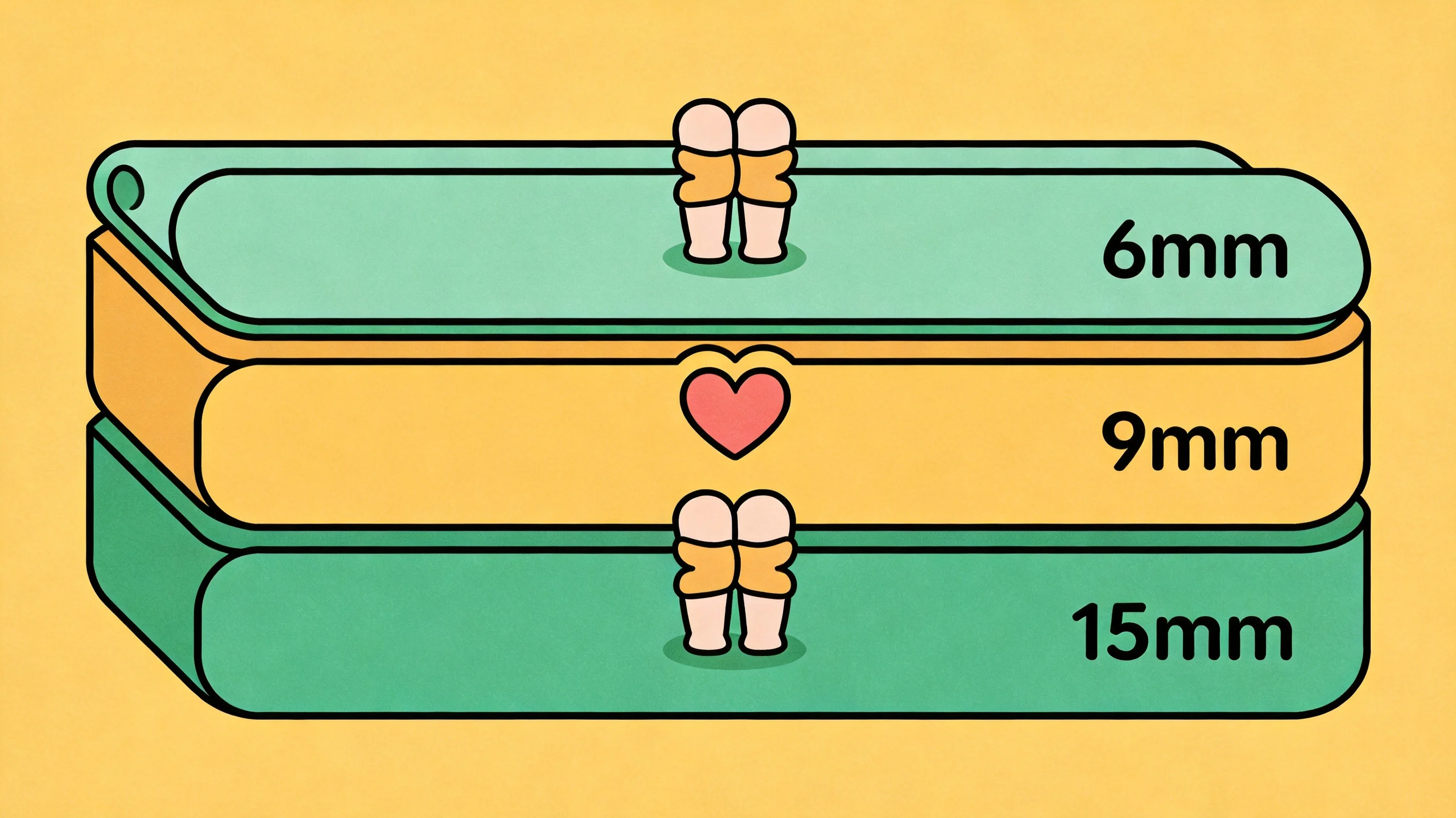
- Standard 5–6 mm: fine early on, but often not enough once knees and hips do regular floor work.
- 8–10 mm high-density: the comfort zone for most of pregnancy — real shock absorption without sinking.
- Soft 15 mm foam: tempting, but too unstable for standing work and too yielding for wrists.
Density is again the secret. A high-density mat supports a kneeling bump-friendly posture without letting knees touch bottom. Something like the GXMMAT Extra Thick Large Yoga Mat 7'x5'x9mm pairs that deep 9 mm cushioning with a dense core, so gentle floor sequences feel padded rather than mushy.
Material matters too. Choose mats labeled free of PVC, heavy metals and strong chemical smells; natural rubber and quality TPE are the usual safe picks. Let any new mat air out for a couple of days before first use.
Stability: why firmness still matters
Here is the balancing act: your body needs cushion, but your balance needs a steady floor. As the bump grows, your weight shifts forward and slightly wider; standing poses feel subtly different week to week. A mat that compresses unevenly or slides amplifies every wobble.
Look for:
- Textured top that holds palms and feet during weight-bearing poses.
- High-grip underside so nothing shifts when you step wide.
- Firm edges — no curling corners to catch a foot during slow transitions.
And give yourself permission to keep a chair, wall or countertop within arm's reach for balance support. That is smart prenatal practice, not weakness.
Space and setup at home
Prenatal routines love lateral room: wide-legged child's pose, side-lying stretches, hip circles. Standard-width strips start feeling narrow right when you need freedom most.
A larger surface solves several problems at once. With a spacious mat like the GXMMAT Large Yoga Mat 6'x4', there is room for bolsters and pillows beside you rather than balanced precariously at the edge, plus clean floor space to roll onto your side safely. Home practice also means you can keep water, phone and snacks within reach — small comforts that matter enormously in the third trimester.

Safe-practice extras
Round out the setup with a few pregnancy-specific touches:
- Bolster or firm cushions under hips and belly in restorative poses.
- Yoga blocks to reduce how far you fold forward.
- A folded towel rolled under the side of the bump during side-lying rest.
- Non-slip socks for slow, deliberate transitions on hard floors.
Check with your doctor or midwife about which movements suit your trimester, then let your mat handle the comfort half of the equation.
Bottom line
A great prenatal yoga mat combines deep, dense cushioning, trustworthy grip and generous width so that changing bodies stay protected and balanced through all three trimesters. Aim for 8–10 mm of high-density material, keep supports close by, clear enough room to move freely, and always pair your practice with guidance from your healthcare provider. Comfortable support lets you focus on what prenatal yoga is really about: breathing, strength and connection.