
Key Takeaways
- A basic care kit costs almost nothing: spray bottle, soft cloths, mild soap or vinegar solution, and a strap.
- Wipe after sweaty sessions; deep clean monthly — over-washing wears mats out faster than under-washing.
- Roll with the practice side facing out so the corners stay flat during use.
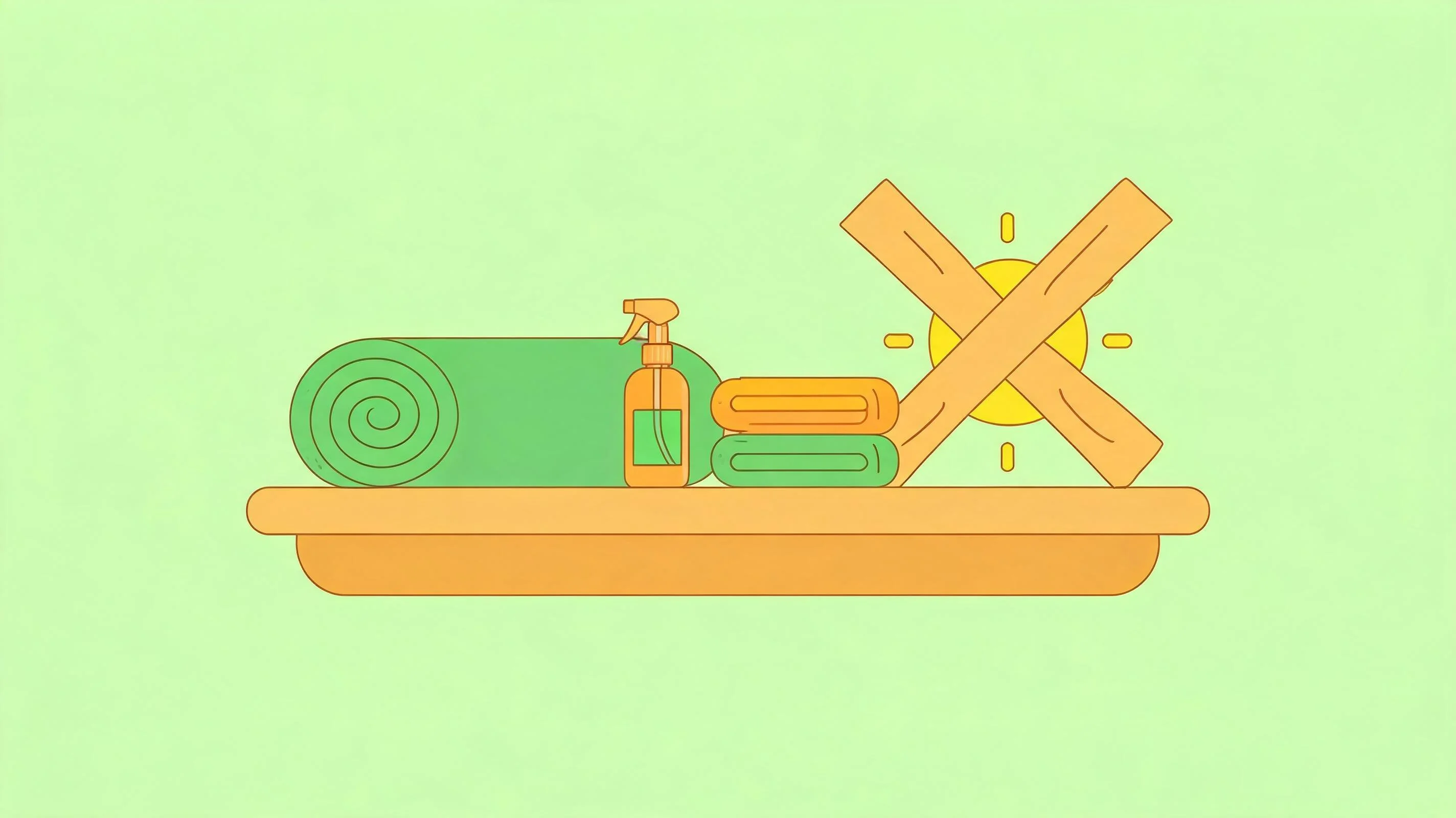
- Store cool and dry, away from sunlight — UV degrades foam and rubber.
- Care differs by material: closed-cell TPE/PVC wipes clean; open-cell rubber needs gentler, less wet treatment.
Why a care kit matters
Mats rarely die mid-practice. They die in the closet — rolled up damp, leaning against a sunny window, absorbing the smell of last week's hot session. A few dollars of supplies plus a two-minute habit can add years to a mat's life, which is both cheaper and greener than replacing it.
REI's care guidance sums it up well: regular gentle cleaning, full drying before storage, and avoiding harsh chemicals are what keep a mat functional season after season.
What goes in the kit
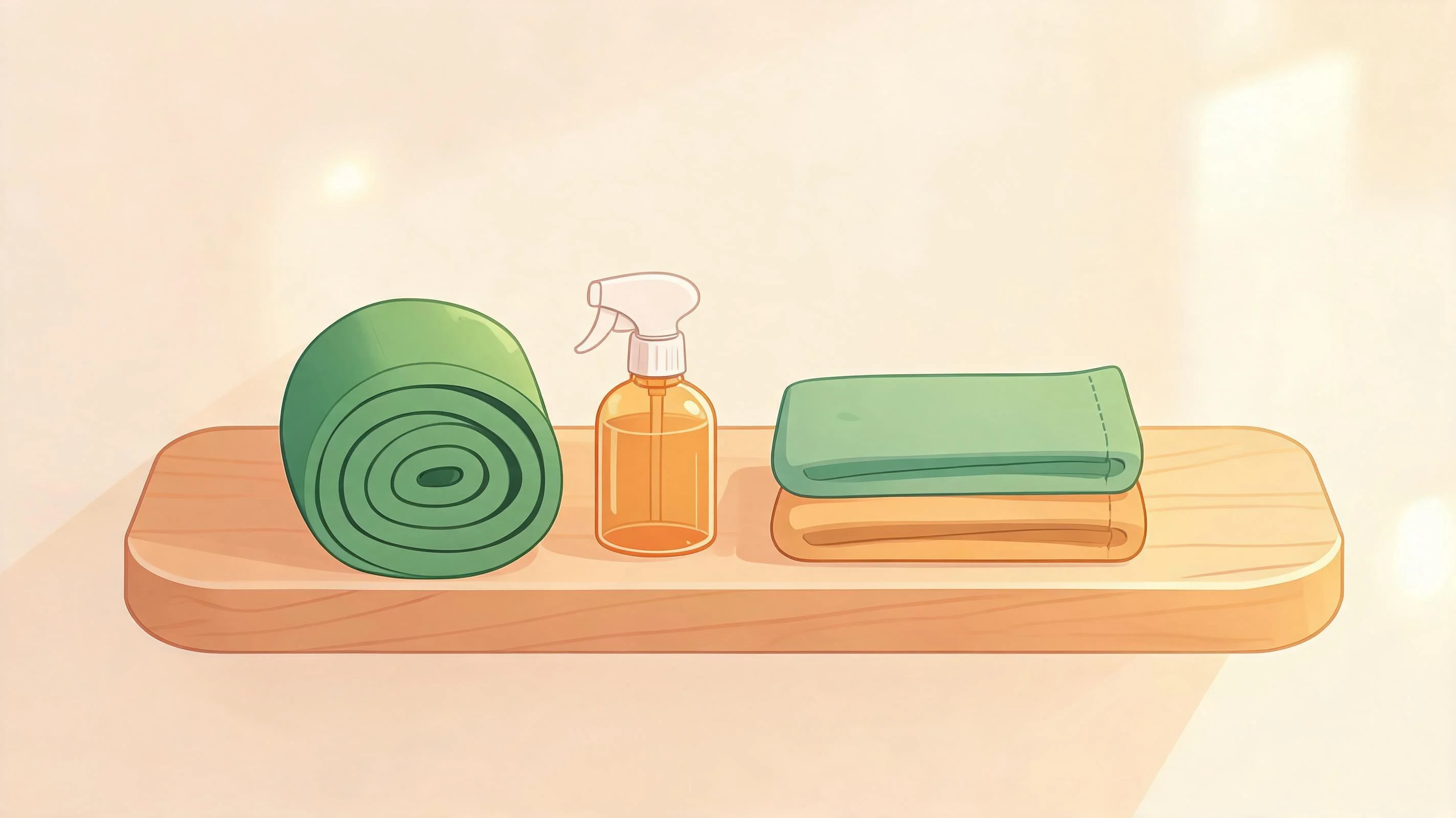
Everything fits in a drawer:
- Small spray bottle — for a water-plus-few-drops-of-mild-soap mix, or a 1:4 white-vinegar-to-water solution for deeper cleans.
- Two soft microfiber cloths — one for washing, one for drying.
- Soft brush (optional) — only for textured closed-cell surfaces.
- Mat strap or wide elastic band — keeps rolls tight without kinks.
- A hook or basket — off the floor, out of the sun.
Skip bleach, harsh all-purpose sprays and alcohol-heavy solutions on anything except the sturdiest PVC — they dry out and crack softer foams.
The cleaning routine
Two levels, both quick:
- After sweaty sessions (30 seconds): spray lightly, wipe the whole surface, hang or lay flat until fully dry.
- Monthly deep clean (5 minutes): apply your vinegar or soap solution generously, work it across the surface with the cloth, rinse-wipe with a damp second cloth, then air dry completely — overnight if needed.
Yoga Design Lab's vinegar-cleaner guide recommends roughly one part vinegar to four parts water, optional lemon drops for scent. Whatever you use, the golden rule is the same: never roll or store a damp mat — trapped moisture breeds odor and breaks down foam.
Rolling and storage habits
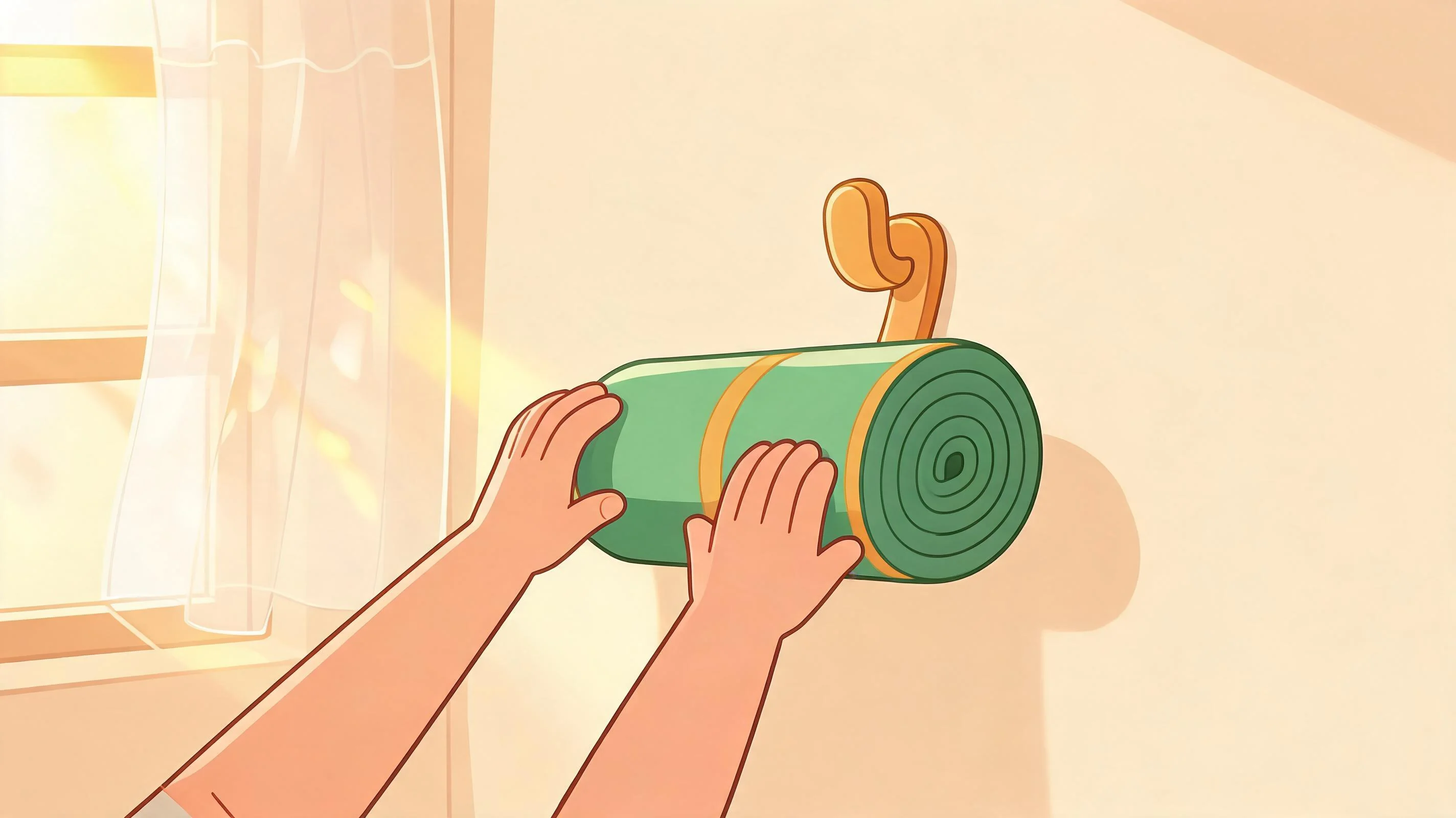
- Roll practice-side out. The surface you use stays smooth instead of memorizing a curl; corners lie flat next class.
- Loose, not strangled. Tight rolling creases the material over time.
- Cool, dry, shaded. A closet or hook beats a car trunk; sunlight slowly eats elasticity, and heat warps foam.
- Flat for thick mats. Very dense large mats are happiest stored loosely rolled or even flat under a bed.
Hugger Mugger's storage guide makes the same point from the studio side: consistent, low-effort storage habits are what separate mats that last years from mats that curl within months.
Material-specific notes
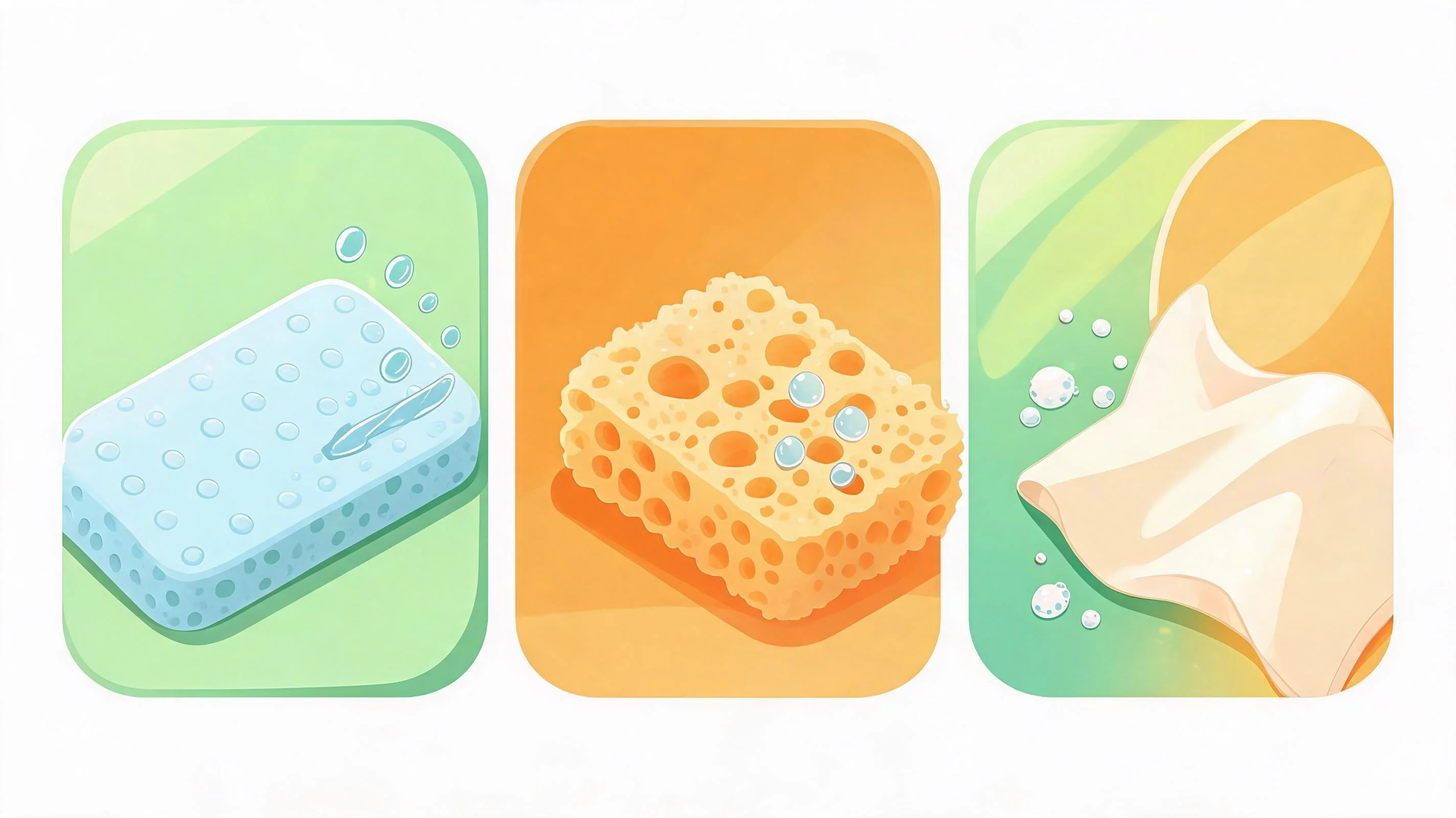
- Closed-cell TPE / PVC: water beads on top; wipes clean easily and dries fast. Tolerates slightly stronger soap mixes.
- Open-cell natural rubber: absorbs liquid by design. Use minimal moisture, more wiping than soaking, and always dry flat away from heat. Never leave it in a hot car.
- PU-top mats: the grippy layer is delicate — mild soap only, no vinegar, and pat rather than scrub.
When to replace
Care extends life but isn't immortal glue. Replace when you see:
- Flaking, crumbling or persistent odor that survives a deep clean.
- Visible compression set — dents that don't rebound where knees land.
- Peeling layers or a slick surface that no longer grips even when clean.
Most quality mats last one to three years of steady practice, longer with real care; Kati Kaia's lifespan overview puts premium dense mats at the far end of that range.
If replacement time does come, starting from a durable base makes every bit of this routine easier — something like the GXMMAT Large Yoga Mat 6'x4' rewards care with years of service, while households with multiple practitioners do well to give each person their own GXMMAT Large Yoga Mat 6'x6' so hygiene and wear stay predictable.
Bottom line
Assemble five cheap items, wipe after sweat, deep clean monthly, roll practice-side out and store away from sun. That's the entire discipline — about two minutes of attention per session buys years of extra mat life, better hygiene, and a practice surface that still grips like new.