
Key Takeaways
- Beginners do best with a medium-thick mat around 6 mm — enough cushion for knees, still stable for standing poses.
- You do not need to spend a fortune: $40–100 buys a mat that lasts years if it is dense and well made.
- A standard mat is 68 inches long; taller or wobbly beginners benefit from extra length and width so hands and feet stay on the mat.
- Grip matters more than looks — a slippery mat is the fastest way to lose confidence.
What a beginner actually needs
Your first yoga job is to learn poses, not to fight your equipment. A good beginner mat does three things: cushions your knees and wrists when you are on the floor, stays put when you step into a lunge, and gives you room to stretch without fingers sliding off the edge. That is it. Everything else is optional.
The mistake most newcomers make is buying the cheapest thin mat at a big-box store, discovering their knees ache within a week, and quitting. Thickness and density solve that problem cheaply.
Thickness: the comfortable sweet spot
Mat thickness is measured in millimeters, and here is the simple map:
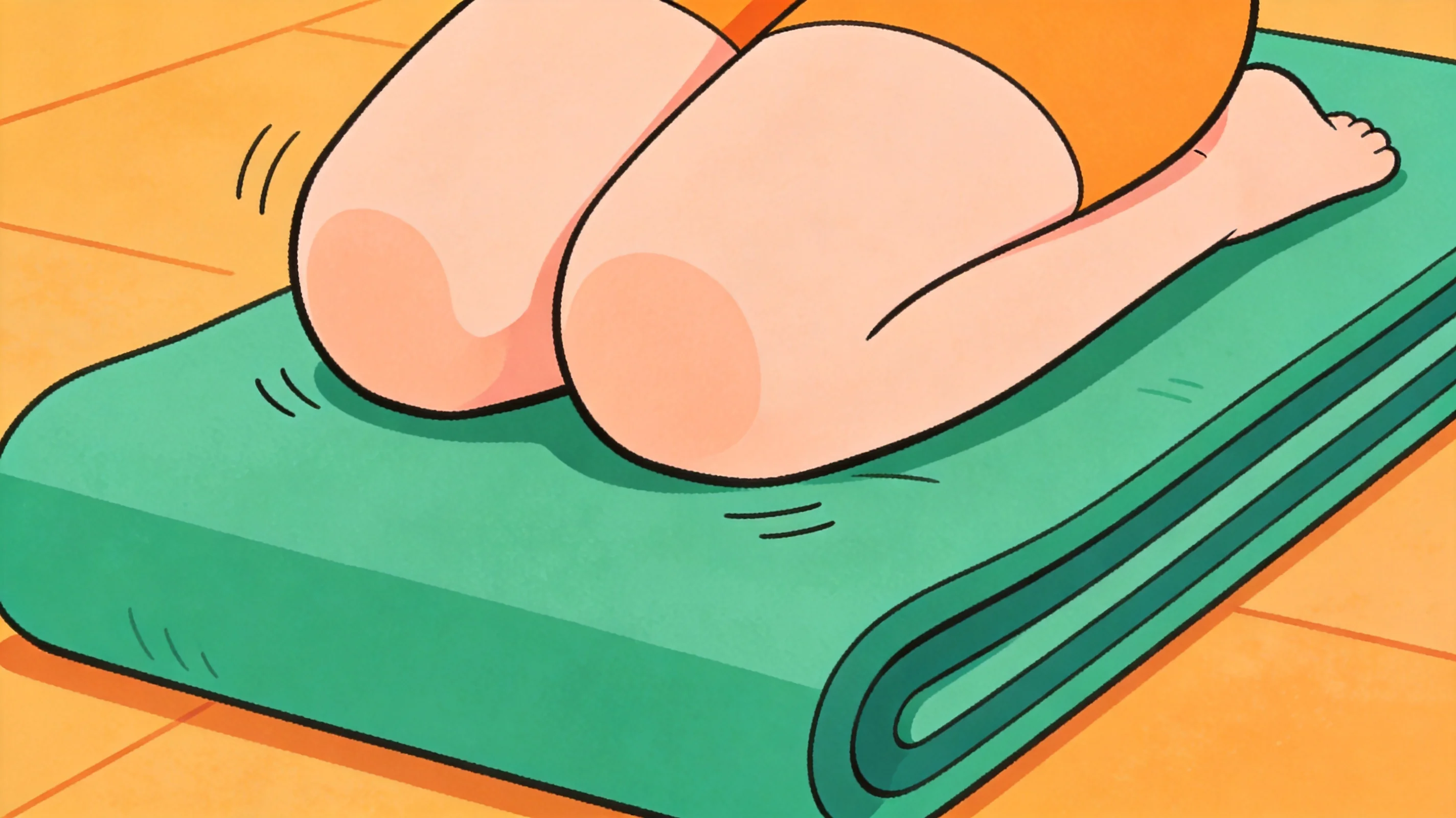
- 2–4 mm: thin travel-style mats. Great grip feel, but hard on beginner knees during tabletop or kneeling poses.
- 5–8 mm: the beginner sweet spot. Enough padding to make floor work comfortable, still firm enough to balance on one foot.
- 10 mm and up: plush, but often squishy enough to make balancing harder, better suited to gentle stretching than flowing practice.
If you practice mostly at home on a hard floor, lean toward the thicker end of the sweet spot. Density matters too — a dense 6 mm mat protects joints better than a soft 10 mm one.
Budget: how much to spend
Good news: this is not an expensive hobby to start. Rough tiers:
- Under $30: basic foam mats. Fine for testing whether you enjoy yoga, but they compress fast and often smell strongly of chemicals at first.
- $40–80: the value zone. Dense TPE or rubber-blend mats with real grip that last several years of regular practice.
- $80–150: premium natural rubber and premium large-format mats. Worth it if you know you are committed, or you want extra space from day one.
One smart shortcut: instead of replacing a starter mat after six months, buy once in the value zone with generous dimensions. A spacious mat like the GXMMAT Large Yoga Mat 6'x4' costs about the same as two cheap mats but removes both the sore-knees problem and the falling-off-the-edge problem in one purchase.

Size: standard vs extra room
A standard studio mat is about 24 by 68 inches. If you are under 5'8" and practice in a gym, that works. But home practice changes the math. At home nobody sees your setup, so you can use all the room you want:
- Taller practitioners should look at 72–84 inch lengths so heels and heads stay on the mat in savasana.
- Wobbly beginners benefit from width — stepping off the side mid-pose breaks focus and confidence.
- Anyone sharing a workout space can lay out one big surface for yoga, stretching and bodyweight work alike.
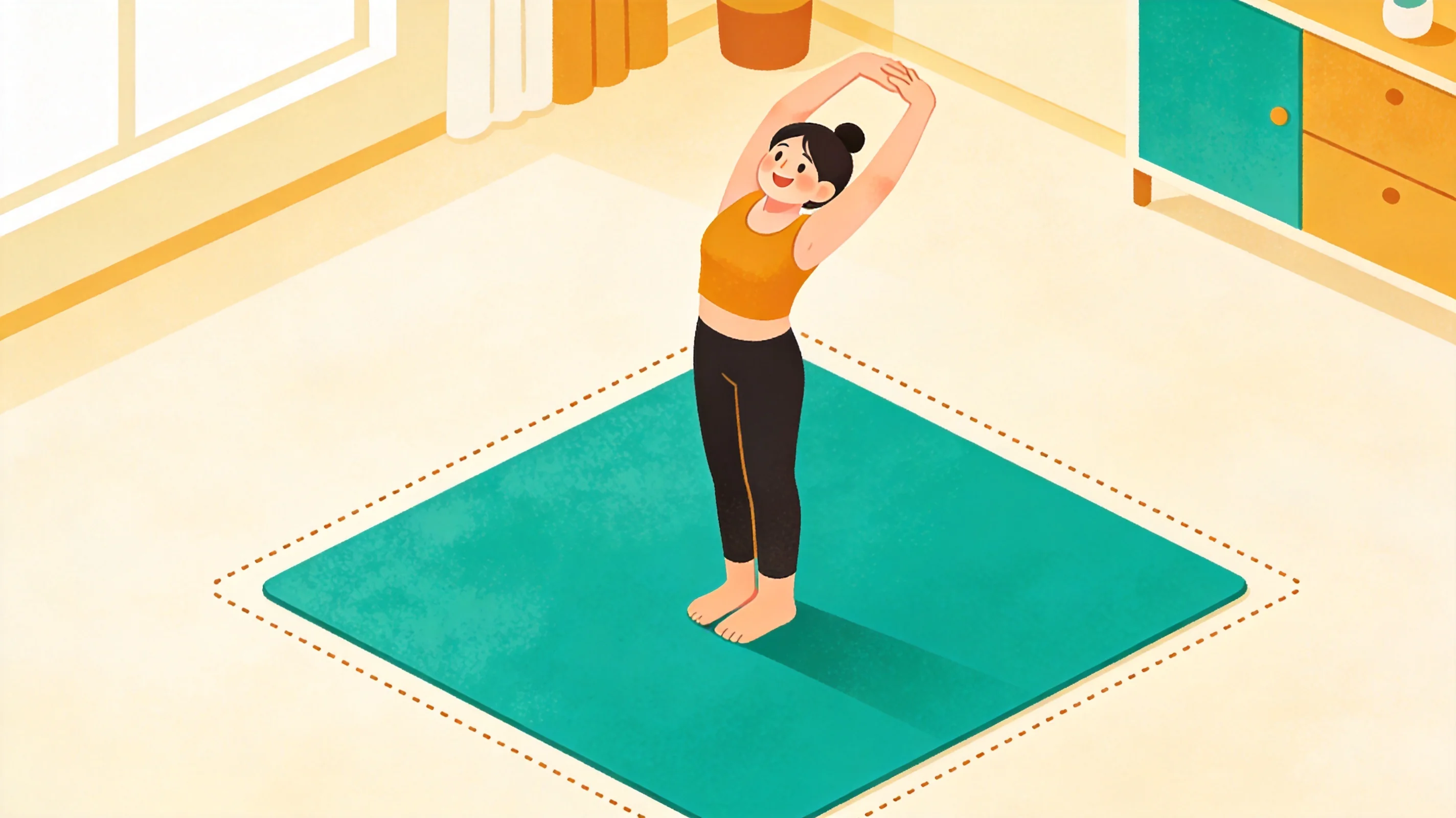
That is why oversized mats have become popular with people learning at home. The GXMMAT Large Yoga Mat 6'x6', for example, turns a corner of the living room into a full practice square where you can roll, stretch and never think about edges again.
Quick picks for new practitioners
- Small apartment, occasional practice: a 6 mm standard-length TPE mat keeps cost and storage simple.
- Daily home practice: a dense oversized mat gives joint comfort now and space for your practice to grow.
- Sensitive knees or wrists: prioritize density over raw thickness and add folded towels under pressure points while you build strength.
Whatever you choose, unroll it the day it arrives and let it air out; most mats soften and de-scent noticeably within a few days.
Bottom line
For your first mat, aim for around 6 mm of dense material, a $40–100 budget, and more length and width than you think you need. Comfort keeps you coming back, and consistency is what actually makes yoga work. Pick a mat that forgives wobbles, cushion your joints, and give yourself permission to take up space while you learn.