
Key Takeaways
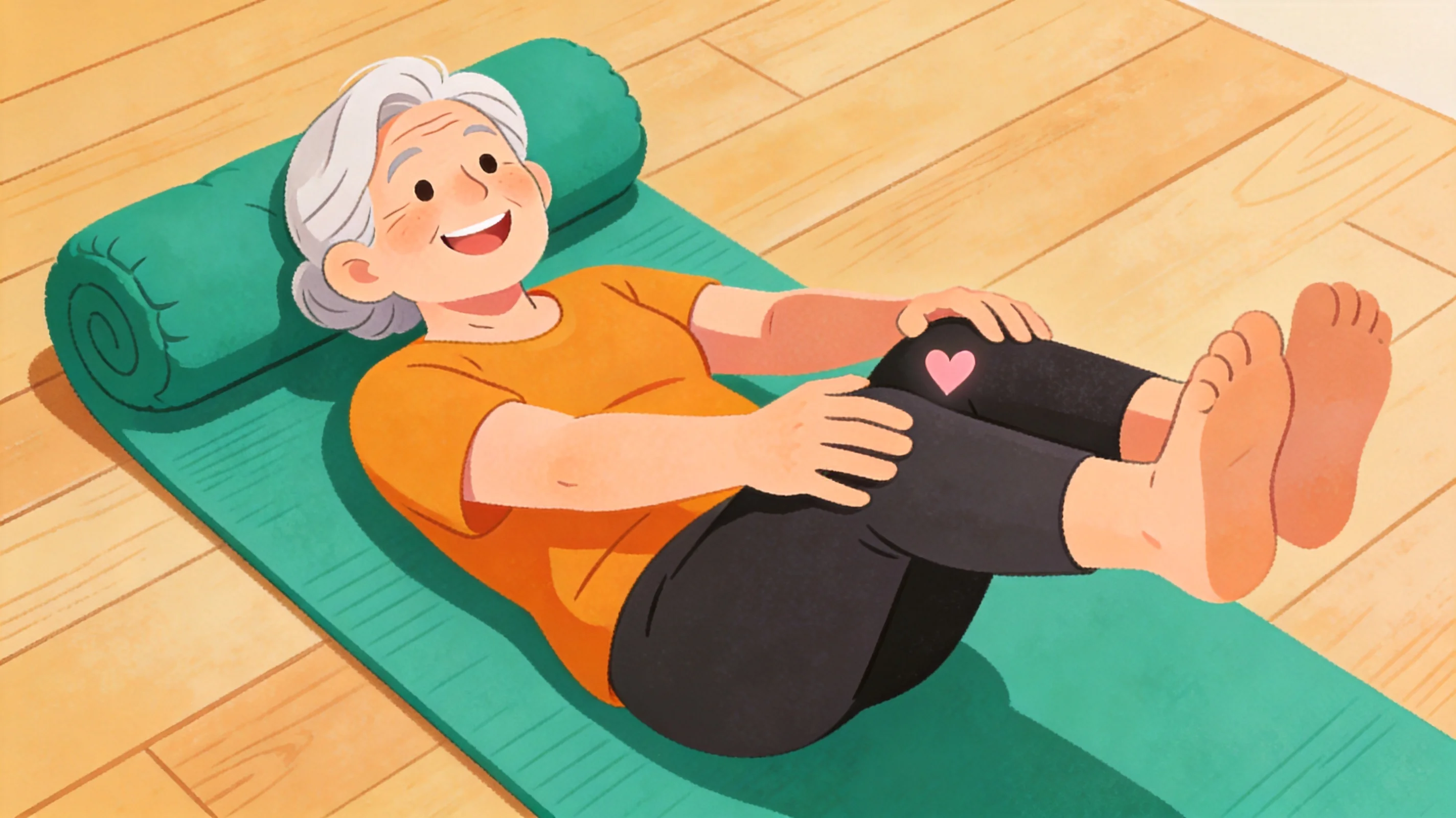
- Sore knees are the #1 reason people switch mats — and the fix is more than just "thicker."
- For most knee pain, 5-6mm of high-density material is the sweet spot.
- Dense beats thick. A 5mm dense natural rubber mat often protects better than a 10mm soft foam mat.
- Natural rubber gives the compression resistance your knees need without feeling unstable.
- Too-soft foam makes balance poses wobbly; match cushioning to stability.
Why your knee hurts on a mat
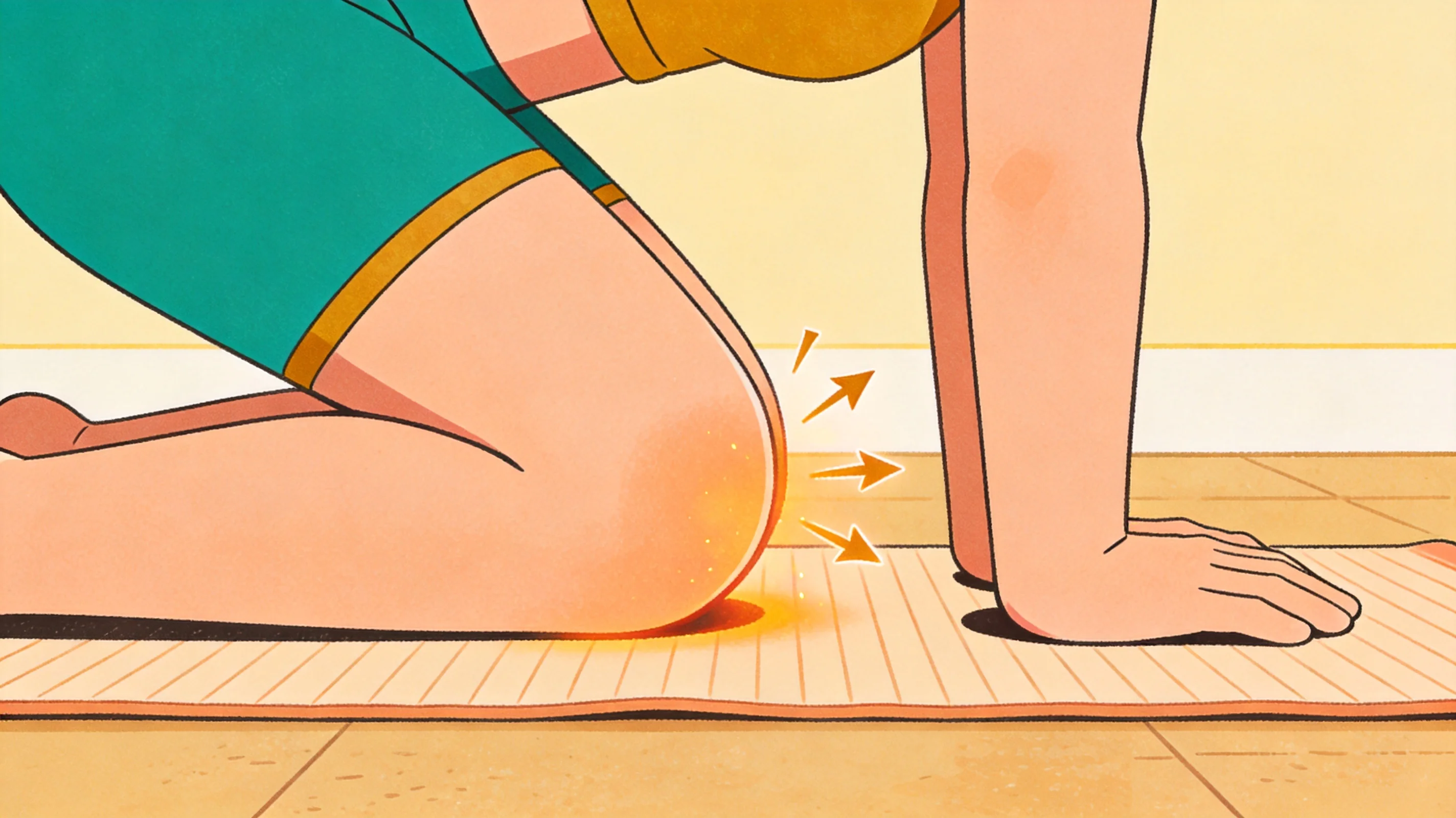
Poses like tabletop, child's pose or camel put a lot of body weight onto a very small patch of your knee. On a thin standard mat, that patch presses almost straight into the hard floor — the painful "bottoming out" effect. The right cushioning spreads that weight out.
Thickness for knee pain
Here's what the numbers actually feel like:
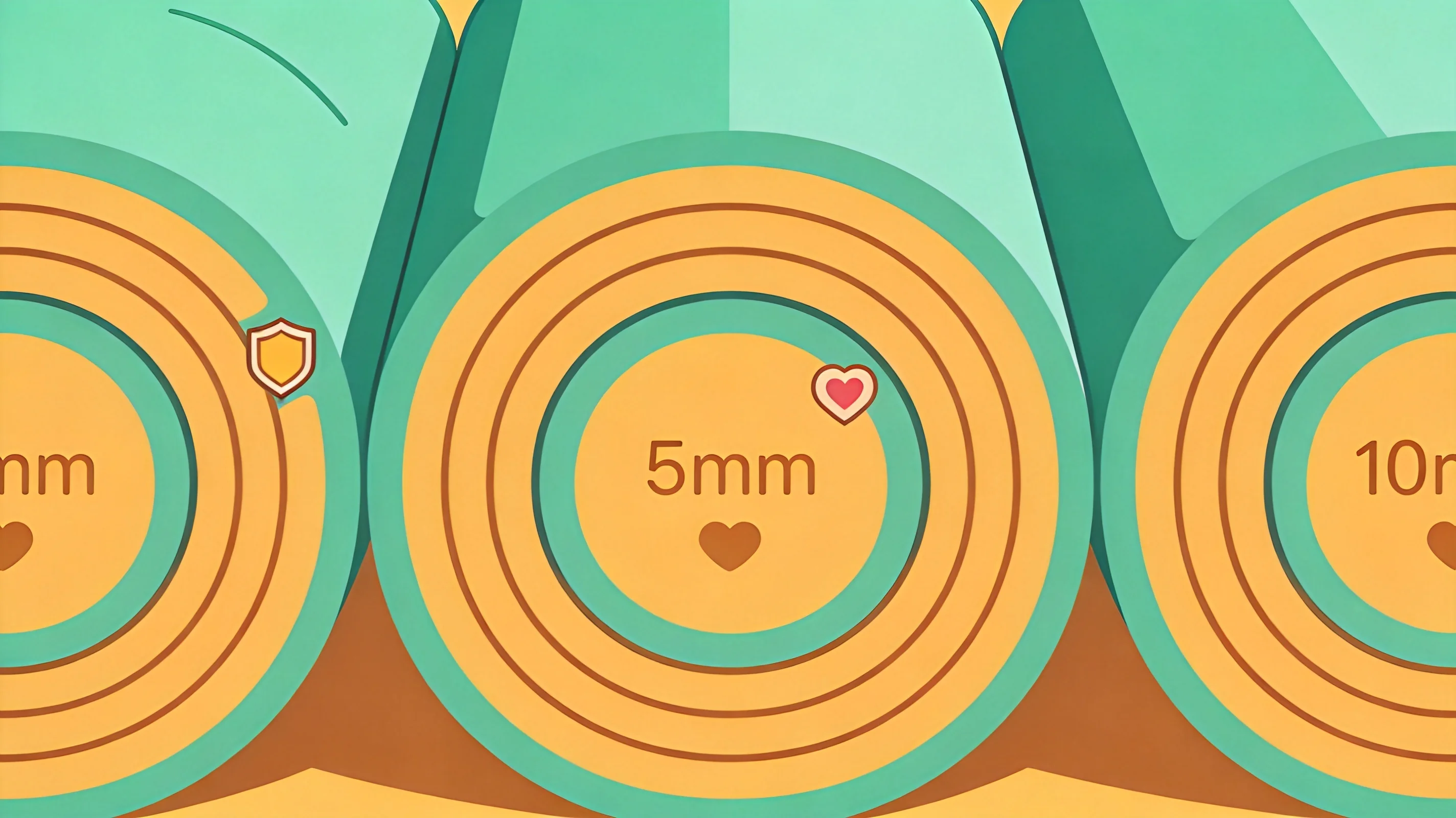
- 3-4mm standard: fine for balance and portability, but usually too thin for sensitive knees.
- 5-6mm: the ideal comfortable range for most joint concerns — a real buffer that still stays stable.
- 6-8mm: extra cushioning for floor-heavy or restorative practice.
- 10mm+: very cushioned, but often made of soft foam that can make standing balances unstable.
Start at 5-6mm of dense material. If you're mostly on the floor, you can go thicker; if you stand a lot, favor firmness.
Density matters more than thickness
Here's the trick most people miss. A thick mat made of soft, low-density foam lets your knee press right through to the floor. You get the softness but not the support.
High-density material resists compression. When you press your knee in, the mat pushes back, keeping your joint elevated. That compression resistance is what actually protects your knee.
So a 5mm dense natural rubber mat often beats a 10mm soft foam mat for knee care.
Material that suits your knees
Match material to your needs:
- Natural rubber: dense, grippy, and supportive — the premium choice for knee and joint health.
- High-density TPE foam: good cushion with a lighter, more portable feel.
- Cork: firm, naturally antimicrobial, and it grips better as you sweat.
- NBR foam: soft and thick, better for floor and restorative work than for standing balance.
All of these cushion better than plain PVC, which stays slick and compresses less gently.
The stability trade-off
A mat that's too soft makes standing poses like tree or warrior III feel wobbly — your ankles overwork to stay up. The goal is the goldilocks zone: enough cushion for your knees on the floor, enough firmness to keep you grounded standing up.
If you need extra floor protection but stand a lot, use a mat that's dense in the 5-6mm range, or add a cushion under your knees during kneeling poses.

Bottom line
Choose a yoga mat for knee pain by looking for density, not just thickness. Aim for a 5-6mm high-density mat in natural rubber or dense TPE, and go thicker only if your practice stays mostly on the floor. Protect the knee, keep the stability, and you'll practice comfortably for years.
Give your knees the support they deserve — dense cushioning works harder than sheer thickness.