
Key Takeaways
- Two smells, two causes: a chemical smell on a new mat is off-gassing; an earthy or sour smell on a used mat is bacteria in trapped moisture.
- New-mat smell fixes itself with airing time — days to two weeks, no scrubbing needed.
- Earned smell requires killing the moisture cycle: deep clean, then dry completely before storage.
- Sun helps lightly but damages heavily — brief airing outdoors beats baking for hours.
- If odor survives a proper deep clean and full drying, the mat has absorbed it permanently — replace.
First, diagnose which smell you have
The fix depends entirely on the diagnosis:
- Chemical, plastic-ish, strongest when new → manufacturing residues releasing gas. Normal, temporary, harmless to air out.
- Earthy, sour, locker-room, gets worse after sweaty sessions → bacteria and mildew feeding on sweat inside damp foam. Won't leave until the moisture cycle is broken.
Smelling a brand-new mat straight from the roll? Off-gassing. Smelling a trusted old friend after hot week? Biology. Hugger Mugger's smell guide splits causes the same way — and the treatments differ completely.

Fixing new-mat smell: air, don't scrub
That factory scent is volatile compounds leaving the material — which means the only real cure is airflow and patience:
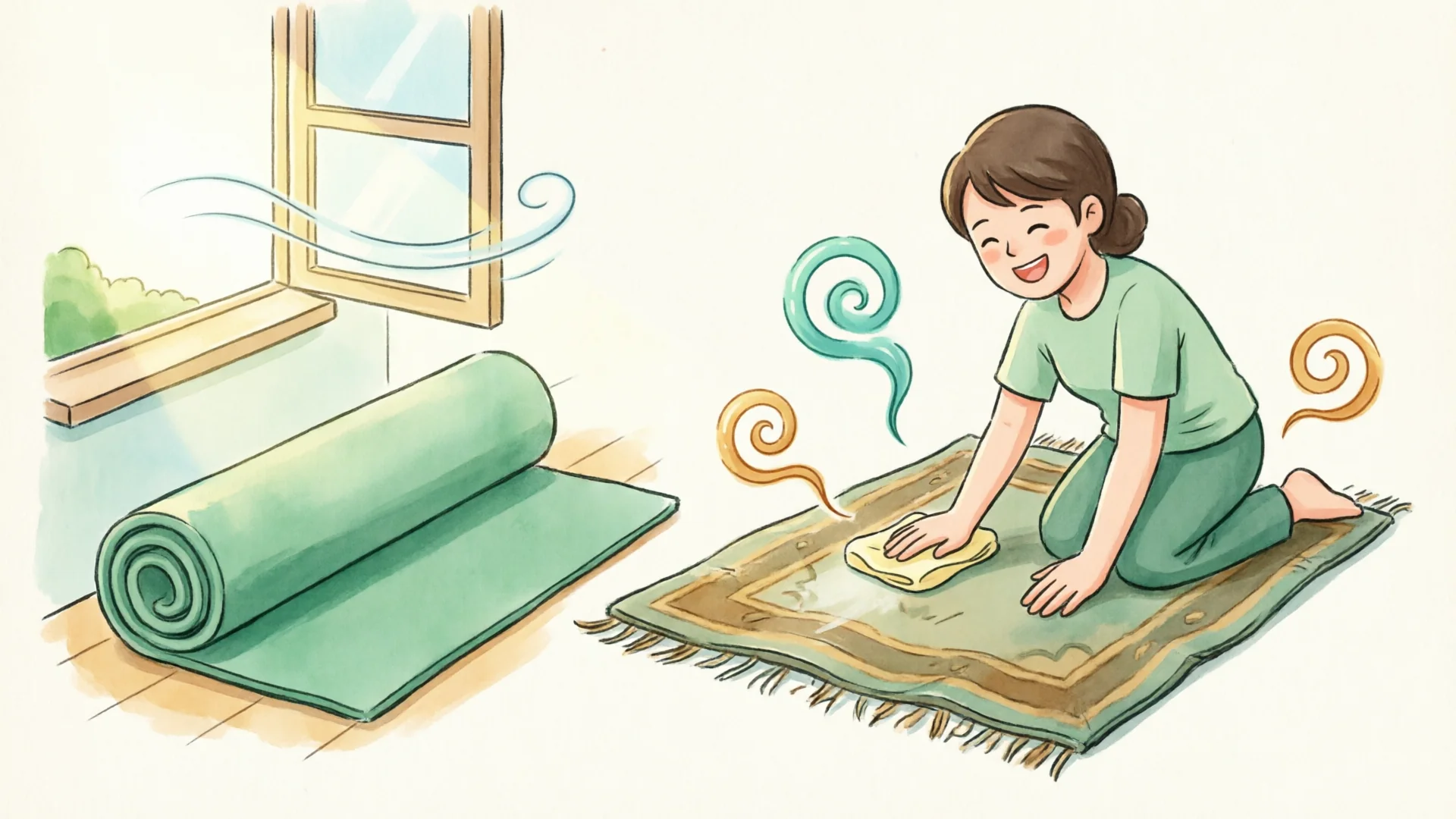
- Unroll it fully in a ventilated room, ideally near an open window. Rolled-up mats can't off-gas; they just marinate.
- Give it 2-7 days of unrolled air time; strong PVC smells may take up to two weeks.
- Wipe once with diluted mild soap after the first day to remove surface residues.
- Optional: a bowl of baking soda placed nearby (not rubbed in) absorbs ambient odor.
Gaiam's new-mat guidance recommends essentially this: unwrap, unroll, wait, wipe. What NOT to do: douse a new mat in vinegar and seal it back in its bag — you'll trade chemical smell for pickle smell.
Fixing earned smell: break the moisture cycle
Biological odor lives in moisture. The sequence that works:
- Deep clean: generous wipe with mild soap solution or 1:4 white vinegar-water across the whole surface; work into textured areas.
- Rinse-wipe with a second damp cloth so cleaner residue doesn't become the new smell.
- Dry completely — flat or hung — before anything touches storage. This step IS the fix; cleaning without drying just resets the clock.
- Light sun exposure helps — an hour outdoors freshens most mats. Hours of direct sun will degrade foam, so treat sun as seasoning, not therapy.
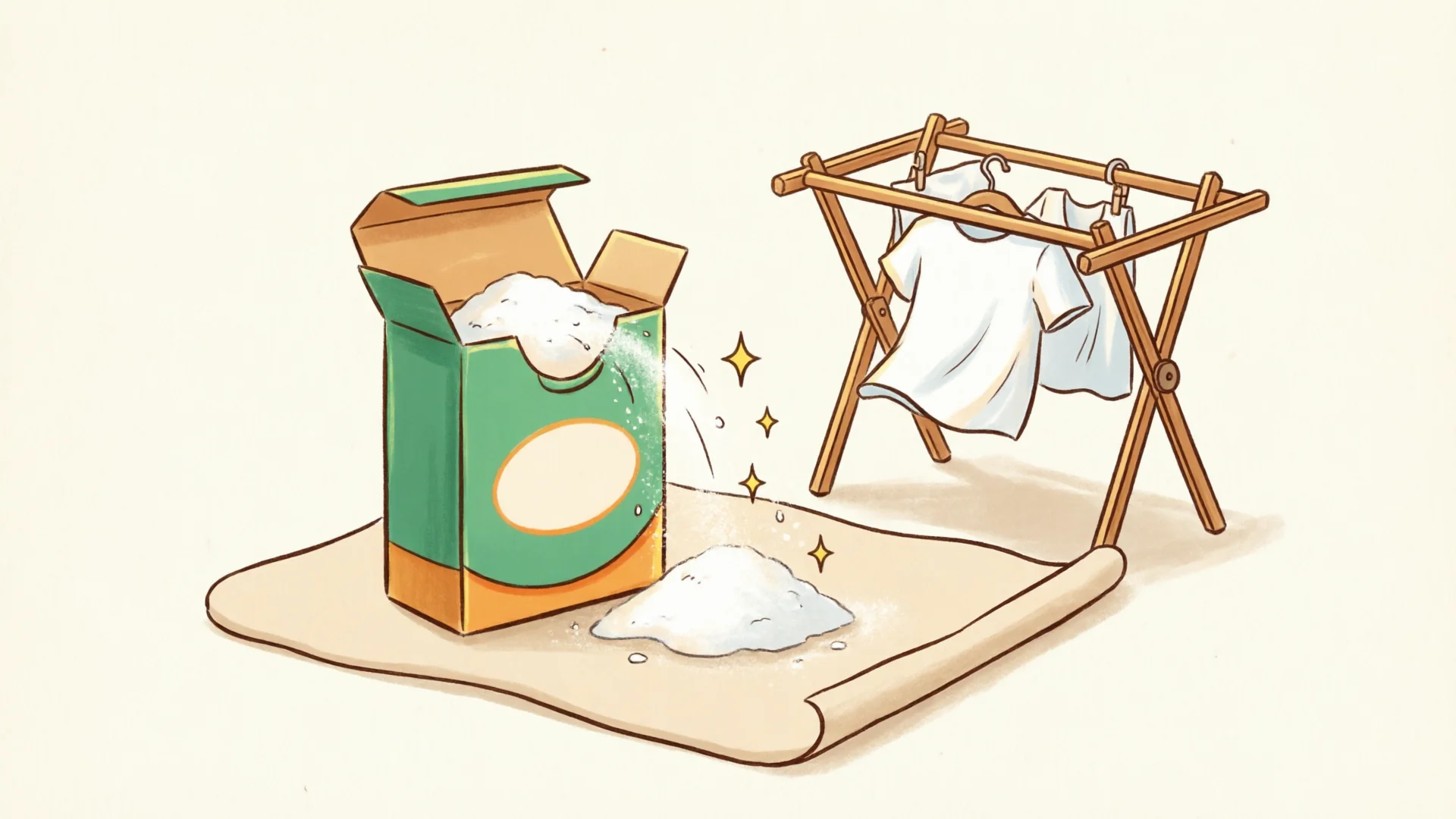
- Stubborn cases: sprinkle baking soda over the dry surface, let sit overnight, brush off, wipe once more.
Vapor Fresh's deodorizing guide reaches the same conclusion from the sports-equipment side: kill the moisture, and the smell has nowhere to live.
Prevention beats all cures
Three habits keep smell from ever starting:
- Dry before rolling — always, even when you're late.
- Wipe after sweaty sessions so salts never settle in.
- Store shaded and ventilated, never sealed damp in a car trunk or closed bag.
Dense closed-cell builds make prevention easier because they don't absorb sweat in the first place — a roomy option like the GXMMAT Large Yoga Mat 6'x6' wipes clean in seconds, while joint-heavy practices on thick builds like the GXMMAT Extra Thick Large Yoga Mat 7'x5'x9mm should simply extend drying time after hot sessions since more material holds more moisture.
When smell means replace
If a mat still smells after a genuine deep clean plus a full overnight-plus dry cycle, the odor has penetrated beyond reach — usually years of moisture in open-cell or worn material. At that point you're managing a colony, not maintaining equipment. Retire it, upcycle what you can, and start fresh with better drying habits already in place.

Bottom line
Chemical smell? Air it out for days, wipe once, wait. Earned smell? Deep clean, rinse, and dry completely — every single time. Prevention is three habits long, and the only incurable odor is the one that reached the foam's core, which is replacement territory. Diagnose first, treat correctly, and neither smell needs to stick around.