
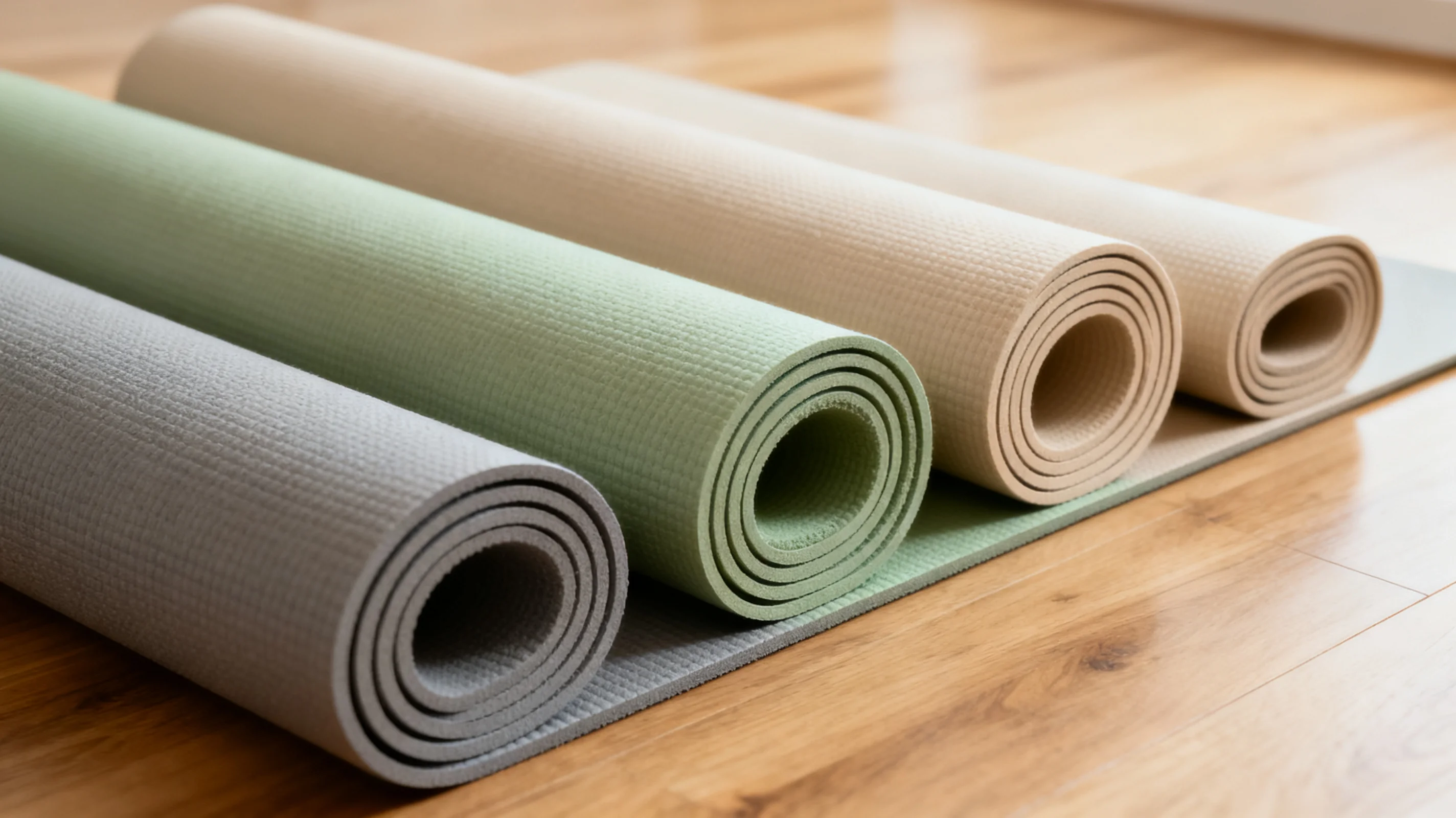
Why mat thickness is the first spec to choose
Ask any experienced practitioner and they'll tell you: thickness changes how a mat feels far more than color or texture. A thin mat keeps you grounded and stable, close to the floor. A thick mat cushions your knees, wrists and spine, and protects home floors from heavy equipment.
But "thicker is better" isn't true either. Too much padding makes standing-balance poses wobbly and can make your hands feel unstable in plank or downward-facing dog. The right thickness depends on what you practice, where you train, and how your joints feel.
| Mat type | Thickness | Best for | Trade-off |
|---|---|---|---|
| Thin travel/yoga | 5–7mm | Balance poses, portability | Less joint cushioning |
| Classic yoga | 7mm | Daily yoga, easy to roll | Moderate cushioning |
| Extra-thick yoga | 9mm | Knee comfort, restorative | Slightly heavier |
| Exercise/floor | 10mm | Home gyms, floor protection | Less portable |
| Extra-large floor | 10–12mm | Heavy training, equipment | Large footprint |
Unless you practice exclusively in a studio on padded floors, 7mm is the most versatile place to start — it balances support, grip and stability.
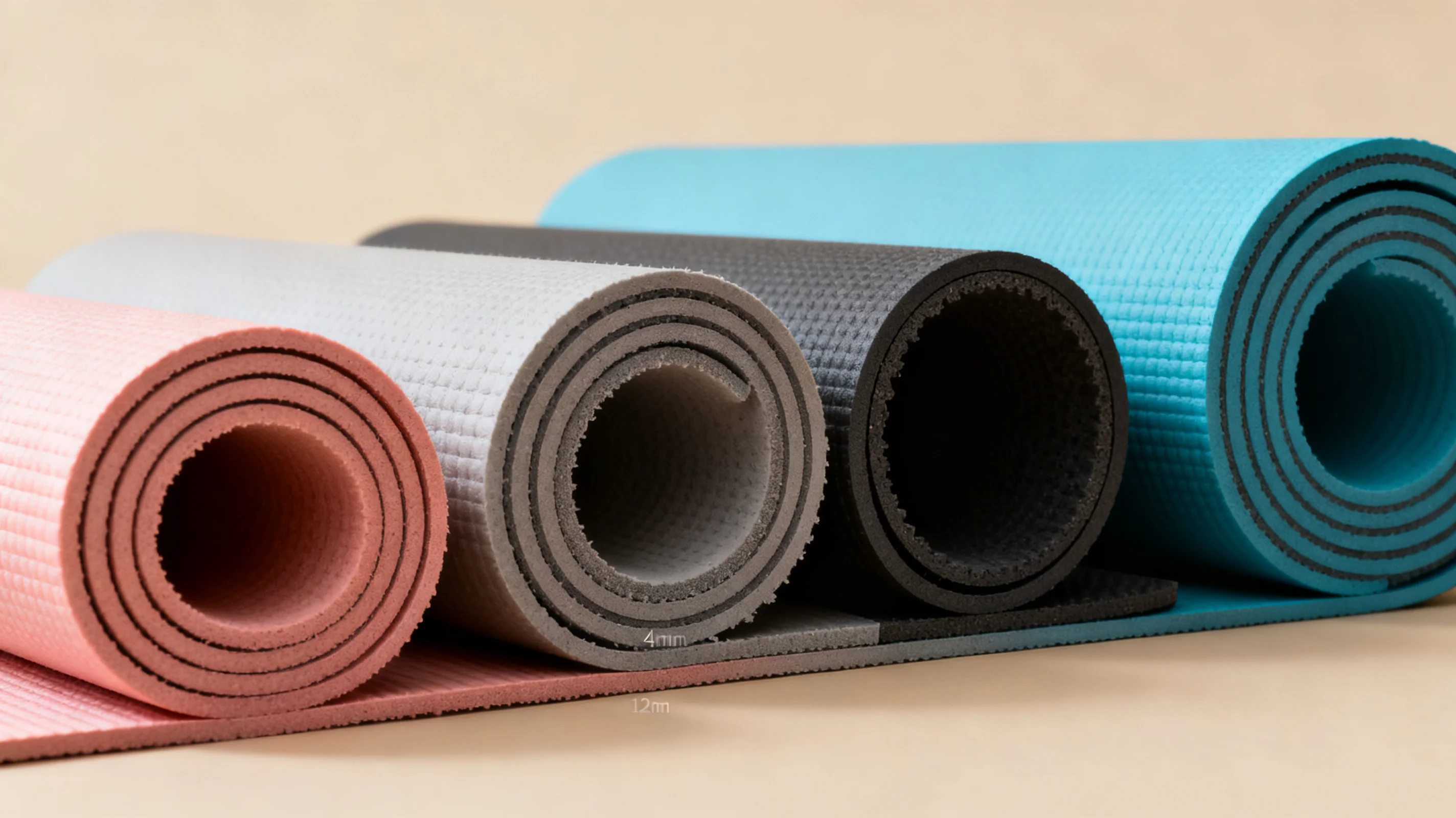
7mm mats: the everyday default
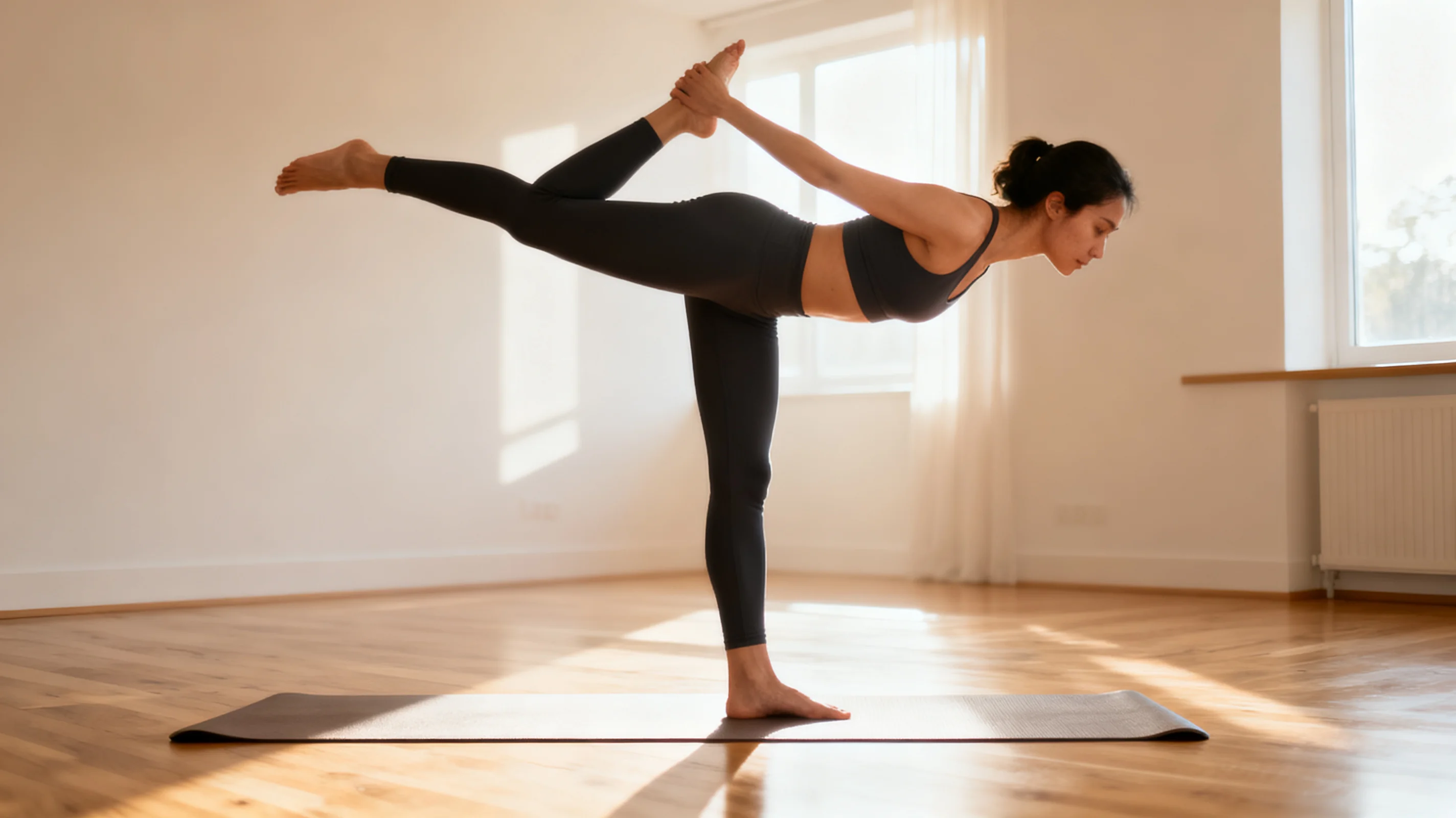
At 7mm (0.28"), you get the sweet spot most yoga teachers recommend. The mat is thick enough to cushion your spine during floor work and your wrists in push-ups, yet firm enough that balance poses stay stable.
The AuraYogaMat Large Yoga Mat 6'x4' and 6'x6' are 7mm — compact enough to roll up and store, large enough for a full vinyasa sequence. At 6'x4' (183 x 122 cm) you have extra room beyond a standard 68'' mat, which matters for taller practitioners and wide-stance poses.
Best for: daily yoga, beginners, home practitioners, anyone who values stability.
9mm mats: extra knee and joint comfort
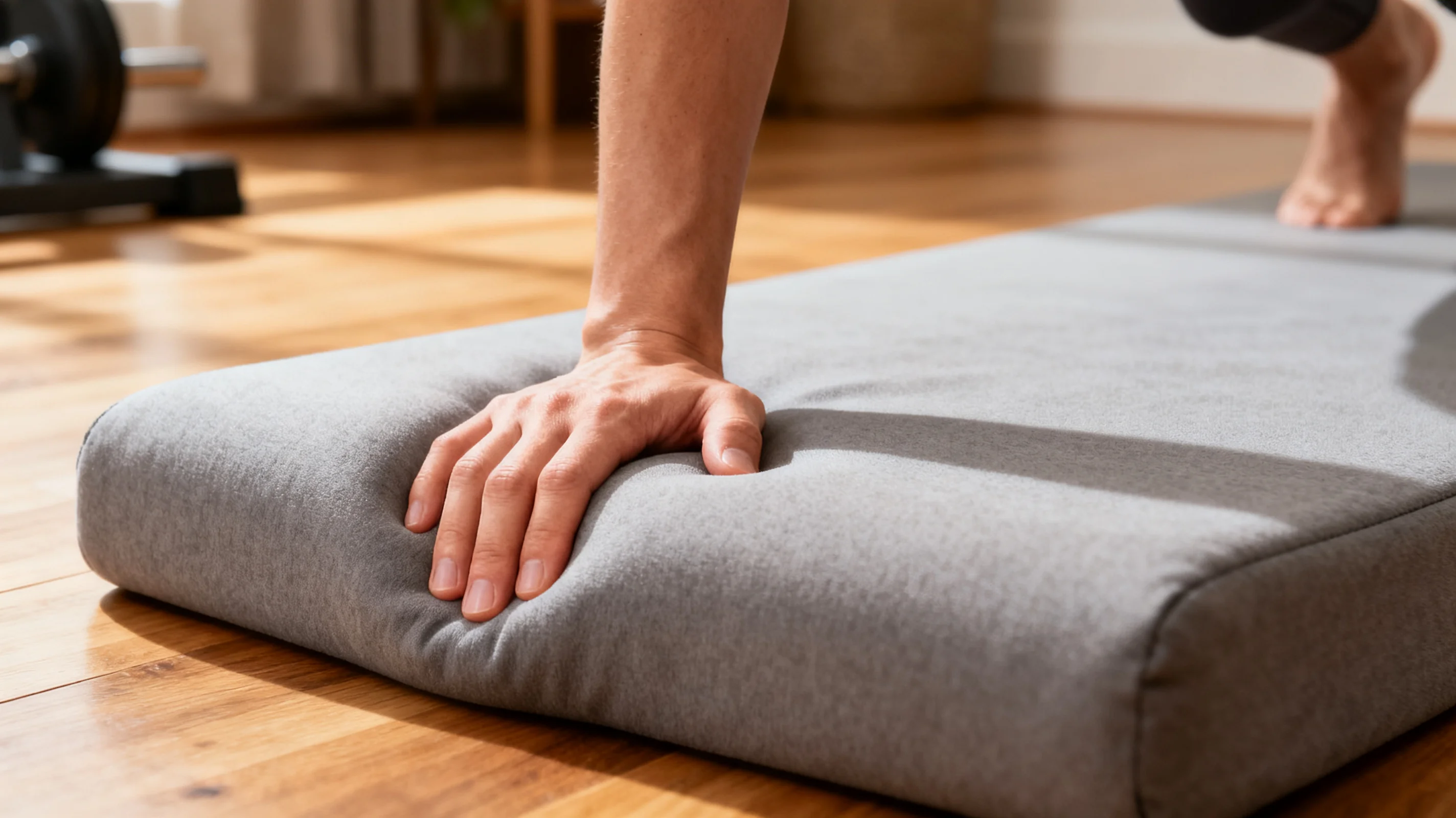
The AuraYogaMat Extra Thick Large Yoga Mat 7'x5' is 9mm (0.35") — our pick for deeper knee, hip and wrist cushioning. If you practice yin, restorative, or spend a lot of time on your knees in poses like camel or low lunge, the extra 2mm makes a real difference over a session.
At 7' x 5' (213 x 152 cm) it's also our widest yoga mat, giving broad spinal support during savasana and enough width for your elbows and heels.
Best for: joint-sensitive practitioners, restorative and yin yoga, taller or wider frames.
10mm and 12mm mats: floor protection for home gyms
If you train at home — dumbbells, kettlebells, HIIT or bodyweight circuits — a 7mm yoga mat won't protect your floor or your joints. That's where exercise mats come in.
The AuraYogaMat Extra Large Exercise Mats are 12mm (0.47") of high-density, non-toxic foam, available from 6'x10' up to 6'x16'. They absorb impact, stop equipment from scuffing boards and tiles, and give you a full-room padded surface instead of a narrow strip.
The Large Exercise Mat 6'x4' and Extra Wide Exercise Mat 7' are 7–10mm — lighter options ideal for dedicated home-gym corners where you want floor coverage without covering the whole room.
Best for: home gyms, strength and HIIT training, protecting wood and tile floors, family workout spaces.
How to choose: 4 quick questions
- Where do you train? Hardwood or tile floor → choose 10mm or thicker. Studio with padded floors → 7mm is fine.
- Do your knees or wrists bother you? → Step up to 9mm or 10mm. Thinner mats concentrate pressure on joints.
- Is stability or cushioning your priority? Balance-heavy practice like standing flows → thinner. Floor-heavy flows, yin, core → thicker.
- What else shares the floor? Equipment and kids → a large 12mm exercise mat protects both floor and body.
Still deciding? Start with the thickness that fits your room
Beginners don't need the thickest option — they need a reliable foundation. Start with a 7mm yoga mat (large enough to move in) and only upgrade thickness if your joints or floor tell you to. Home gymbers should skip the yoga mat entirely and start with 10–12mm floor coverage.
The wrong thickness isn't a wasted purchase; it's a lesson. The right one, though, will be under your feet for thousands of sessions.
Prefer to compare sizes instead? Browse the full AuraYogaMat exercise mat and yoga mat collections to match thickness to your space.