
Key Takeaways
- Yoga mats run 4-7mm and stay firm so you can hold balance poses without sinking.
- Exercise mats run 10-12mm and soak up impact from weights, kettlebells and HIIT.
- If your setup is gear-heavy, you likely need the extra thickness and length of an exercise mat.
- Expect to add a separate mat per room versus a one-size-fits-all mat.
Why the confusion?
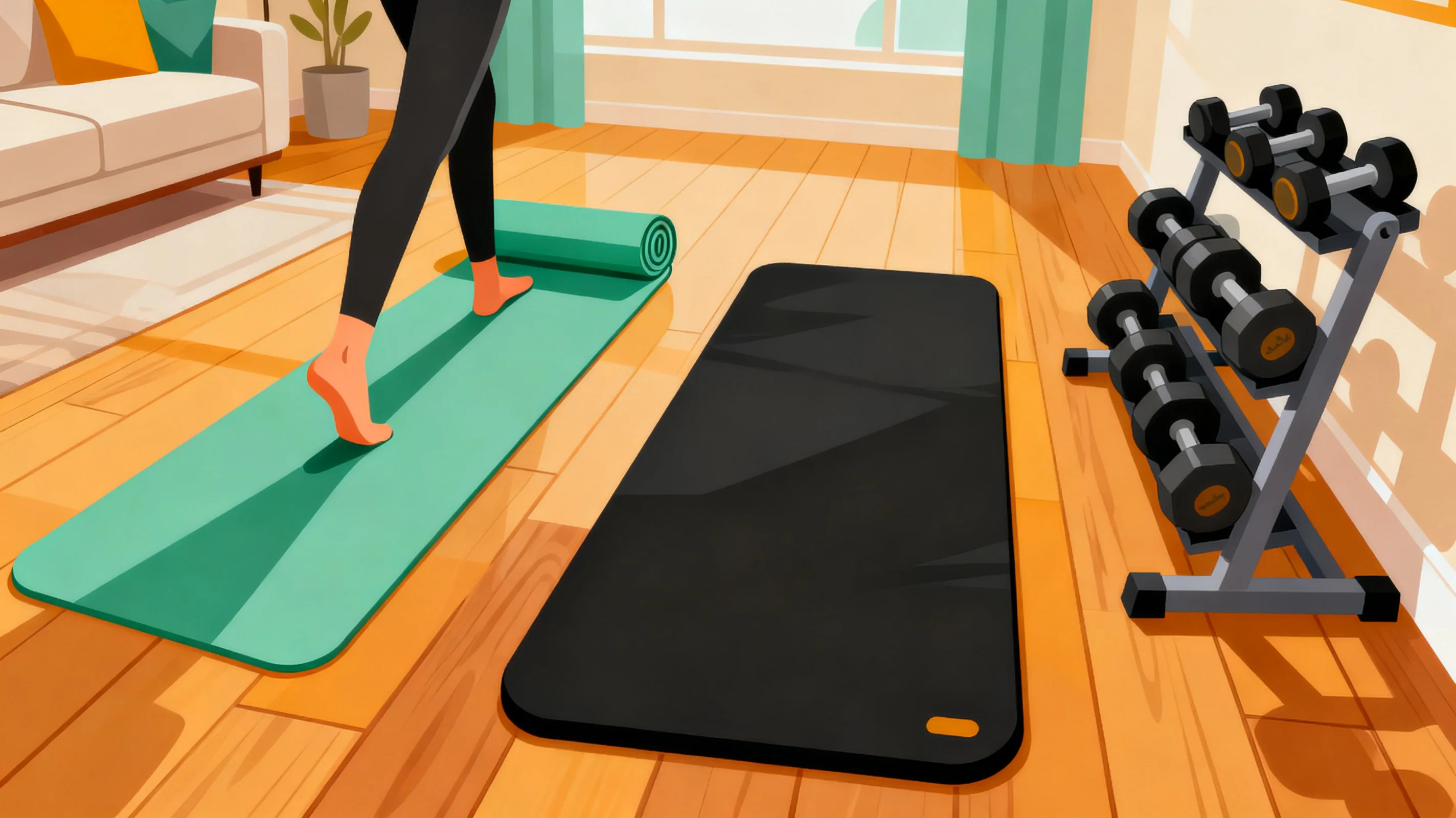
Walk into any home gym store and you'll see rows of mats that all look similar. A long roll of black foam. A rounded end. A carry strap. But the thing is, they do very different jobs.
A yoga mat is built to keep you grounded and stable while you balance on one foot. An exercise mat is built to protect your floor and your joints when you drop a kettlebell or plant your knees for a burpee. Same shape on the shelf, completely different engineering underneath.
The difference at a glance
| Feature | Yoga Mat | Exercise Mat |
|---|---|---|
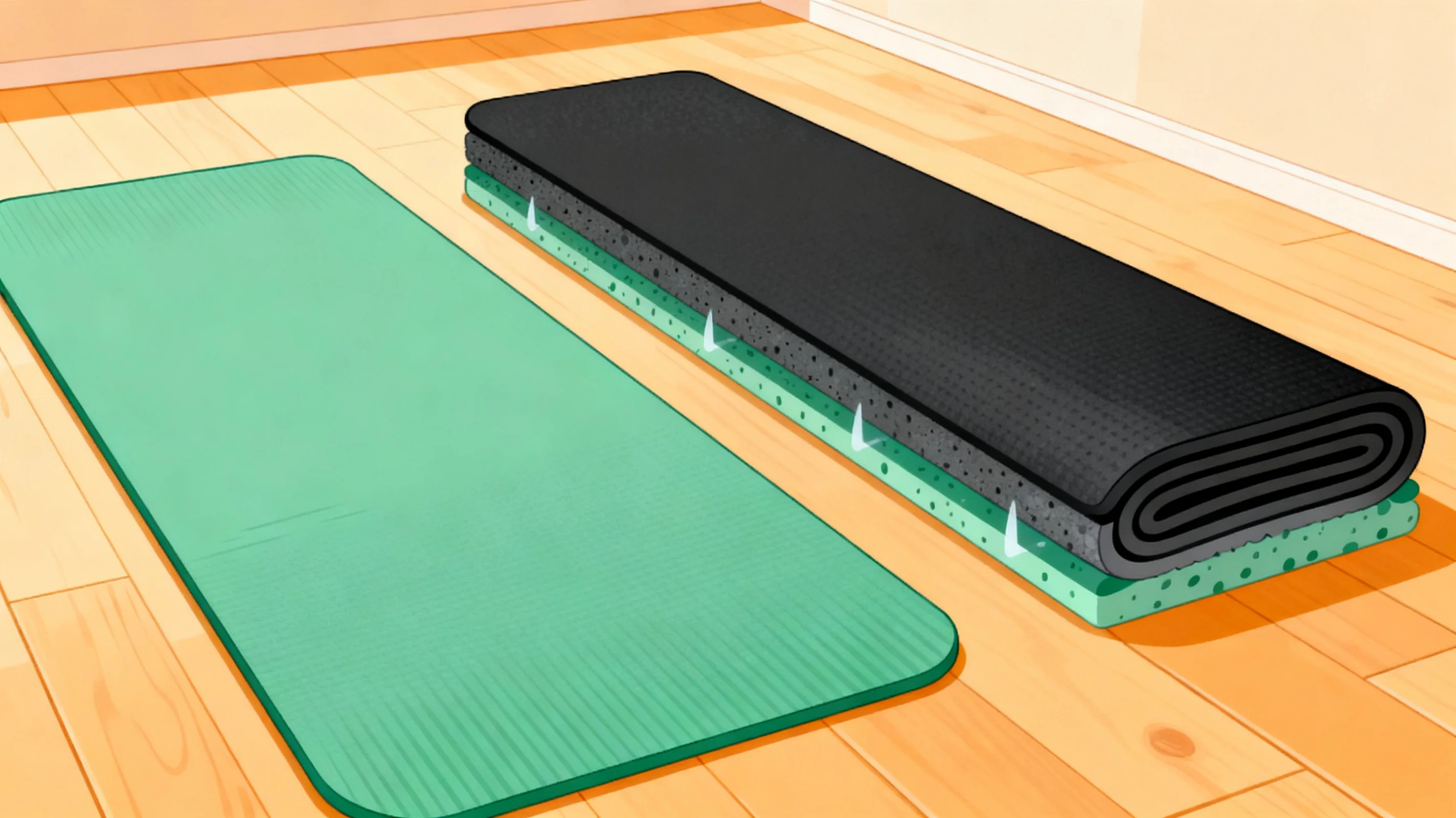
| Thickness | 4-7mm (0.16-0.28") | 10-12mm (0.39-0.47") |
| Best for | Balance, floor work, portability | Equipment, HIIT, floor protection |
| Firmness | Firm, stays stable | Soft, absorbs impact |
| Typical size | 6'x4' to 6'x8' | 6'x4' to 6'x16' |
| Weight | Light, easy to roll | Heavier, stays put |
| Materials | PVC, TPE, rubber | High-density foam |
That thickness gap is the whole story. Once you know what you're doing on it, the choice becomes obvious.
What a yoga mat is really for
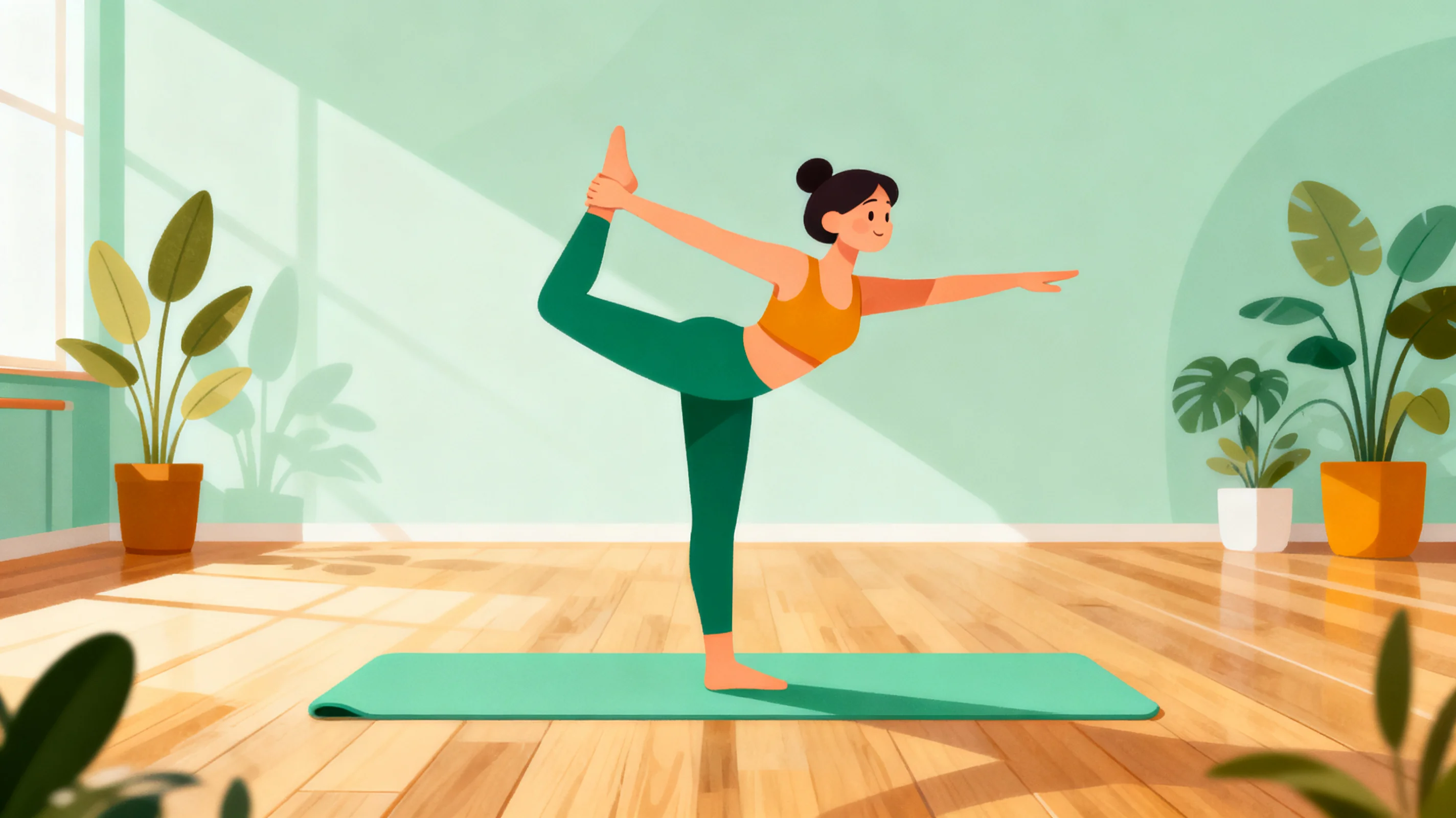
Yoga is about connection to the floor. In a standing split or a warrior pose, you don't want to feel like you're standing on a marshmallow. A firmer, thinner mat keeps your feet and hands planted so you can hold balance work without wobbling.
The sweet spot for most practitioners is around 7mm. It gives you enough padding for your spine during floor work and your wrists in push-ups, without turning every balance pose into a trust exercise. Sources I pulled agree: thicker isn't automatically better once you're above 6-7mm, and over-6mm mats can compromise stability for active poses.
Travel is another angle. If you pack your mat and take it to classes or outdoors, a thinner, lighter mat is easier to haul. My own take: for a dedicated practice on padded studio floors, a firmer mat wins every time.
What an exercise mat is for
Swap the barre for a barbell and the calculus changes. When you're doing HIIT, dropping dumbbells, or setting up a squat station, the mat has two jobs: cushion your body and protect the floor underneath.
That's why exercise mats are thicker and use denser, high-density foam. At 10-12mm, they absorb the shock of impact so your knees don't take it, and they stop a dropped plate from dinging your hardwood or tiles. The trade-off is a slightly softer surface that can feel unstable for pure balance work.
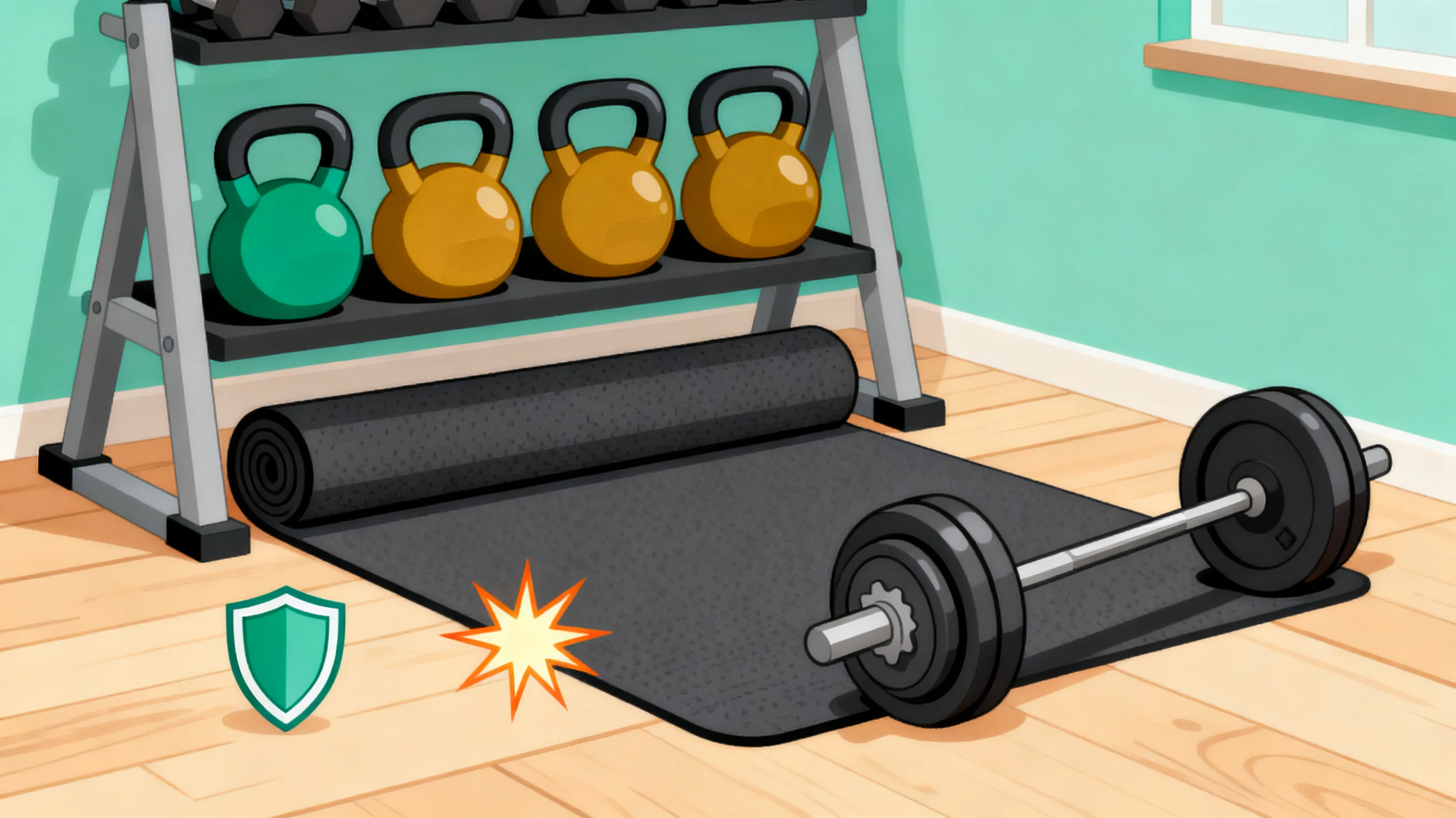
If you train heavy or drop weights, an exercise mat is the honest answer. A yoga mat simply doesn't have the padding or the surface area to do that job safely.
Size matters more than you'd think
Here's where most people trip up. A standard yoga mat is 6'x4' — fine for one person on the floor. But a serious home gym needs extra-large mats, and that's a size category yoga mats rarely reach.
Exercise mats come in 6'x6', 6'x8', 6'x10', 6'x12' and even 6'x16' so you can cover a whole workout area as one continuous surface. That's a real advantage if you squat, row, or do multiple movements in one space — you don't want a seam in the middle of your deadlift.
If you're tall, a larger mat also fixes the classic problem of your head or feet hanging off the edge. For double duty, an extra-large mat can serve as both a yoga surface and a level workout floor.
How to choose: a quick decision guide
Ask yourself these three questions, fast:
- Do I do mostly yoga? Then a 7mm firm mat keeps your balance poses stable.
- Do I lift, do HIIT, or drop weights? Then you want a 10-12mm high-density exercise mat.
- Do I need to cover a larger area? Then supersize to an extra-large mat rather than juggling two smaller ones.
Many home practitioners end up with one of each — a compact yoga mat for daily practice, and a larger exercise mat for the days they train harder. There's nothing wrong with that; it's the most common setup I see.
For anyone running both yoga and strength work from one room, an extra-wide or extra-large exercise mat doubles nicely as a base layer, with a yoga mat rolled out on top when you need extra joint cushioning.
The bottom line
A yoga mat keeps you stable and portable. An exercise mat protects your floors and cushions impact. They're not interchangeable — they're complementary.
If you only want one mat, go by your dominant activity: balance-focused yoga favors a firm 7mm mat; any kind of equipment, HIIT, or floor work favors a 10-12mm exercise mat. And if you train at home across both, an extra-large mat gives you the space to do it all in one continuous surface.