

Key Takeaways
- Studio mats age several times faster than home mats because they see multiple classes a day plus frequent cleaning cycles.
- Material choice decides lifespan: dense natural rubber and high-density TPE outlast soft PVC foam under daily class loads.
- Closed-cell surfaces matter for shared mats because they resist sweat absorption and clean up faster between sessions.
- A written rotation and care routine costs nothing and can add months of usable life to every mat in the room.
- Replace on grip loss and structural damage, not on looks — faded color is cosmetic, peeling layers are not.
Why Studio Mats Wear Out So Much Faster
A home mat might serve one person three or four times a week. A studio mat is rolled, stood on, sweated on, sprayed, wiped, and rolled again — sometimes ten or more times a day. Each cycle compresses the foam slightly, flexes the surface layer, and dries out whatever oils keep the material supple. Multiply that across a full schedule and it is easy to see why a mat rated for years of home practice can look tired within a single season in a busy room.
The good news: wear rate is not random. It follows material quality and handling habits, and both are within your control.
Choose Materials Built For Daily Class Loads
When teachers evaluate mats for the studio shelf, durability comes down to a few concrete traits:
- Density over softness. Soft budget foam bottoms out quickly under repeated pressure. Dense, high-resilience cores recover between classes and resist permanent body impressions.
- Material family. Natural rubber holds grip and structure longer than most foams, while quality TPE offers a lighter, latex-free middle ground. Thin PVC class mats are cheap upfront but usually retire fastest. REI notes that both material and thickness drive how long a mat lasts.
- Closed-cell surface. Open-cell tops soak up sweat and cleaning liquid in shared use. Closed-cell surfaces stay drier, sanitize faster, and are far more hygienic across many users per day.
- Reinforced edges. Fraying starts at the borders where hands and feet push off. Cleanly finished edges delay that failure mode by months.
Brands such as GXMMAT and CHEETE build their reputation on exactly these commercial-grade traits — dense cores and tough closed-cell skins — which is why they appear frequently in studio and gym settings where mats work all day.
Run A Simple Rotation And Care System
You do not need software to manage mat life — just consistency:
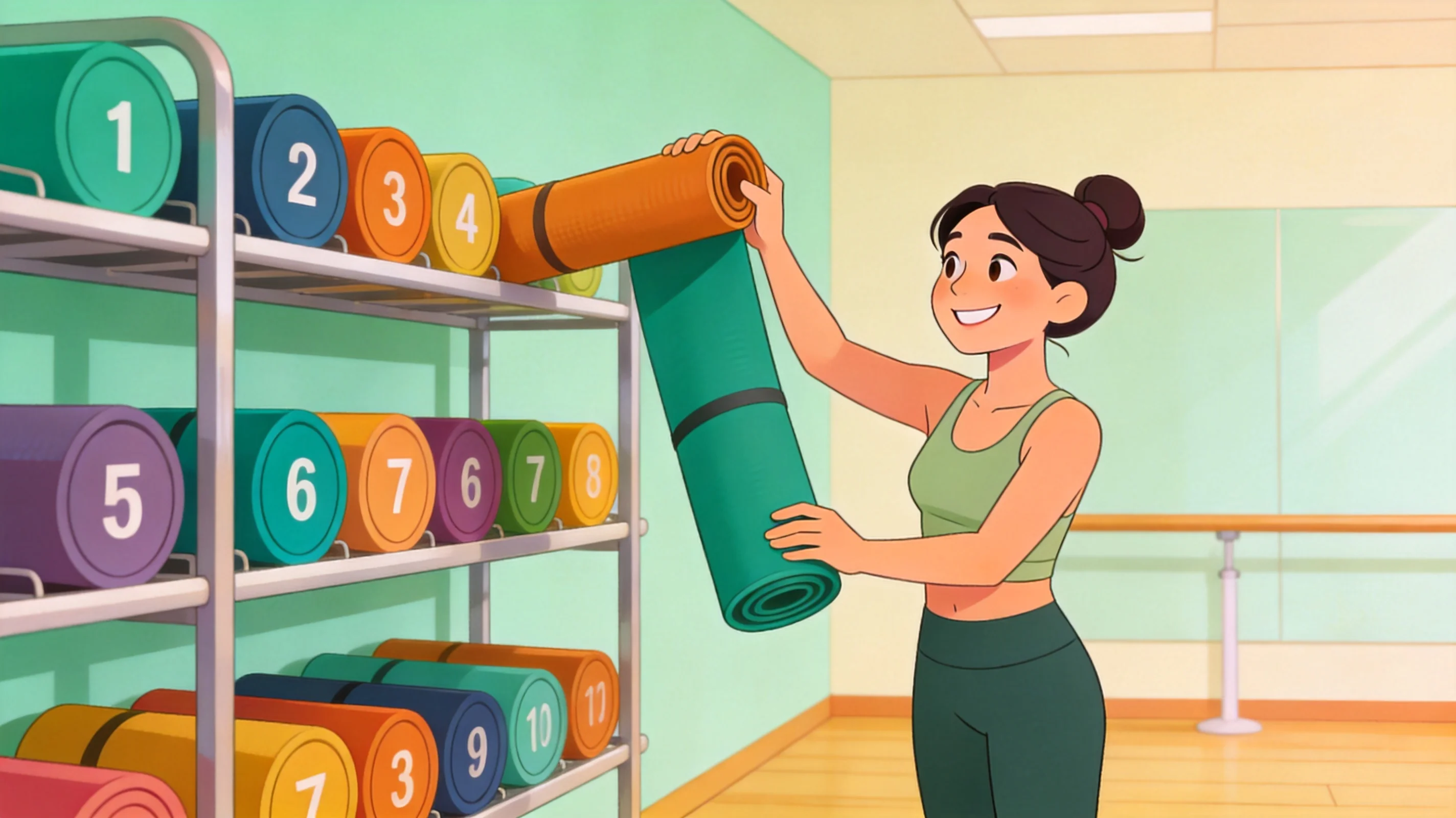
- Number your mats so you can track usage honestly instead of reaching for the same favorites at the front of the rack.
- Rotate front-to-back weekly, giving each mat similar rest time to decompress and fully dry.
- Clean on a fixed schedule: wipe after every class with a mild diluted solution, deep-clean monthly, and hang mats loosely rather than leaving them tightly rolled while damp.
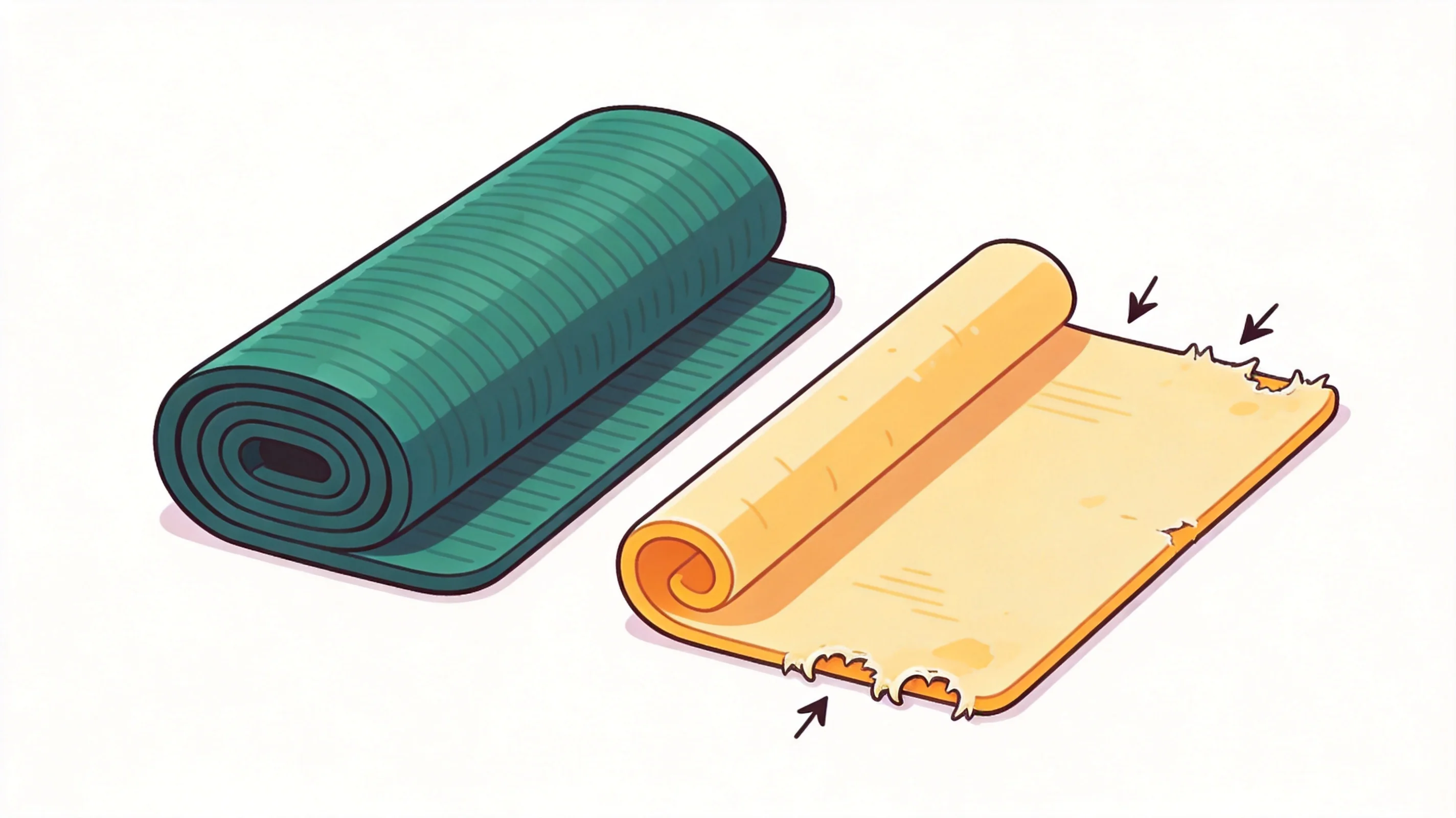
- Inspect monthly. Run a hand along edges and high-contact zones checking for peeling, crumbling, or slick spots where texture has worn flat.
Studios that follow this kind of routine routinely report adding a season or more of usable life compared with a wash-and-forget approach — meaningful savings once you multiply a modest per-mat price across twenty or thirty mats.

Know When To Rotate A Mat Out
Retire a studio mat when grip has visibly smoothed, when layers begin separating, or when odor persists even after a deep clean. A mat that still looks fine but slides under down dog is a liability, not an asset. Keep one or two spares in the rotation plan so replacements never arrive mid-schedule.
Bottom line
Durable studio mats are bought twice as rarely when you match material to class load and pair the purchase with a disciplined rotation. If you are equipping a new space or scaling up beyond retail packs, working with an OEM and private label partner lets you spec density, thickness, and surface finish for commercial duty from day one.